

Tolstoy Farm
Gandhi co-founded Tolstoy Farm with his friend Hermann Kallenbach in 1910 outside Johannesburg, Gauteng, South Africa. This was Gandhi’s second intentional community, and his home between 1910-1914.
Life at Tolstoy Farm with Gandhi
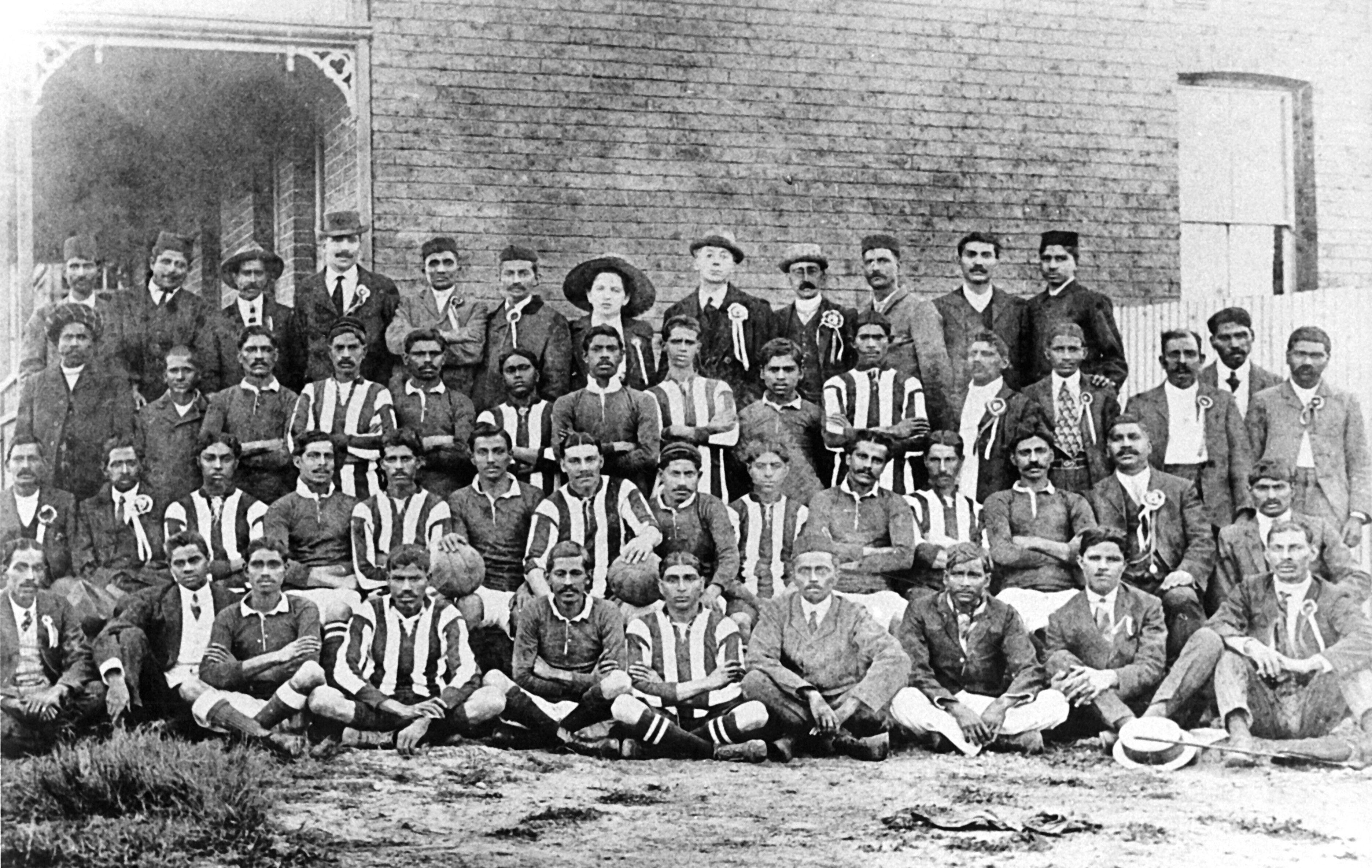
In 1910 Gandhi co-founded, along with his friend Hermann Kallenbach, a new intentional community called Tolstoy Farm. This community was located on farmland outside Johannesburg (Gauteng, South Africa), as Gandhi’s legal work and civic activism took him increasingly to this city. Gandhi and his coresidents continued many aspects of everyday life from Phoenix Settlement, and also added new residential experiments to enhance universal wellbeing at this second community, including gender-segregated co-housing, sharing a communal kitchen, naturopathy and holistic medicine, and alternative education.
At Tolstoy Farm, residents not only learned to work for the collective good by taking up farming and other manual labor in the interest of economic self-sufficiency, they also learned to live like prisoners by sleeping on the floor on bedrolls, dressing in prisoners’ uniforms, and eating simple vegetarian meals like porridge. Gandhi emphasized that by living this way, his coresidents could learn to thrive even in prison. Such voluntary suffering and sacrifice were central to Gandhi’s growing philosophy of universal wellbeing (sarvodaya) and to his method of nonviolent civil resistance (satyagraha).
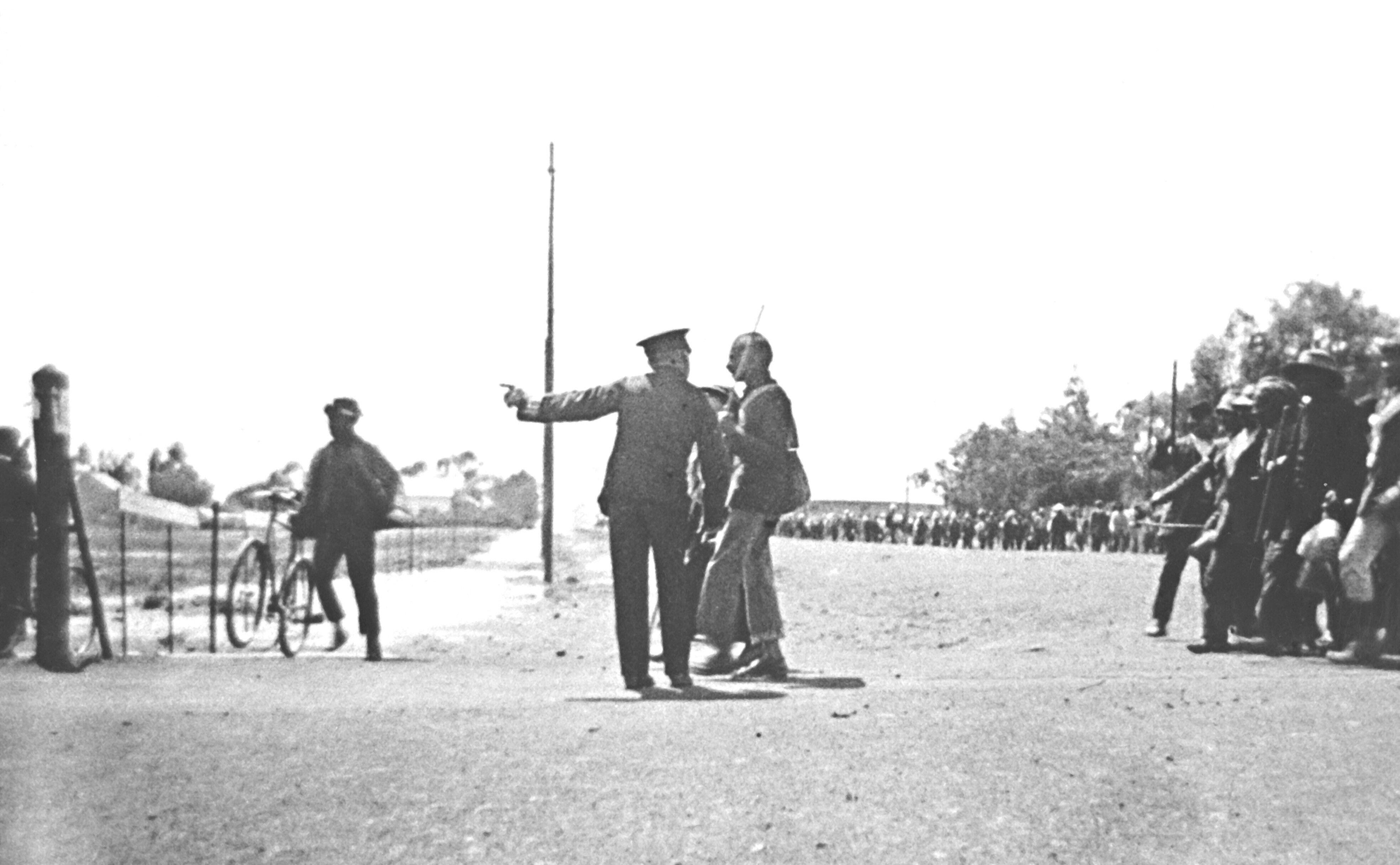
In 1913, Gandhi and coresidents from Tolstoy Farm lead the Great March, a nonviolent protest against racial injustice on behalf of Indians living in South Africa. On this Great March, over 2,000 people undertook a 36-mile walk and crossed the border between Natal and Transvaal colonies without the permit required of non-whites. Gandhi and his coresidents were imprisoned for leading this nonviolent protest. But in the face of growing international pressure, the government of South Africa eventually released Gandhi from prison in order to negotiate a settlement, resulting in the passage of the Indian Relief Act and the Smuts-Gandhi Agreement of 1914. Gandhi attributed the success of the Great March, and the broader satyagraha campaign for Indians’ civil rights in South Africa, to the disciplined nonviolence of his coresidents from Tolstoy Farm and their willingness to suffer time in jail.
In 1914, Gandhi decided to return to his homeland after spending twenty-one years living and working in South Africa. Before departing for India, Gandhi had to decide what to do with Phoenix Settlement and Tolstoy Farm. Approximately two dozen coresidents from these communities decided to travel to India to begin a new community there. Many other coresidents decided to stay in South Africa, but they consolidated the two communities into one, returning to Phoenix Settlement. Tolstoy Farm was closed, its land sold, and in time its buildings were razed.


Tolstoy Farm after Gandhi
After 1914 Tolstoy Farm became an empty shell, as Gandhi and Kallenbach closed it when they left South Africa for India. Gandhi lived in India for the remainder of his life, whereas Kallenbach ultimately returned to South Africa and resumed his work as an architect in Johannesburg. In time Kallenbach decided to sell the Tolstoy Farm land. Today the land is owned by Corobrik, a South African brick manufacturing company that uses clay from the land to make bricks. Corobrik has recognized Tolstoy Farm’s historic importance and has granted permission for a small piece of the historic farm land to be preserved as a heritage site.
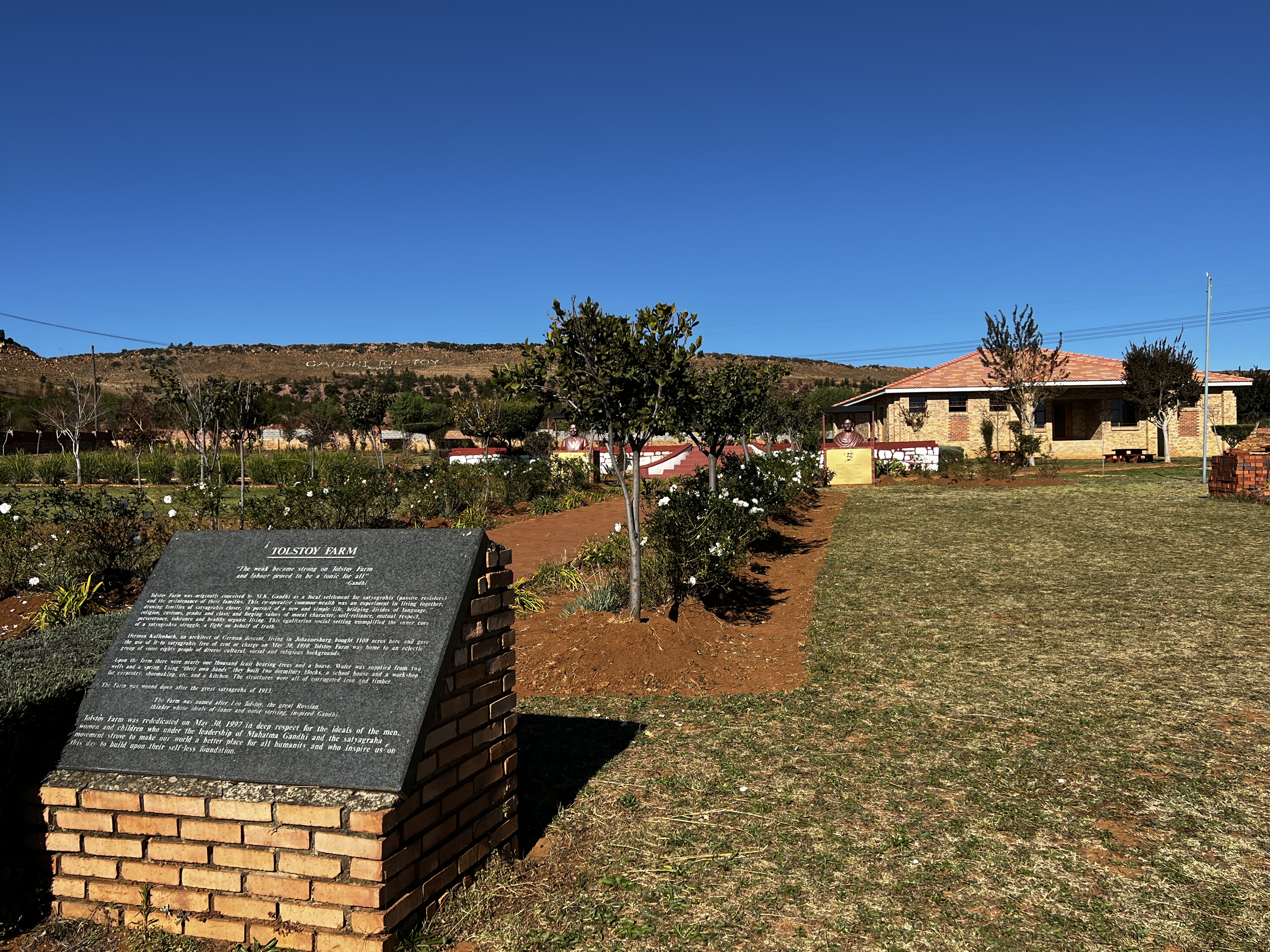
The historic significance of the former Tolstoy Farm site is little known in South Africa today. It is not featured on tourist circuits, even when other sites associated with Gandhi are highlighted as part of educational tours. But surrounded by gravel roads and Corobrik signs saying “private property, unauthorized entry prohibited,” there is a small plot of land that is now undergoing a process of preservation and renovation. Here, within a fenced-in area, once can find a meticulously landscaped garden and a newly constructed building that is in the process of becoming a Tolstoy Farm museum.
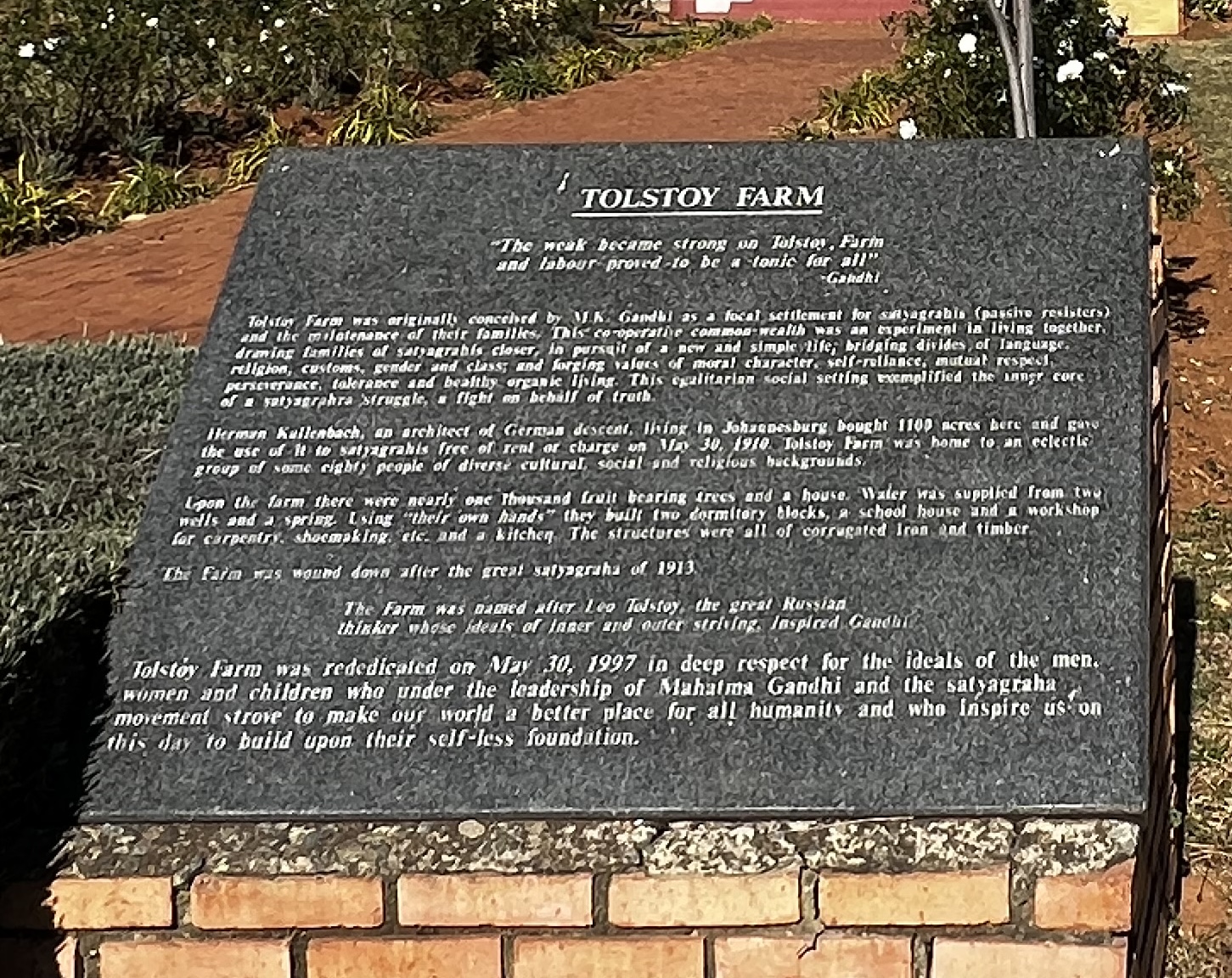
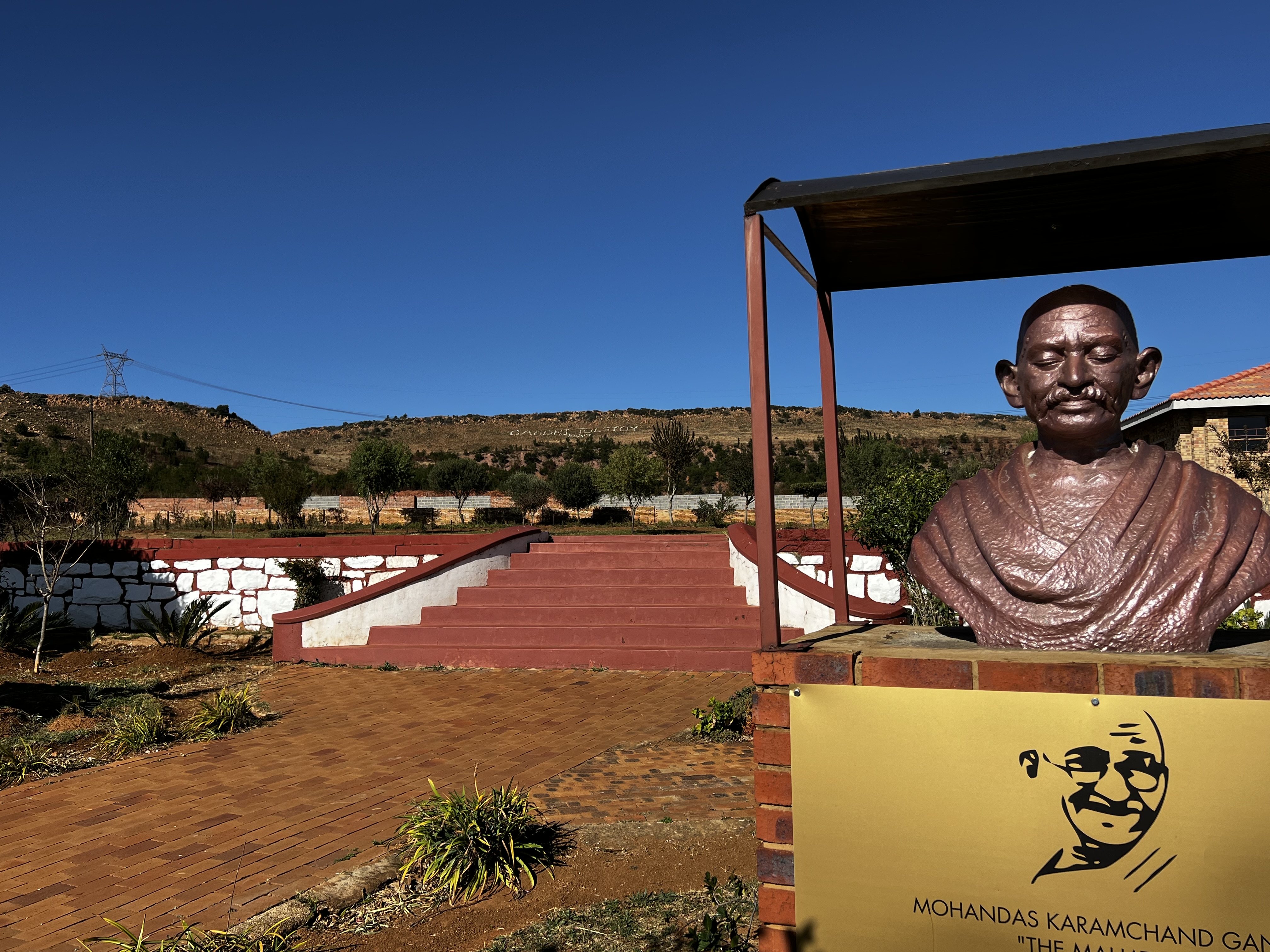
Upon entering this small piece of former Tolstoy Farm land, one can see from the walkway the new museum building to the right, while on the left are the stairs leading to the historic foundation of the site where Gandhi and Kallenbach once lived. A plaque opens with a quote from Gandhi about the farm, “The weak became strong on Tolstoy Farm, and labour proved to be a tonic for all.” The plaque provides a bit of information about Gandhi and Kallenbach founding the farm, naming it after Leo Tolstoy, and living there with an “eclectic group of some eighty people of diverse cultural, social, and religious backgrounds.” At the bottom, the plaque notes that the “Tolstoy Farm was rededicated on May 30, 1997 in deep respect for the ideals of men, women and children who under the leadership of Mahatma Gandhi and the satyagraha movement strove to make our world a better place for all humankind and who inspire us to this day to build upon their selfless foundation.”
Following the walkway one passes newly planted fruit trees – a nod to the abundance of fruit and nut trees that were once on this farm land – and arrives at the stairs leading to the historic foundation of the site where Gandhi and Kallenbach used to live. On either side of the stairs there is a commemorative bust, the one on the left of Nelson Mandela and the one on the right of Mahatma Gandhi. These busts were added to the site in 2019, commissioned by the Mahatma Gandhi Remembrance Organisation in South Africa. Climbing the six stairs to ascend the historic foundation, which is all that is extant from the original Tolstoy Farm, one can see on the hillside beyond white rocks that spell out “Gandhi Tolstoy Farm” in large letters.


Citing the Living with Gandhi Archive:
McLain, Karline (editor). Living with Gandhi Archive. Bucknell University: http://livingwithgandhi.org.