
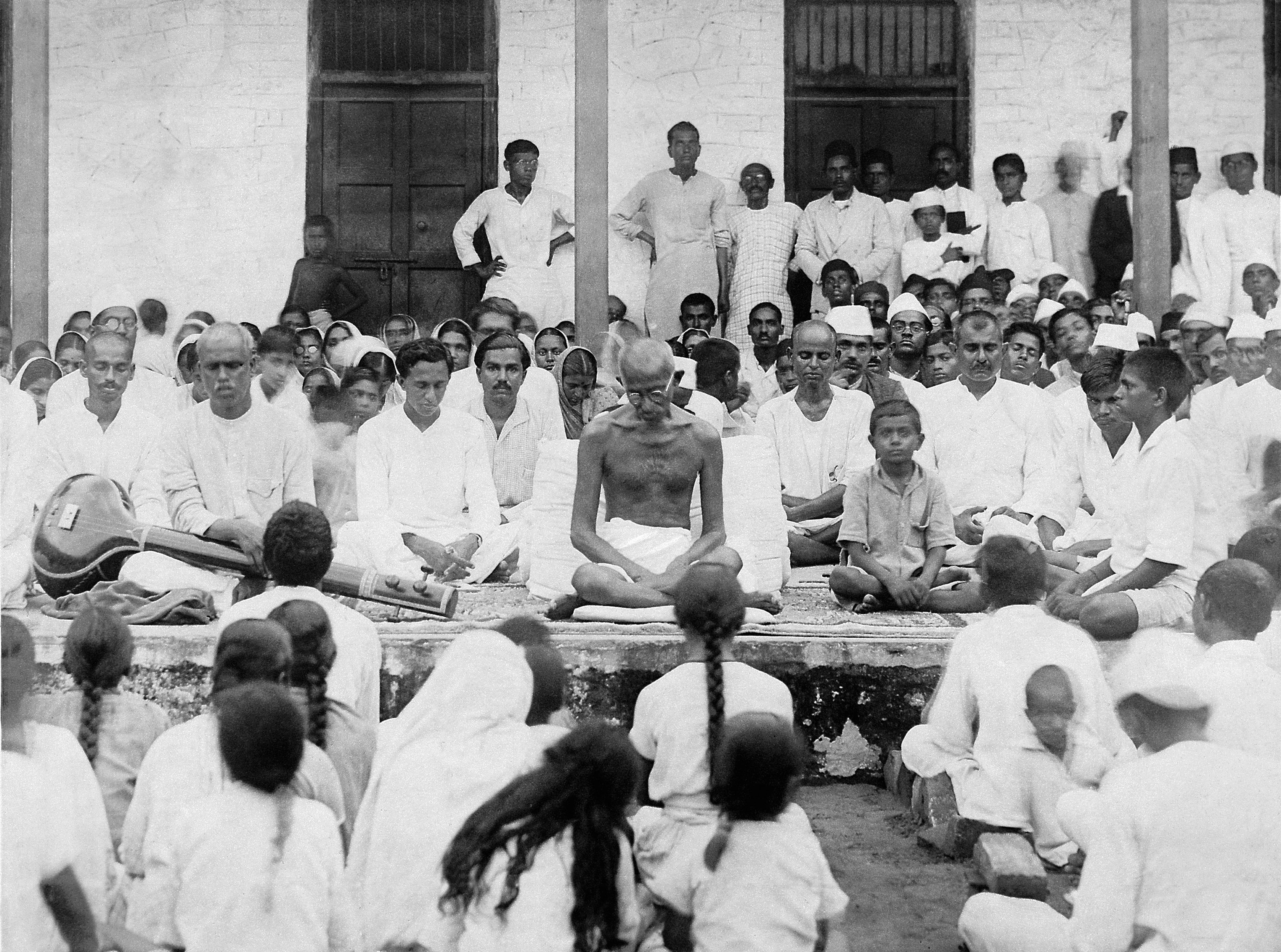
Gandhi founded Sabarmati Ashram in 1917 near Ahmedabad, Gujarat, India. This was Gandhi’s third major intentional community, and his home until he disbanded it in 1933.
Life at Sabarmati Ashram with Gandhi
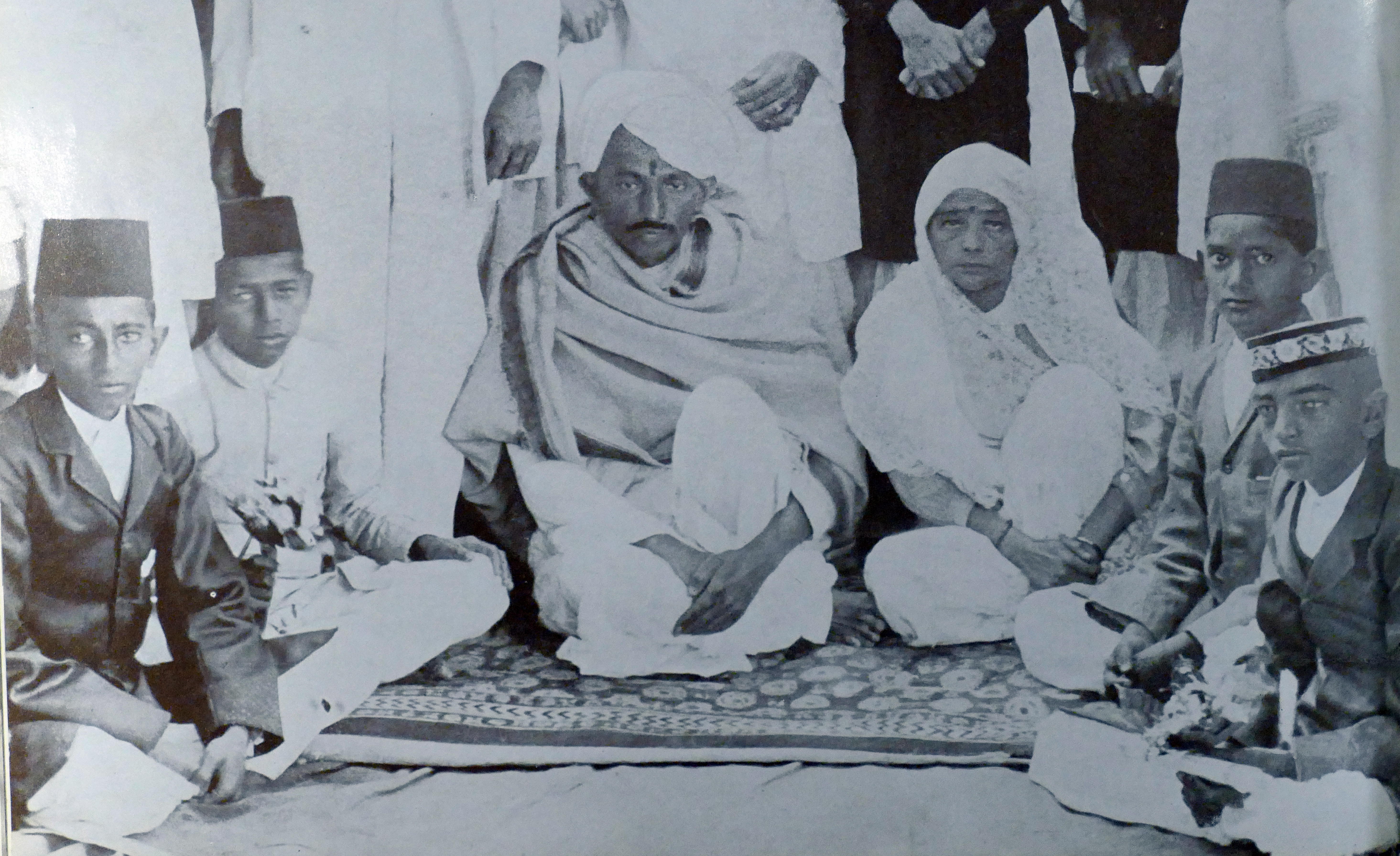
When Gandhi returned to India in 1915 after living in South Africa for twenty-one years, he immediately began planning to establish a new intentional community in his home state of Gujarat. Initially, Gandhi and two dozen companions who had come from South Africa lived in a bungalow in the village of Kochrab. Gandhi called this temporary community Satyagraha Ashram. But as more members joined the community Gandhi began looking for a larger plot of land that was more rural, could be farmed, and would accompany their growing numbers.
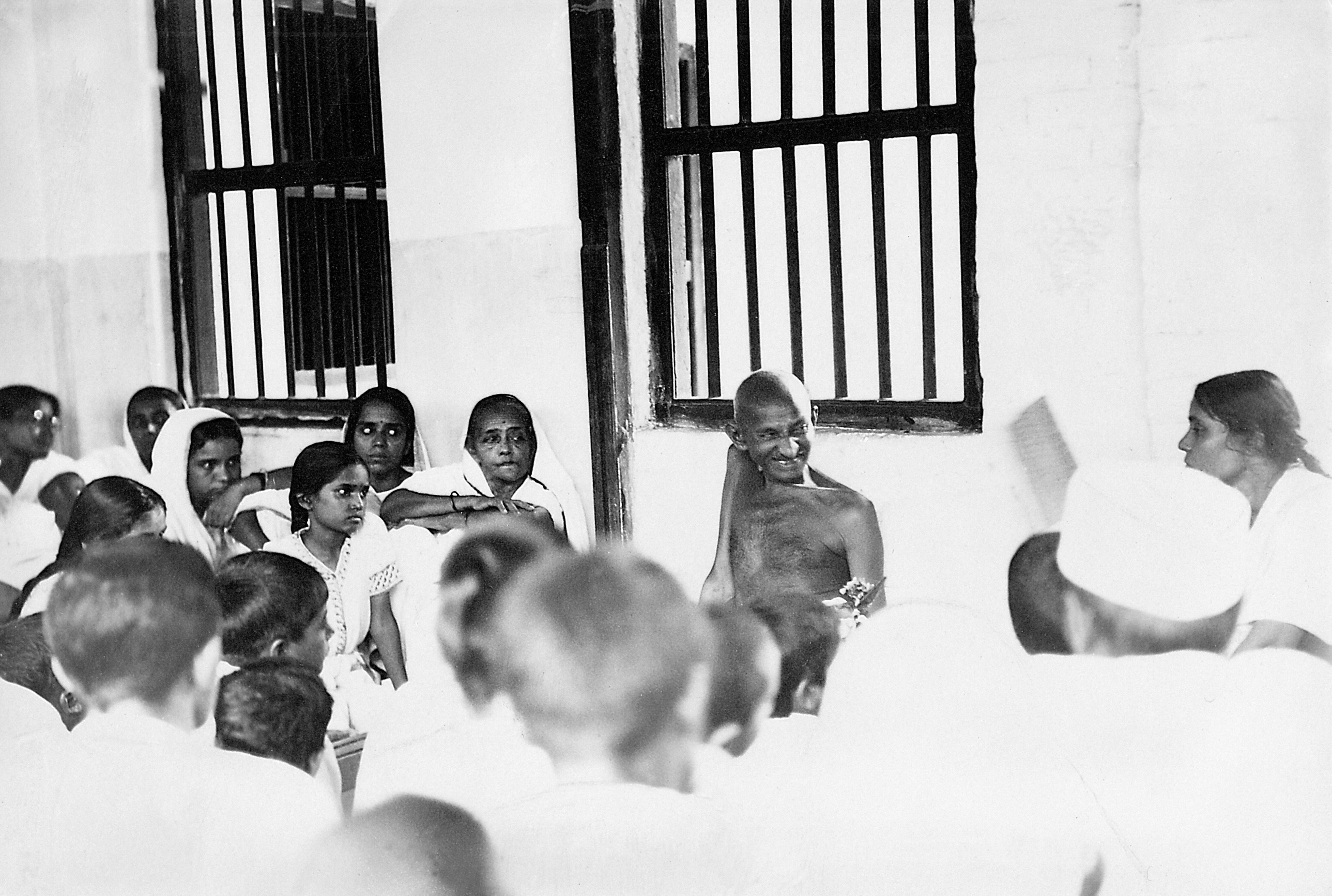
In 1917, Gandhi founded Sabarmati Ashram by purchasing thirty-six acres of land on the banks of the Sabarmati River outside the city of Ahmedabad, establishing its ownership in a collective trust. All residents who joined Sabarmati Ashram vowed to uphold eleven observances that the community deemed essential to the pursuit of universal wellbeing (sarvodaya): truth; nonviolence; celibacy; control of the palate; non-stealing; non-possession; physical labor; economic independence; fearlessness; removal of untouchability; and tolerance.
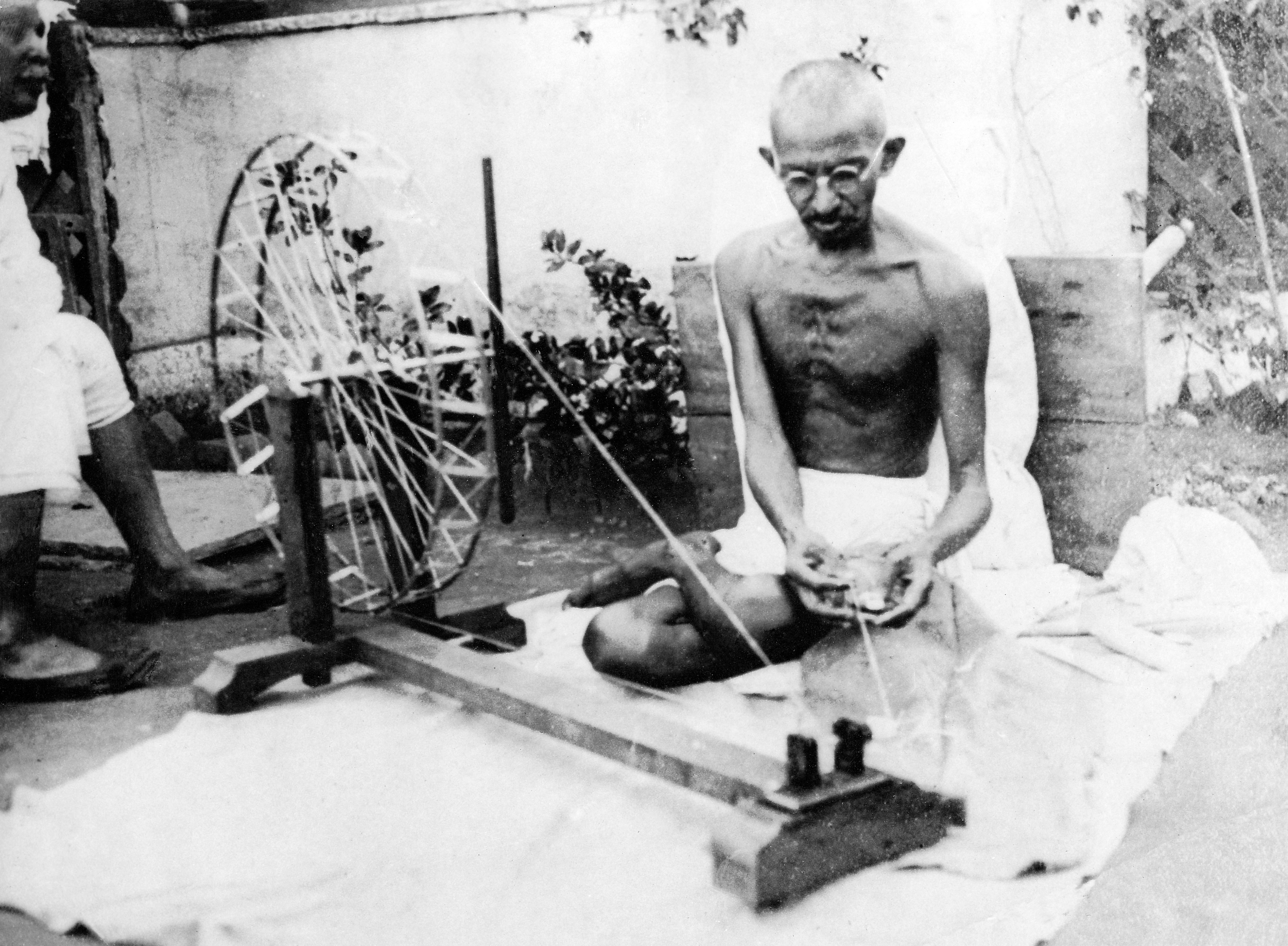
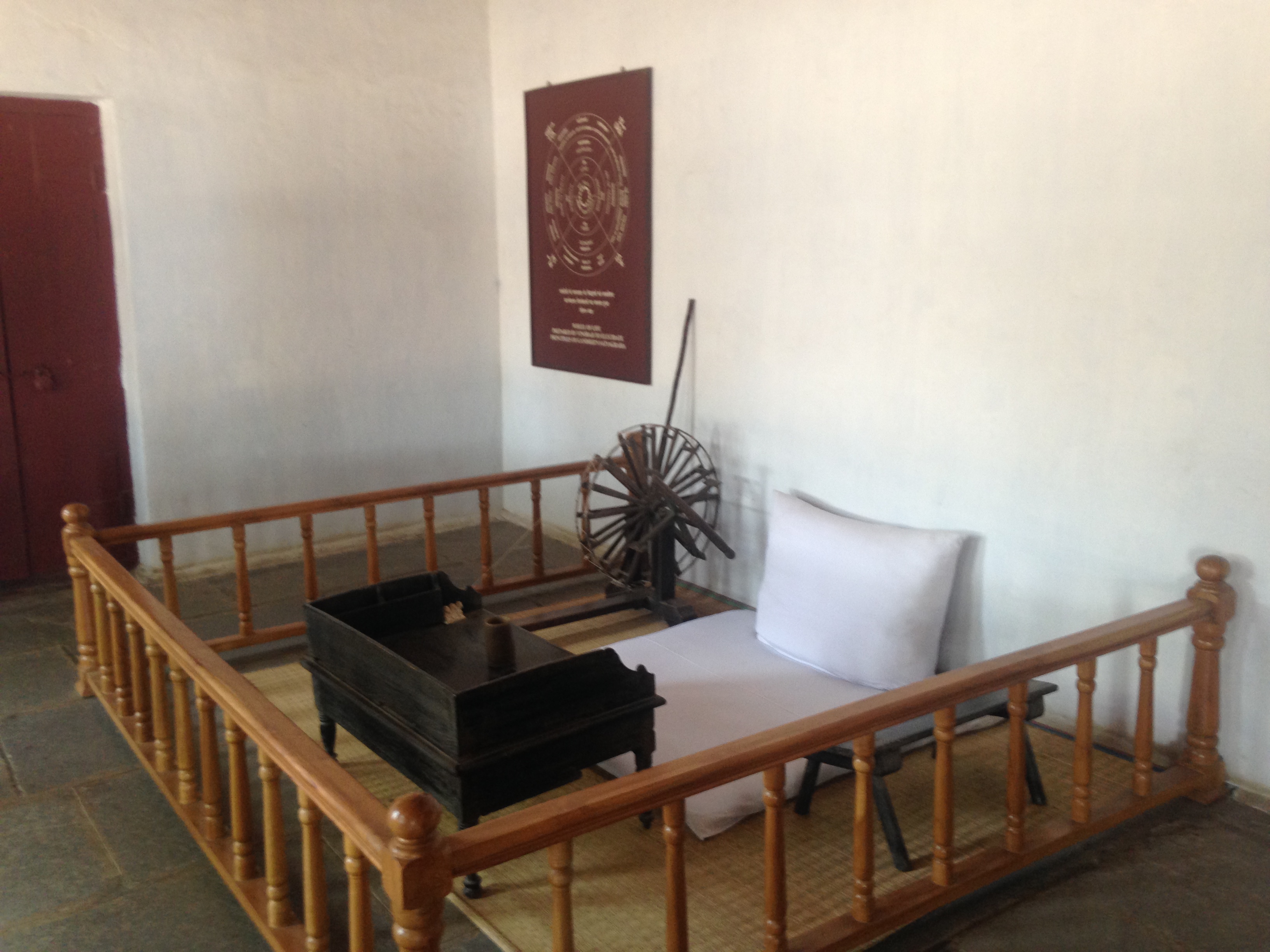
At Sabarmati Ashram the residents continued many of the experiments that had previously been initiated in South Africa, such as farming, multifaith worship, practicing celibacy, and alternative education. New experiments were also added, including admitting a Dalit (“untouchable”) family to live in the community, and promoting the abolition of untouchability. They also added weaving and spinning to the manual labor to promote economic independence. Gandhi learned to use a spinning wheel, and all residents were expected to spin for one hour each day. Through Gandhi’s devotion to spinning and the collective work of his coresidents, homespun cotton was embraced by the Indian National Congress in the 1920s-30s, and the spinning wheel became the iconic symbol of the Indian independence movement.
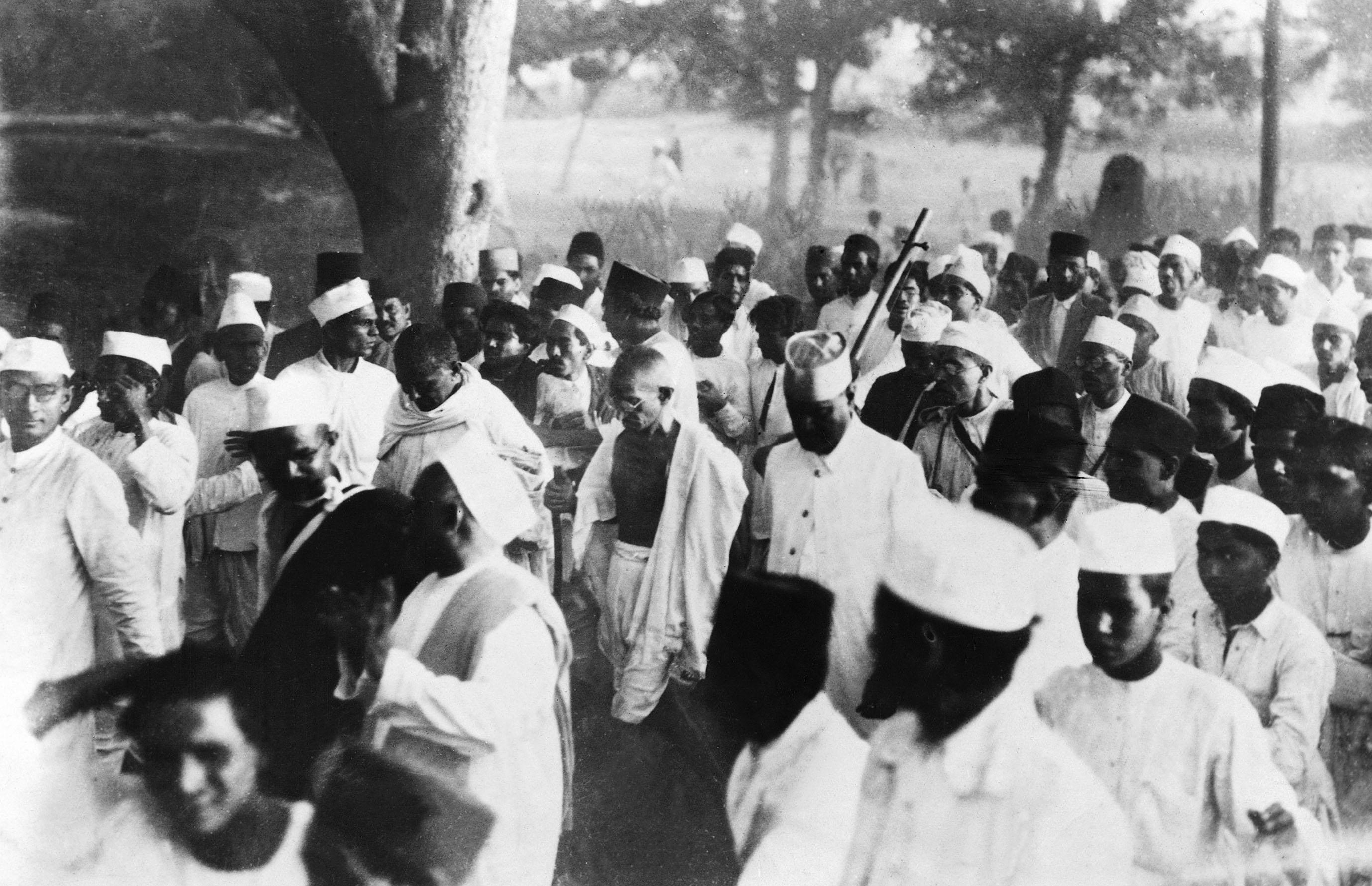
Sabarmati Ashram grew from 25 residents to nearly 300 members. Here Gandhi escalated both his rhetoric and his expectation of voluntary suffering and sacrifice for universal wellbeing (sarvodaya). Residents took a formal vow of nonviolence, and underwent disciplined training for nonviolent civil resistance. Gandhi was deeply involved in politics during these years, leading multiple civil disobedience campaigns. The most famous of these was the Salt March. On March 12, 1930, Gandhi and 78 coresidents from Sabarmati Ashram began a 24-day march to the coast. When they reached the seashore on April 6, where they collected natural salt. In so doing, they broke the British salt tax law, and sparked a nationwide civil disobedience campaign.
Residents from Sabarmati Ashram helped to plan and carry out the Salt March. Gandhi anticipated that the marchers would meet with physical violence, and carefully handpicked 78 coresidents who had taken lifelong vows of celibacy and nonviolence. Gandhi emphasized that they must be willing to serve time in jail, and must be willing to sacrifice their lives if needed. The night before the march began, Gandhi described the Salt March as a “life-and-death struggle” to his coresidents, and declared that they would not return to Sabarmati Ashram until they had either attained India’s independence or died trying. On May 5, 1930, Gandhi was arrested; a majority of the Sabarmati Ashram members were also arrested for their role in the Salt Satyagraha. In 1933, from his prison cell, Gandhi closed Sabarmati Ashram.
Sabarmati Ashram after Gandhi
In 1933, when Gandhi decided to close and disband Sabarmati Ashram, he consulted with his fellow coresidents and trustees, and they decided to hand over the community grounds to the Harijan Sevak Sangh (“Servants of Untouchables Society”), a non-profit organization dedicated to the removal of untouchability, to serve as a hostel for Dalit families and a place to provide an education and professional training to Dalit children. Following India’s independence in 1947 and Gandhi’s assassination in 1948, the Sabarmati Ashram grounds were divided into a handful of trusts dedicated to various Gandhian pursuits. One of these trusts, the Sabarmati Ashram Preservation and Memorial Trust, was charged with preserving part of Sabarmati Ashram as a heritage site.
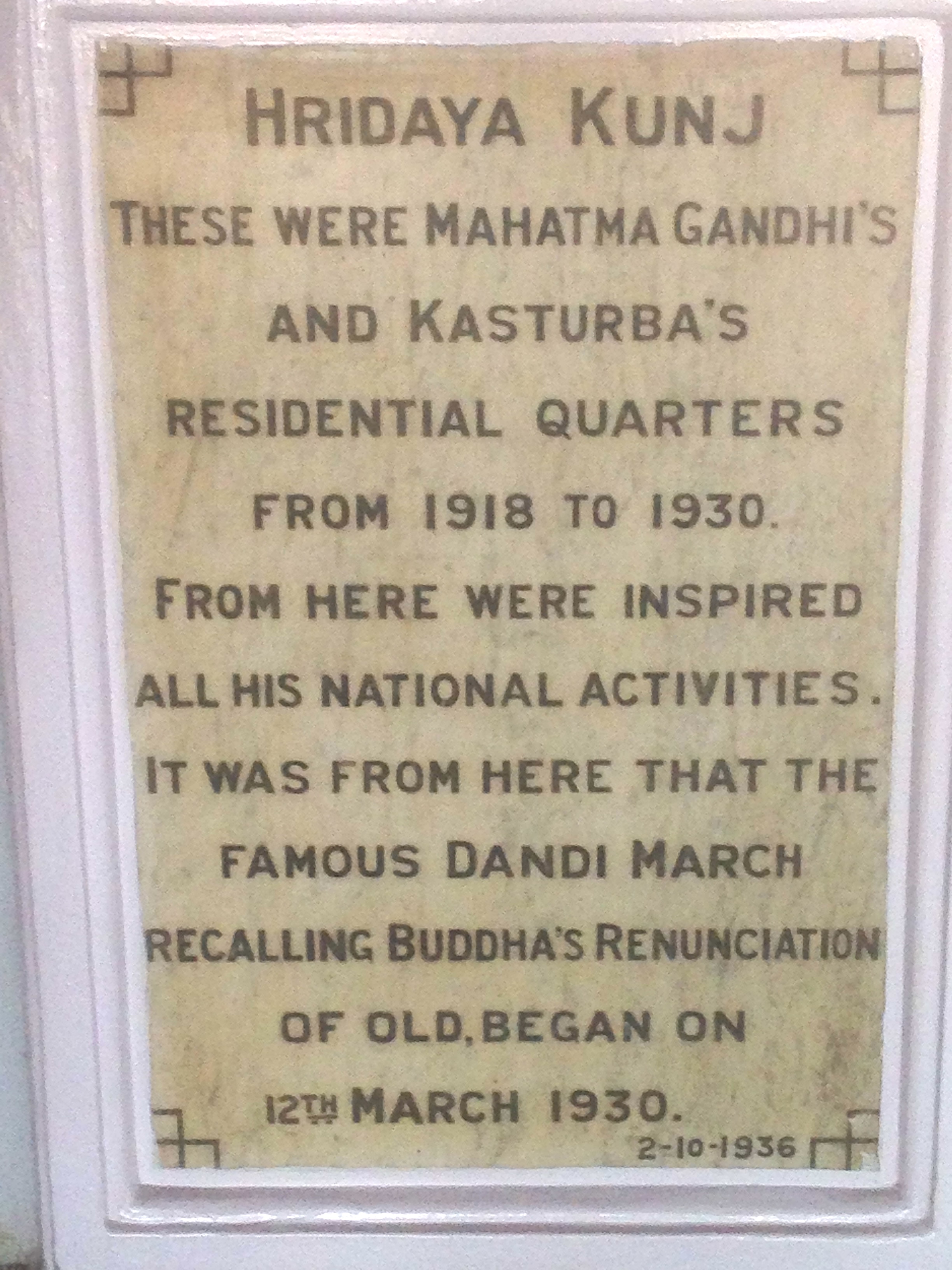
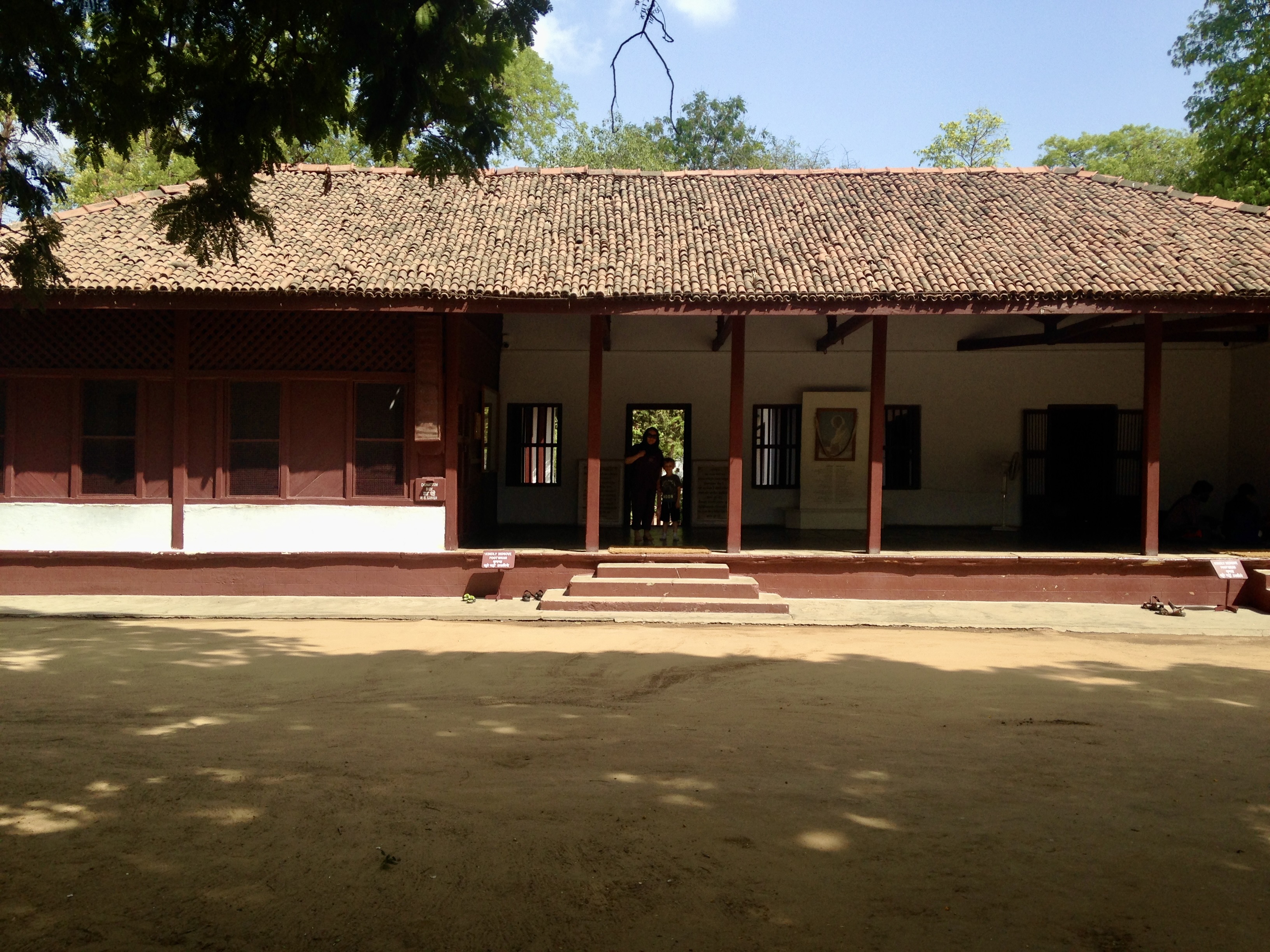
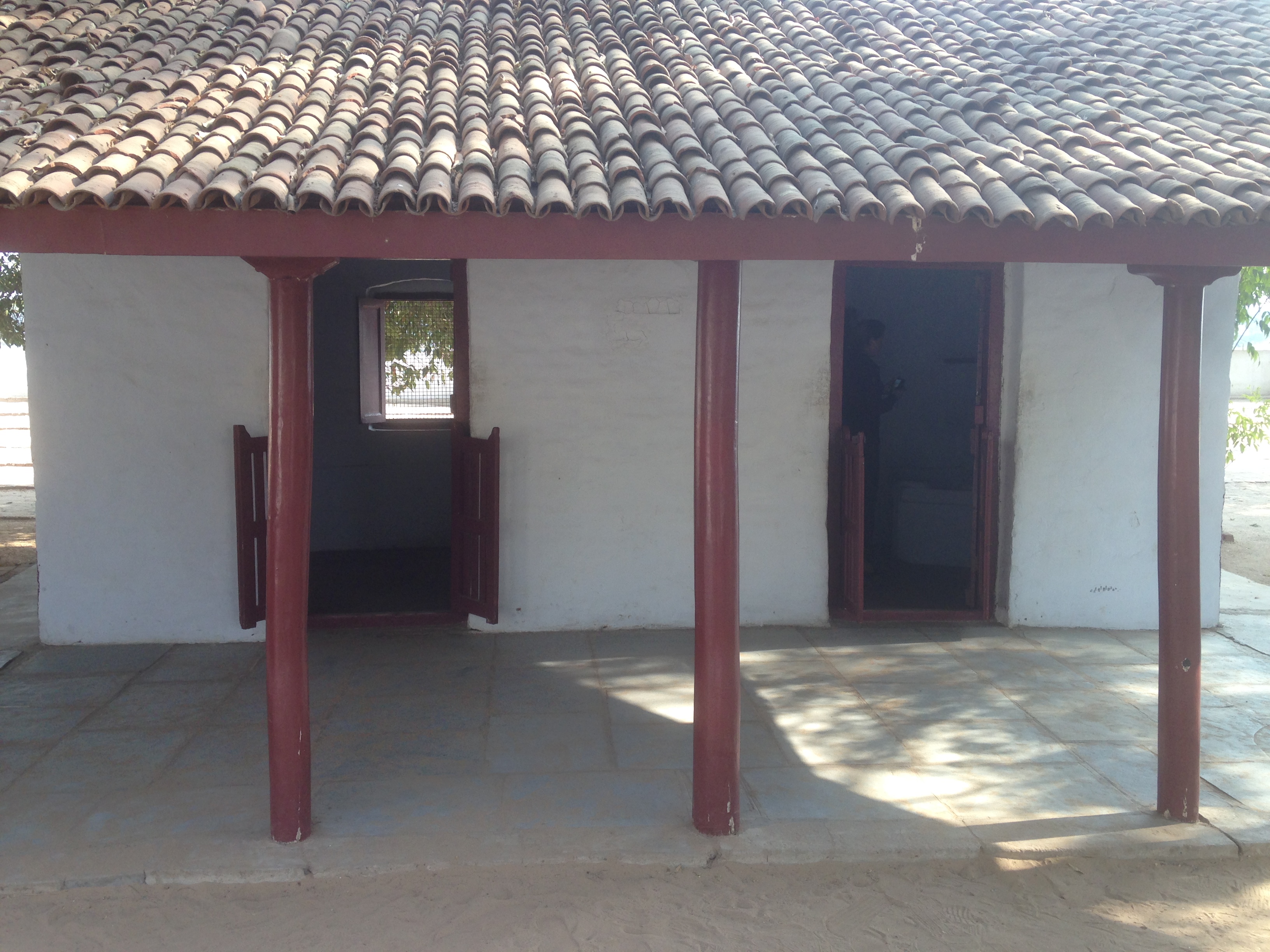
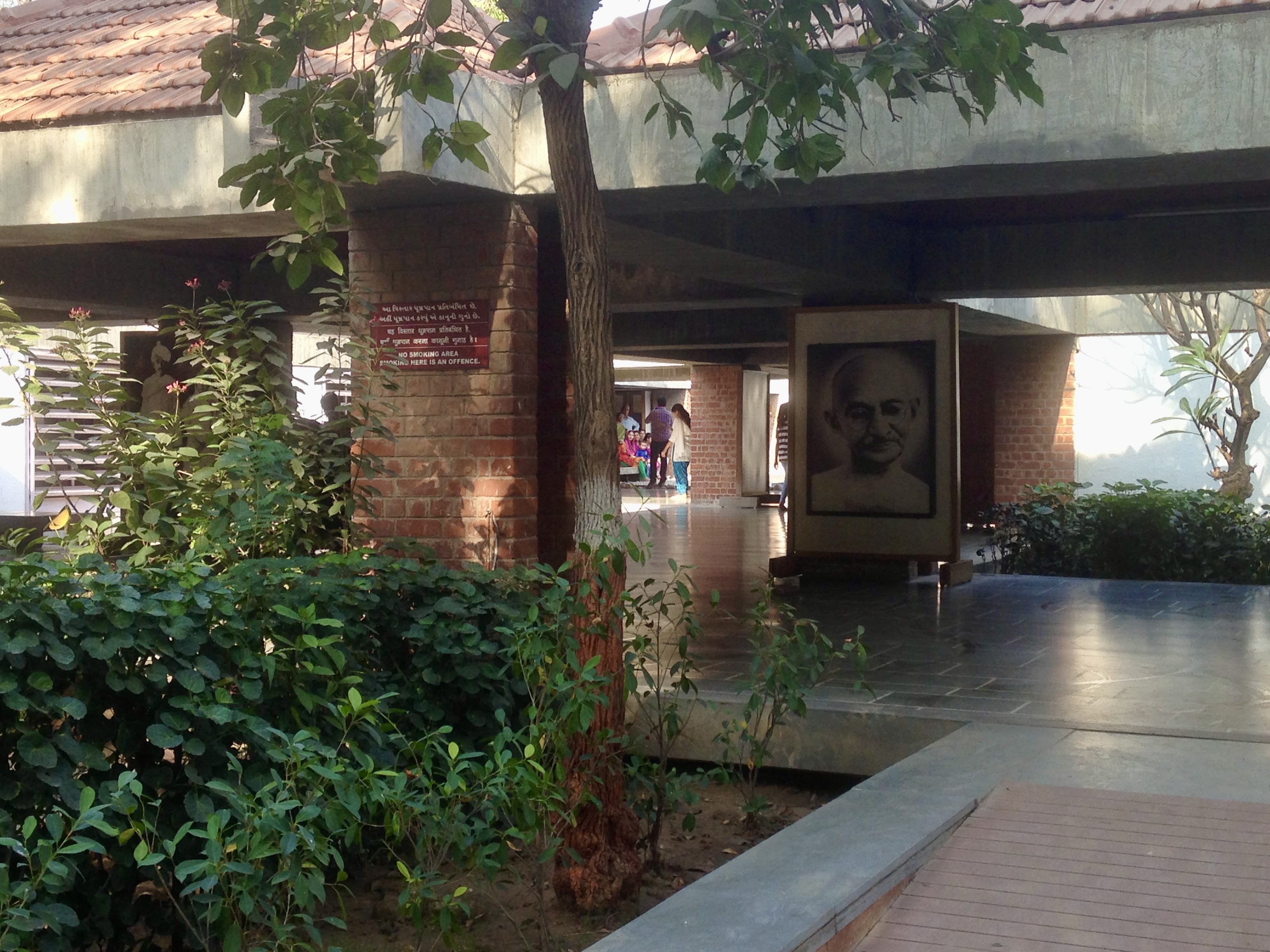
Visitors to Sabarmati Ashram today can tour several historic edifices from Gandhi’s time. At Hridaya Kunj, Gandhi and Kasturba’s house, visitors can see Gandhi’s spinning wheel and desk on the veranda, and can read a list of the eleven observances that residents agreed to live by hanging on the wall. Visitors can also tour Vinoba/Mira Kuti, the small house that was first occupied by Vinoba Bhave and later by Mirabehn, and can take their shoes off and step onto Upasana Mandir, the communal prayer ground. Beyond these historic sites, the Gandhi Memorial Museum serves as the primary attraction for most visitors. The Gandhi Memorial Museum was designed by Indian architect and urban planner Charles Correa, and inaugurated by Prime Minister Jawaharlal Nehru on May 10, 1963. Correa used a modular design, and gave significant thought to the form the museum should take to honor Gandhi’s legacy, concluding that like Gandhi the museum should also be “human-scaled, unpretentious, modest.”
Walking through the museum visitors move through a series of square rooms, each constructed of brick and wood, with stone floors and tile roofs to align with the aesthetic of the earlier buildings. There is ample natural light, cooling breezes flow across the water tank into the open-air pavilions, and there are wide benches to sit on. The focus of the museum’s permanent exhibit is Gandhi’s political leadership in the anticolonial struggle during the years he was in residence at Sabarmati Ashram. Display cases feature historical black and white photos, with text in Hindi, Gujarati, and English languages to provide historical context, focusing on Gandhi’s nonviolent civil disobedience campaigns during these years, culminating in the Salt March. A secondary focus of the exhibit is the ashram itself, with display cases that highlight the ashram’s eleven observances, ashram activities, Gandhi and Kasturba as the “father” and “mother” of the community, and the controversial decision to admit an “untouchable” family into the community.
When Sabarmati Ashram was founded in 1917, it was a quiet oasis in the rural countryside of Gandhi’s home state of Gujarat, strategically located north of the city of Ahmedabad and on the opposite side of the Sabarmati River from the city center. In the past century, however, Sabarmati Ashram has been enfolded within the city of Ahmedabad through decades of urban growth and encroachment. Today Sabarmati Ashram is a popular regional tourist destination, receiving an average of 3,000 visitors each day, including both domestic and international tourists who come on day trips to walk through its educational museum. In 2024, a new plan was inaugurated by the Government of India and the State of Gujarat to expand Sabarmati Ashram and transform it into a world class memorial and heritage site.
Citing the Living with Gandhi Archive:
McLain, Karline (editor). Living with Gandhi Archive. Bucknell University: http://livingwithgandhi.org.