
Amtul Salaam
Salaam, Amtul
Description
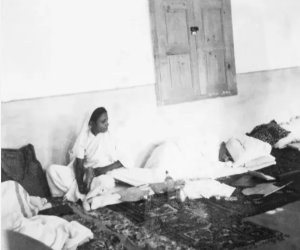
Amtul Salaam (1907-1985, also known as Bibi Amtus Salam) was born in Patiala, India. Raised in an aristocratic and conservative Muslim family, she observed purdah and did not receive a formal education. As a young woman she was drawn to politics, perhaps through the influence of an elder brother. By 1931, at the age of 24, she decided to leave home behind and moved to Sabarmati Ashram. Amtul was drawn to Gandhi’s teachings about the need for Hindu-Muslim unity in the struggle for India’s independence. Gandhi insisted that Amtul should study while living at Sabarmati Ashram to make up for her lack of formal education, and encouraged her to improve her Urdu reading and writing skills, as well as study the Quran. Amtul also learned spinning and participated in the labor of everyday life (cooking, cleaning, farming, etc.) at the community. Amtul regularly suffered from bouts of malaria and other ailments while in residence at Sabarmati Ashram, and though she was a strong advocate of nature cure, she often had to leave for medical attention beyond what could be provided by Gandhi and others living at the ashram.
After Gandhi had disbanded Sabarmati Ashram and settled at his final intentional community, Sevagram Ashram, Amtul joined him there. She resided at times at Sevagram Ashram during Gandhi’s years there, and at times Gandhi sent her to various Dalit colonies to engage in service work in the effort to abolish untouchability. While at Sevagram Ashram, Amtul was one of Gandhi’s partners in his controversial experiments in celibate sexuality. Whenever Amtul was away, whether for service work, medical attention, or in jail for civil disobedience, she and Gandhi regularly wrote letters to one another. Their correspondence reveals a somewhat tumultuous relationship, with Gandhi often expressing paternal affection for Amtul, and also frequently expressing exasperation with her for being too suspicious of him and other coresidents.
When colonial India gained its independence in 1947 and India and Pakistan were partitioned into two countries, Hindu-Muslim riots flared across South Asia. Amtul accompanied Gandhi as he traveled to Bengal to try to restore peace there, and she undertook a fast for 21 days to promote Hindu-Muslim unity. Amtul elected to remain in India after independence, even as her family moved to Pakistan. After Gandhi’s death, Amtul continued to promote Hindu-Muslim unity, founding the Kasturba Seva Mandir in Rajpura, Punjab to help displaced refugees and promote to way of life she had learned at Sabarmati Ashram and Sevagram Ashram.