
The "'I Am Heathcliffe,' Says Catherine" Syndrome
Applebroog (Author), Anderson (Artist), Antin (Artist), Bourgeois (Sculptor), Conde (Artist), Kitchel (Artist), Kozloff (Artist), Matthews (Photographer), Messager (Artist), Rosenbach (Artist), Schneemann (Artist), Shaw (Artist), Sonneman (Photographer), Ukeles (Producer)
1977

Gandhi walking with coresidents, 1944
Gandhi walking with coresidents at Sevagram Ashram, circa 1944. Gandhi advocated daily walks for health purposes, and regularly walked to and from
Published on


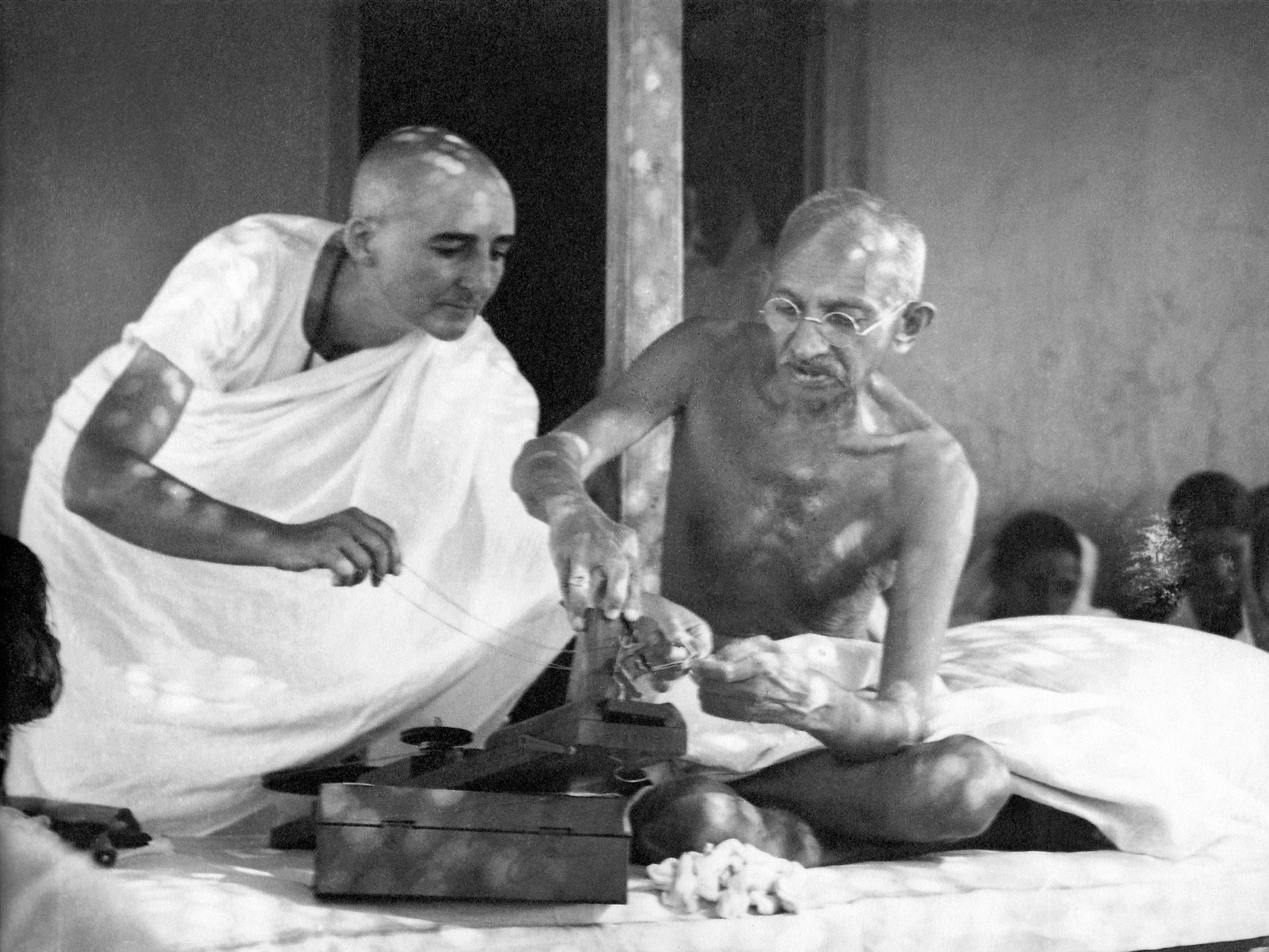
Mirabehn and Gandhi at the spinning wheel
Mirabehn helping Gandhi repair his spinning wheel. To emphasize economic self-sufficiency (swadeshi) and village handicrafts, all
Published on
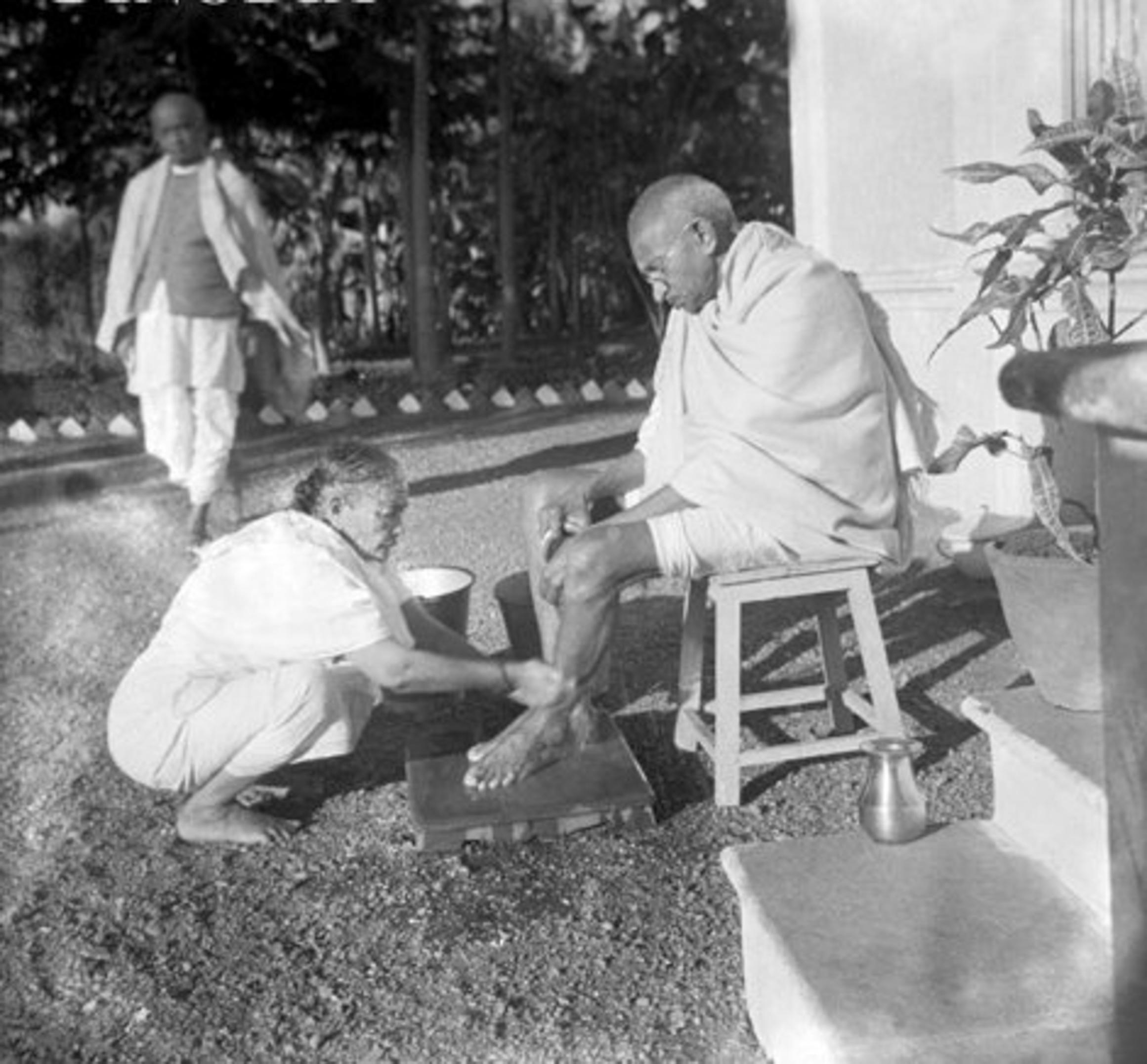
Kasturba Gandhi washing Gandhi's feet
Kasturba Gandhi washing Gandhi's feet, circa 1939. Such bodily service (seva) toward Gandhi was performed by Kasturba and some other
Gandhi (Photographer)
Published on
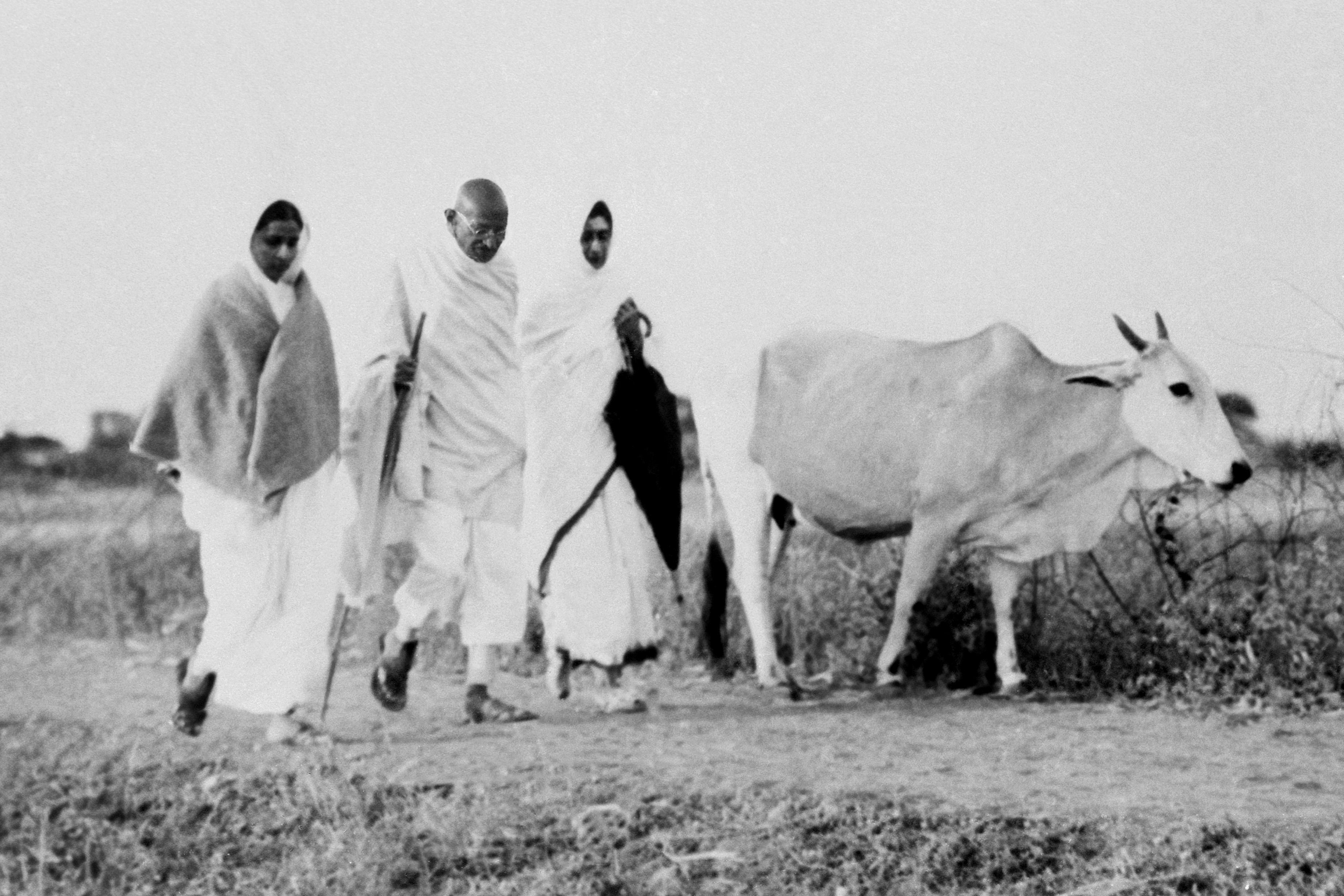
Gandhi walking with coresidents and a cow
Gandhi walking with coresidents (and a cow) at Sevagram Ashram. The community had a small dairy farm with both cattle and goats, as part of its
Published on
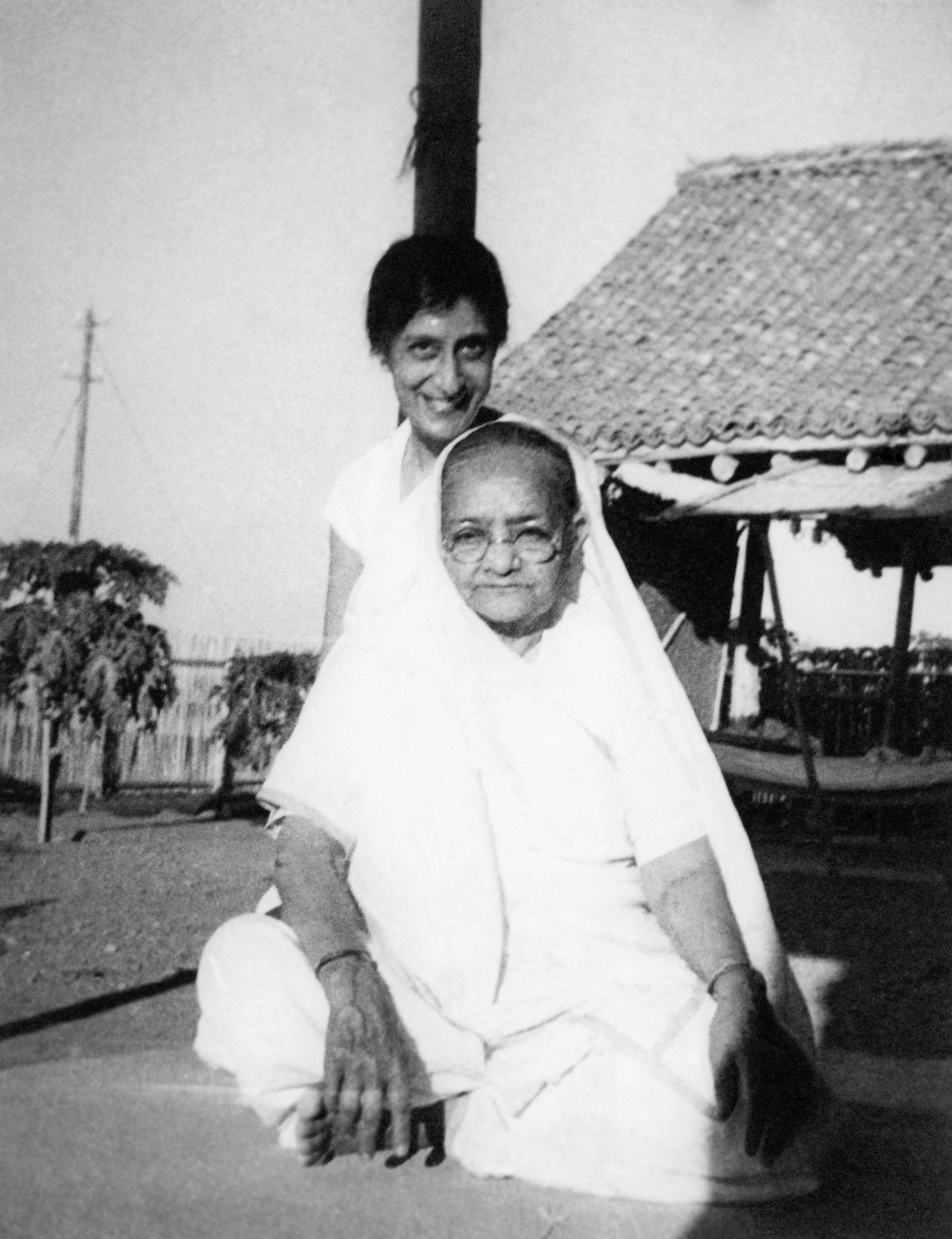
Amrit Kaur and Kasturba Gandhi
Kasturba Gandhi (seated, front) and Amrit Kaur (standing, rear) at Sevagram Ashram, circa 1941.
Gandhi (Photographer)
Published on
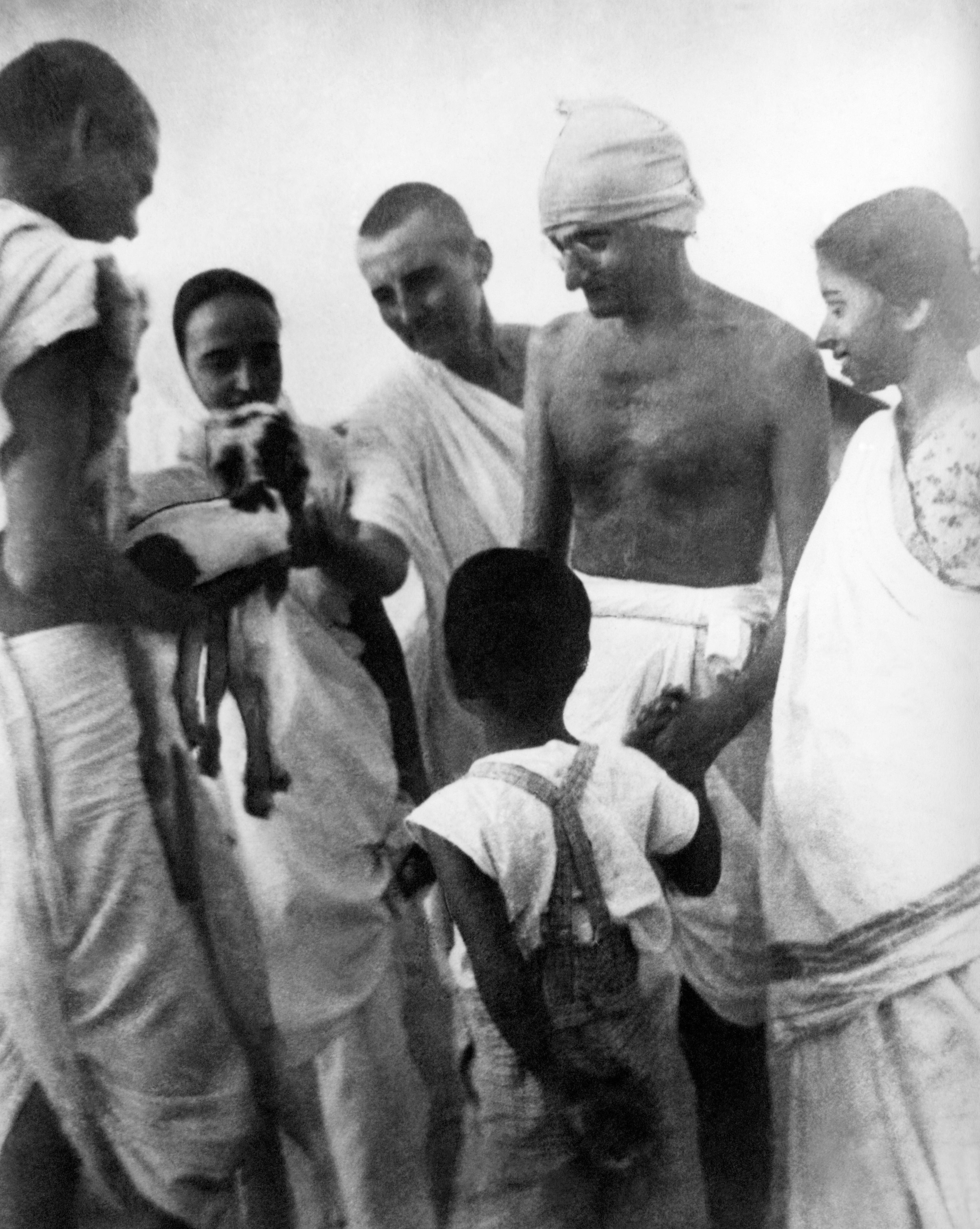
Celebrating baby goats
Celebrating the birth of goats at Sevagram Ashram, circa 1938. Gandhi holds hands with his grandson, Kahandas Gandhi. Mirabehn pets the goats;
Gandhi (Photographer)
Published on
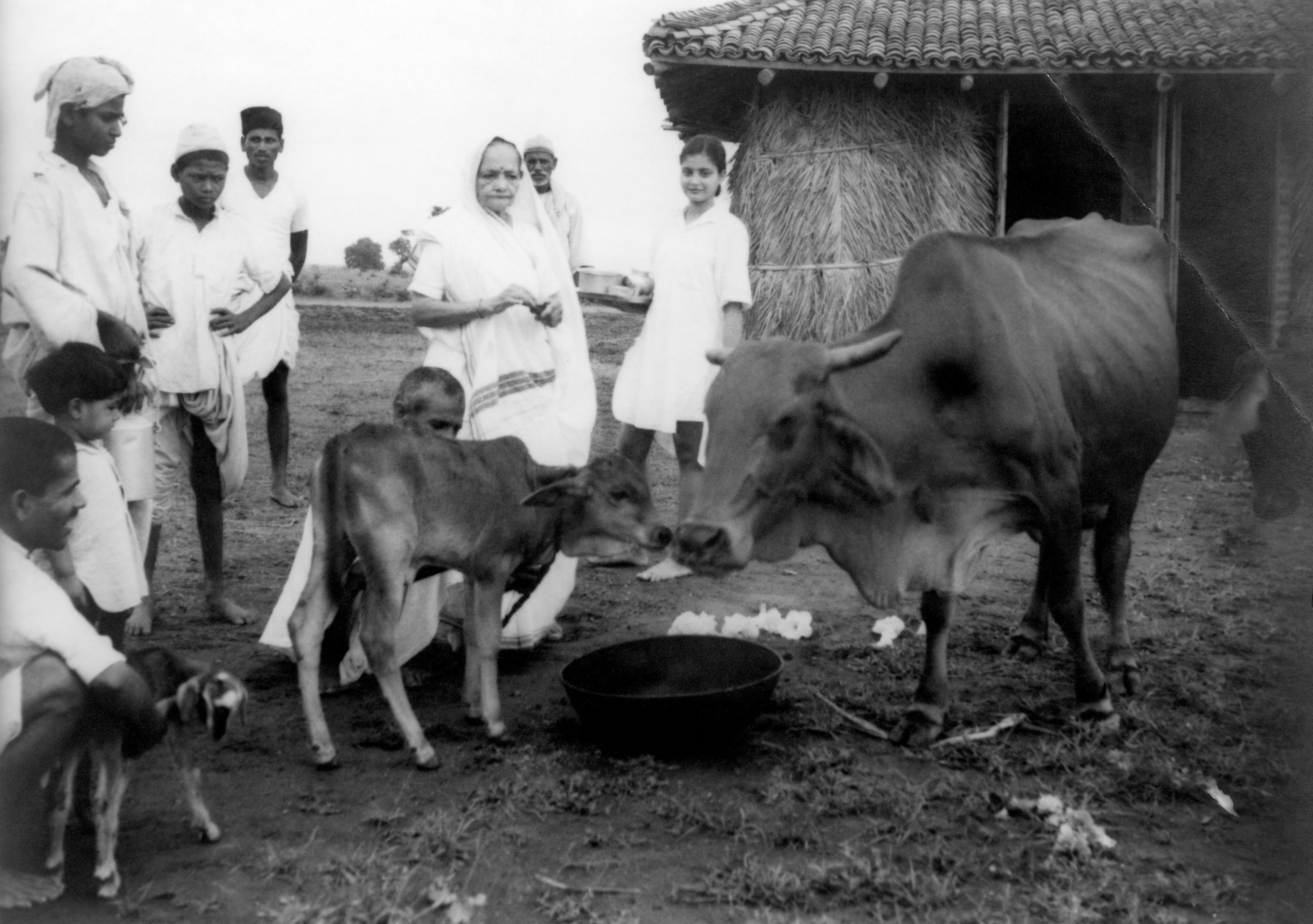
Feeding cows
Residents feeding cows at Sevagram Ashram, circa 1940. Pictured at the center is Kasturba Gandhi, with Abha Gandhi to her left.
Gandhi (Photographer)
Published on
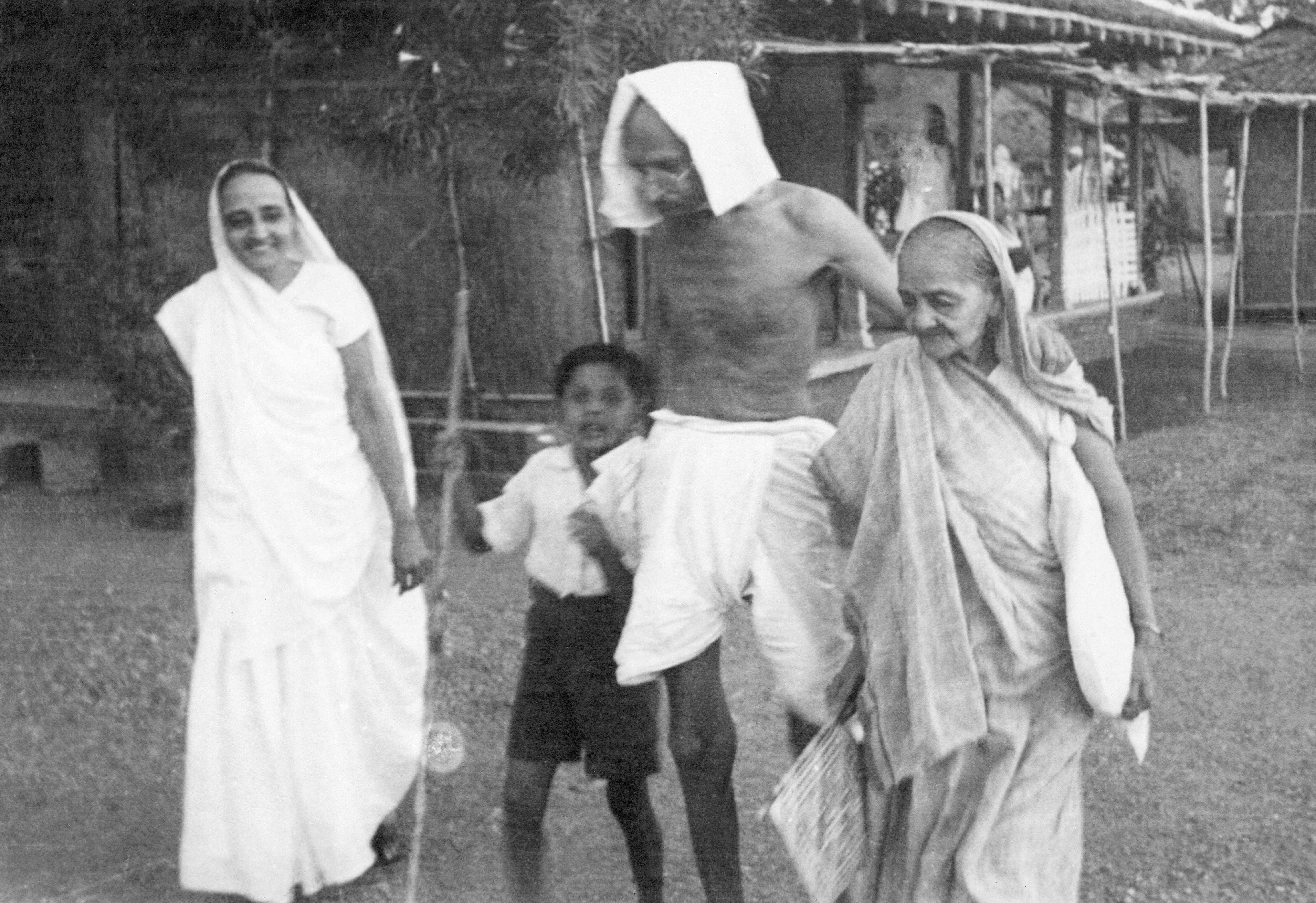
Gandhi walking with Kasturba Gandhi and grandson
Gandhi walking at Sevagram Ashram with his wife, Kasturba Gandhi (on his left), and his grandson (on his right). Also depicted is Nirmala Gandhi (
Published on
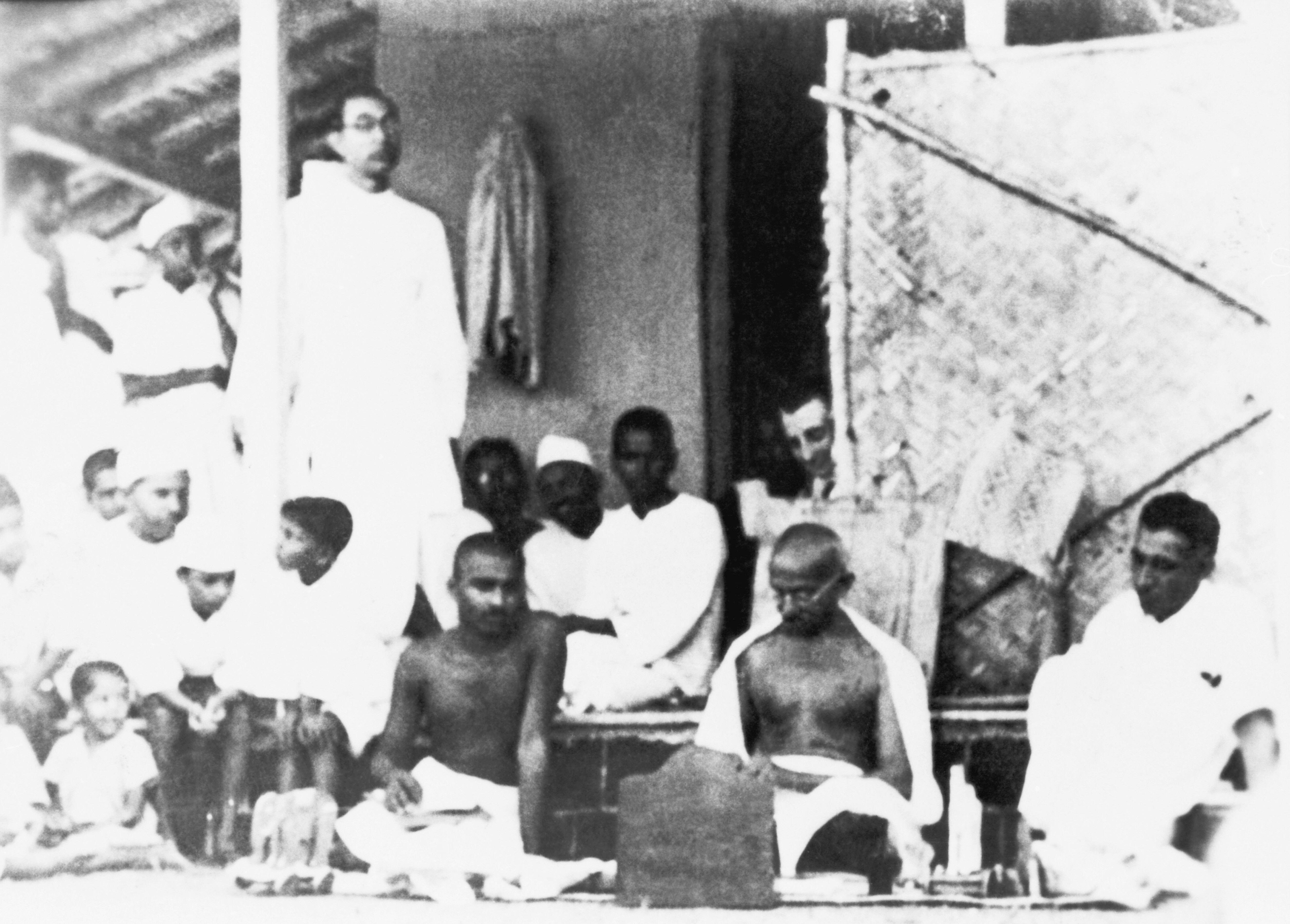
Celebrating Gandhi's birthday
Celebrating Gandhi's birthday (October 2) at Sevagram Ashram in 1938. Kanu Gandhi is seated in the center next to Gandhi; Pyarelal Nayar stands on
Published on
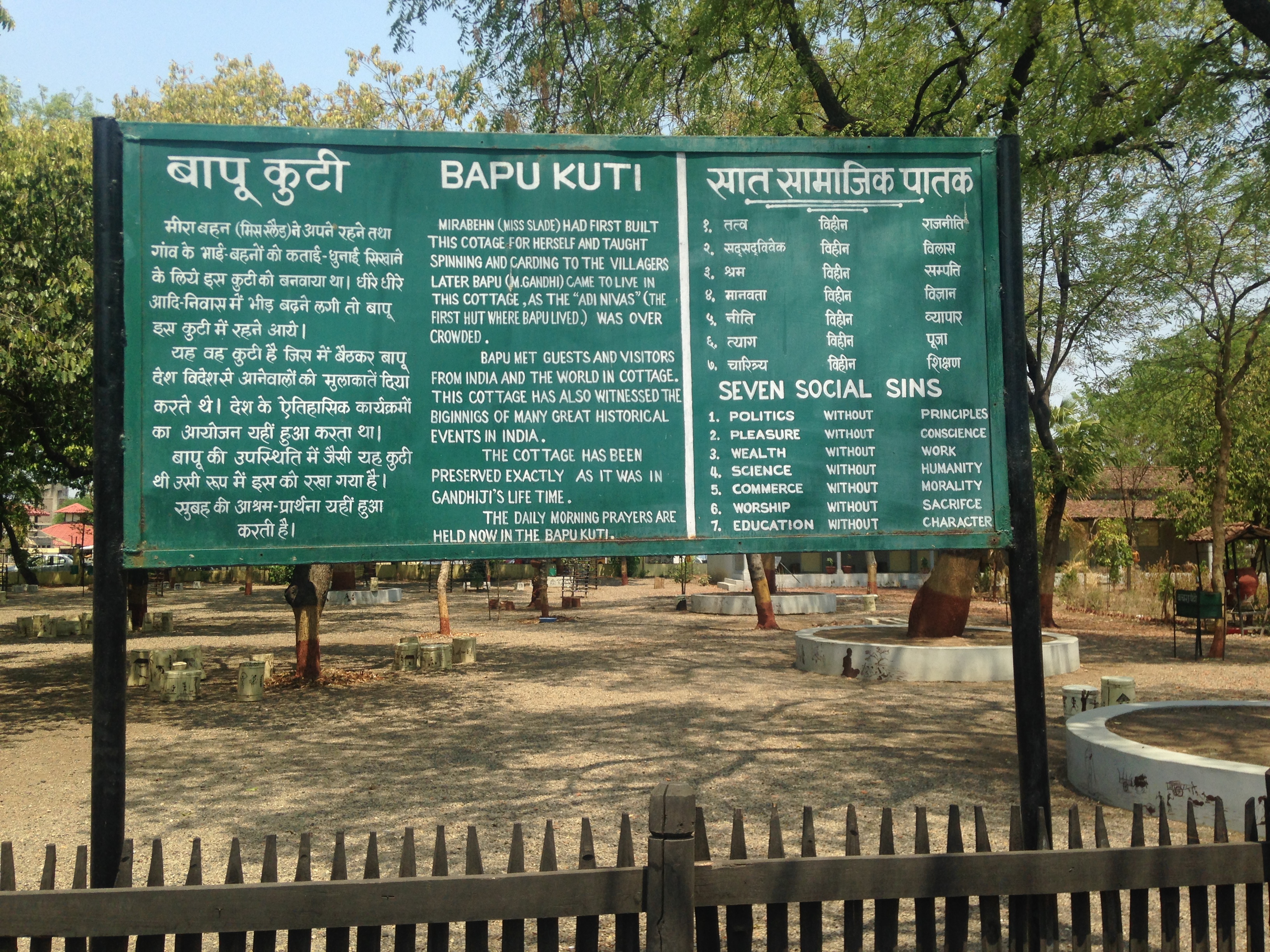
Bapu Kuti sign
"Bapu Kuti" sign at Sevagram Ashram. This sign explains the significance of "Bapu Kuti" as Gandhi's residence at Sevagram Ashram, emphasizing that
McLain (Photographer)
Published on
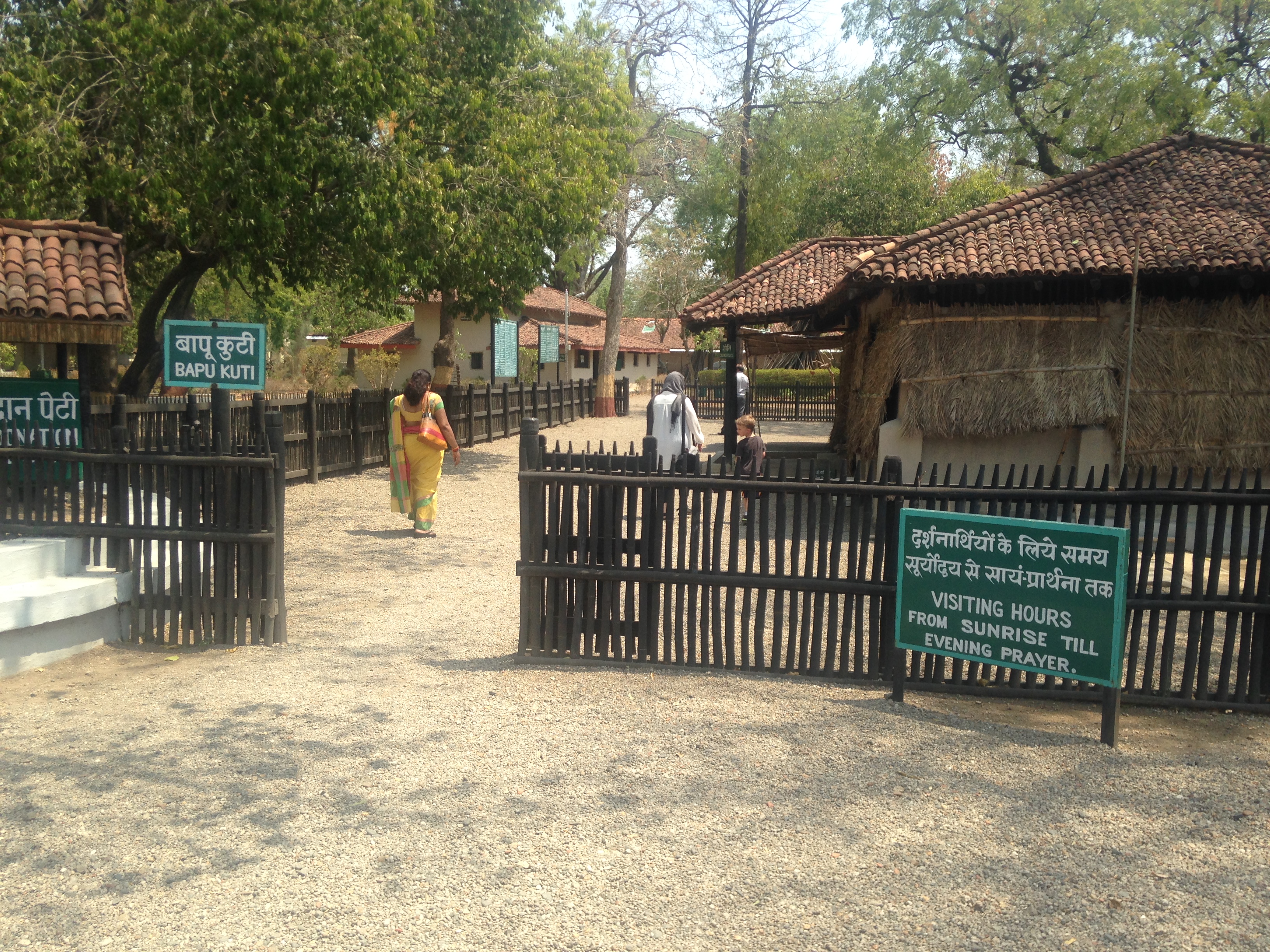
Bapu Kuti exterior 2
Exterior of "Bapu Kuti," Gandhi's Cottage at Sevagram Ashram.
McLain (Photographer)
Published on

Bapu Kuti interior 1
The main living space inside "Bapu Kuti," Gandhi's cottage at Sevagram Ashram.
McLain (Photographer)
Published on

Bapu Kuti interior 2
Interior wall of "Bapu Kuti," Gandhi's cottage at Sevagram Ashram. Gandhi admired the palm trees and the "Om" symbol that Mirabehn molded by hand
McLain (Photographer)
Published on

Bapu Kuti interior 3
The septic toilet inside "Bapu Kuti," Gandhi's cottage at Sevagram Ashram. Work to build earthen latrines and compost waste material was part of
McLain (Photographer)
Published on

Parchure Kuti sign
The sign at "Parchure Kuti," the home of Parchure Shastri at Sevagram Ashram. Parchure Shastri was a coresident and Sanskrit scholar who was
McLain (Photographer)
Published on

Parchure Kuti
"Parchure Kuti," the home of Parchure Shastri at Sevagram Ashram. Parchure Shastri was a coresident and Sanskrit scholar who was stricken with
McLain (Photographer)
Published on

Prayer Ground
The prayer ground at Sevagram Ashram. The community members gathered here in the morning and evening for ecumenical prayers together, and for
McLain (Photographer)
Published on


Dining Hall
The communal dining hall at Sevagram Ashram. Community members ate simple vegetarian meals together here, and were expected to take turns
McLain (Photographer)
Published on

Akhiri Niwas
"Akhiri Niwas," the final house that Gandhi lived in at Sevagram Ashram. It was initially used as a medical center for the local villagers, to
McLain (Photographer)
Published on

Snake cage
The long tongs used to capture poisonous snakes at Sevagram Ashram, and the wooden cage they were place in to hold for removal and release at a
McLain (Photographer)
Published on

Rustam Bhavan
"Rustam Bhavan," the original four-room guest house at Sevagram Ashram. The guest house was built to accommodate overnight stays by Indian
McLain (Photographer)
Published on

Nai Talim
"Nai Talim," the basic education center at Sevagram Ashram. Gandhi and the coresidents at Sevagram Ashram were invested in developing an
McLain (Photographer)
Published on

Yatri Niwas tourism sign
Sign at "Yatri Niwas," the tourist accommodation area, at Sevagram Ashram. In an effort to increase tourism to this heritage site, this area is
McLain (Photographer)
Published on

Exhibition Center
The exhibition center / museum in the "Yatri Niwas" (Tourist Accommodation) area at Sevagram Ashram.
McLain (Photographer)
Published on

Gandhi letter to Tolstoy (April 4, 1910)
Letter from Gandhi to Count Leo Tolstoy, April 1910. Gandhi and Tolstoy exchanged a series of letters with one another in 1909-1910. Gandhi and
Published on

Envelope for Gandhi's letter to Tolstoy (April 4, 1910)
Envelope for Gandhi's letter to Count Leo Tolstoy, dated April 1910.
Published on

Tolstoy farmhouse
The farmhouse that Hermann Kallenbach and Gandhi built at Tolstoy Farm (no longer extant).
Published on

Tolstoy Farm museum
The new museum building at Tolstoy Farm, under construction when this photo was taken in 2023.
Lyons (Photographer)
Published on

Tolstoy Farm entry
The entry to the historic Tolstoy Farm site and new museum.
McLain (Photographer)
Published on

Tolstoy Farm hill
White stones spelling "Gandhi Tolstoy Farm" to mark the historic site of Tolstoy Farm.
Lyons (Photographer)
Published on