
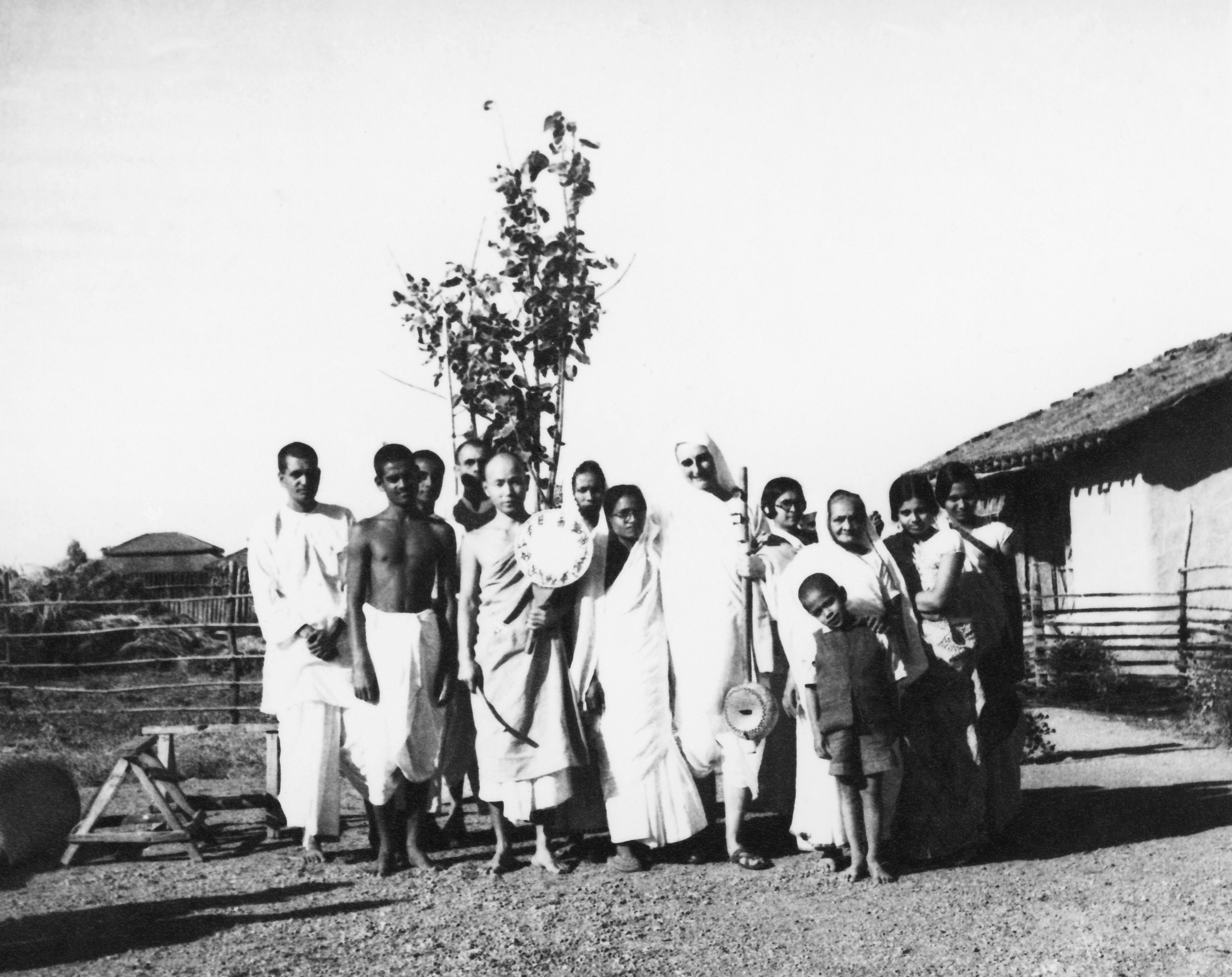
Early residents
Some of the early residents of Sevagram Ashram, circa 1938. Among those included in the photo are Kasturba Gandhi (3rd from right) with her
Gandhi (Photographer)
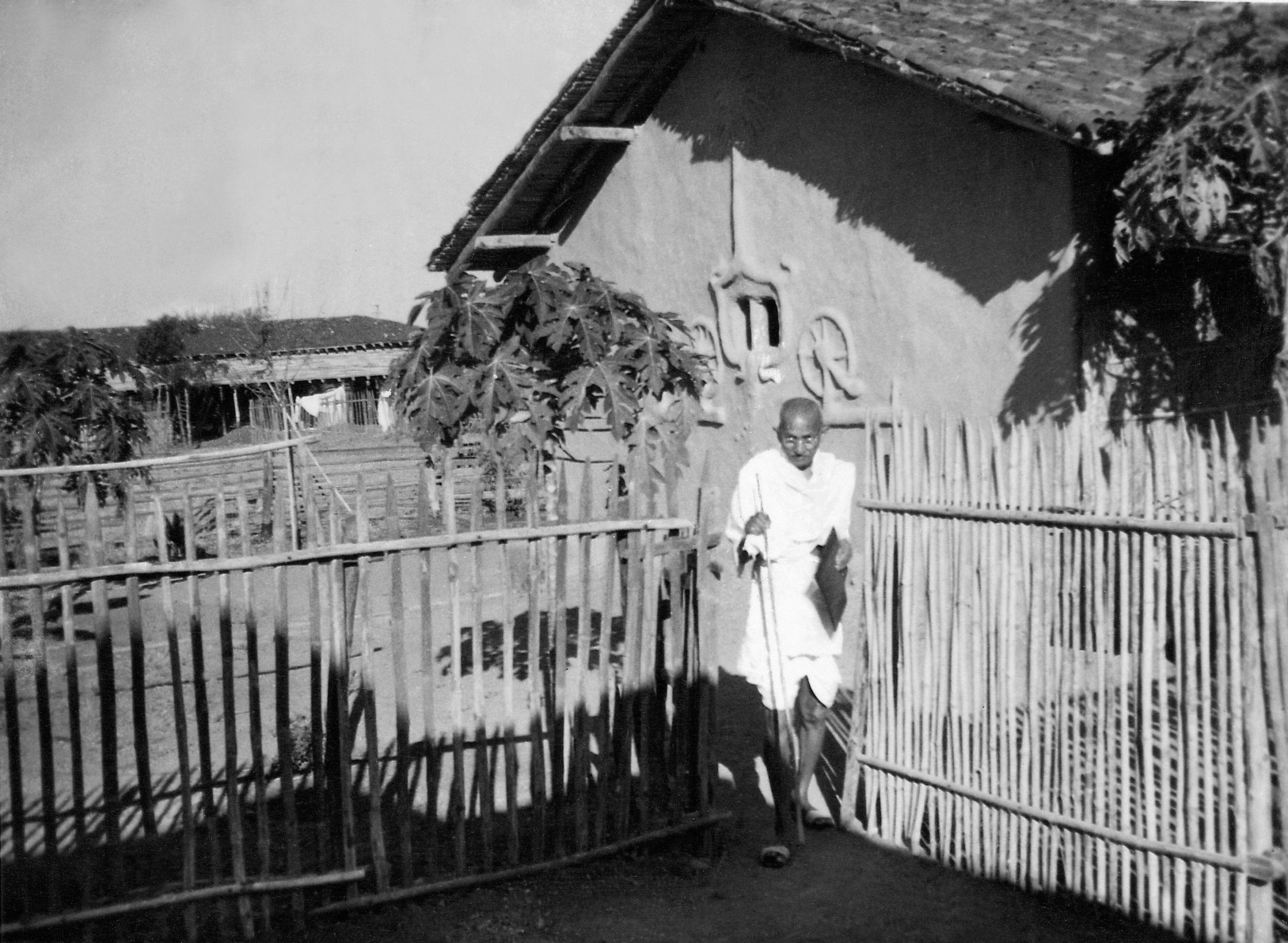
Gandhi at Bapu Kuti
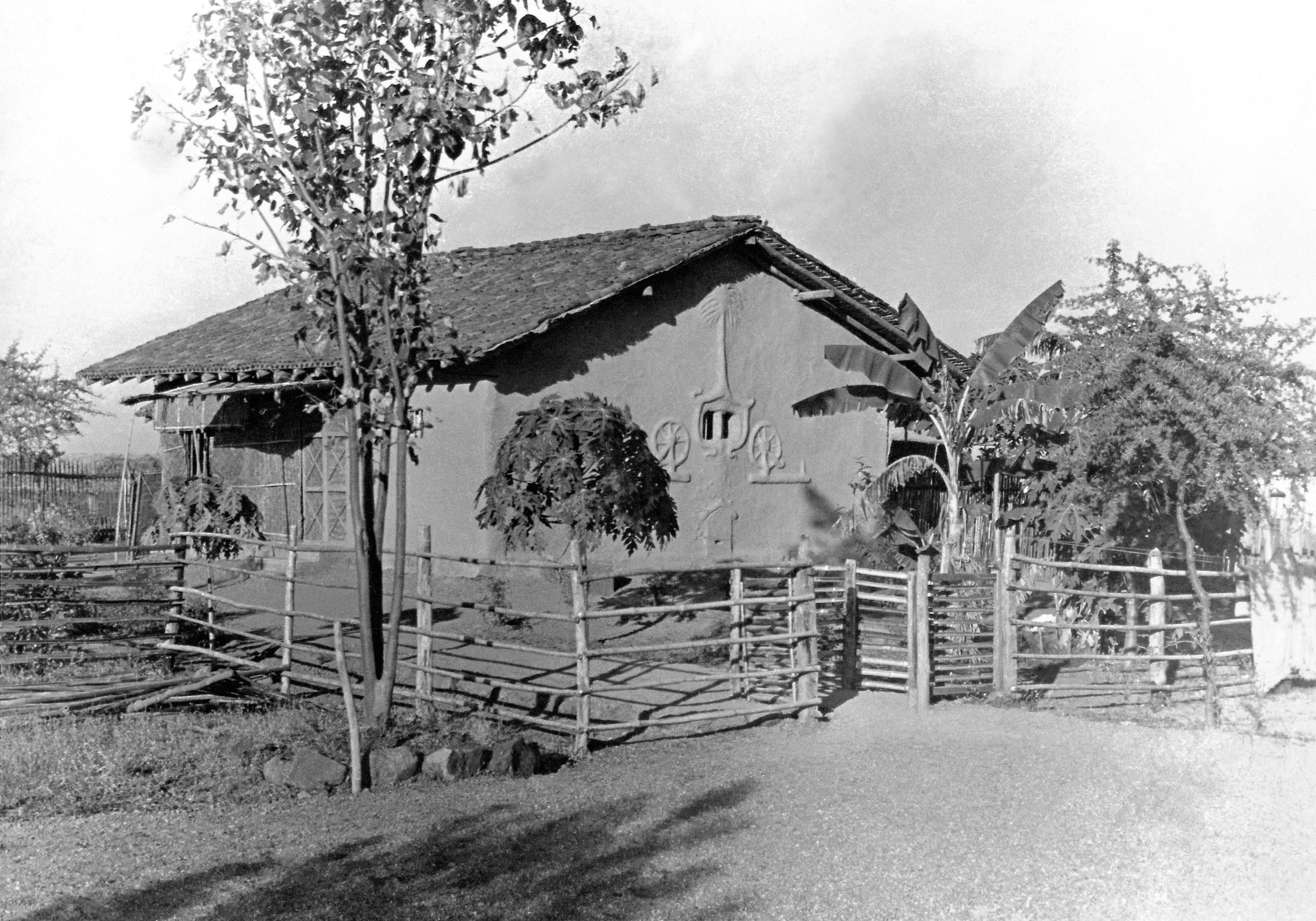
Gandhi in front of his hut at Sevagram Ashram, circa 1941. The hut is called "Bapu Kuti," and was originally built by Mirabehn. Gandhi greatly
Gandhi (Photographer)
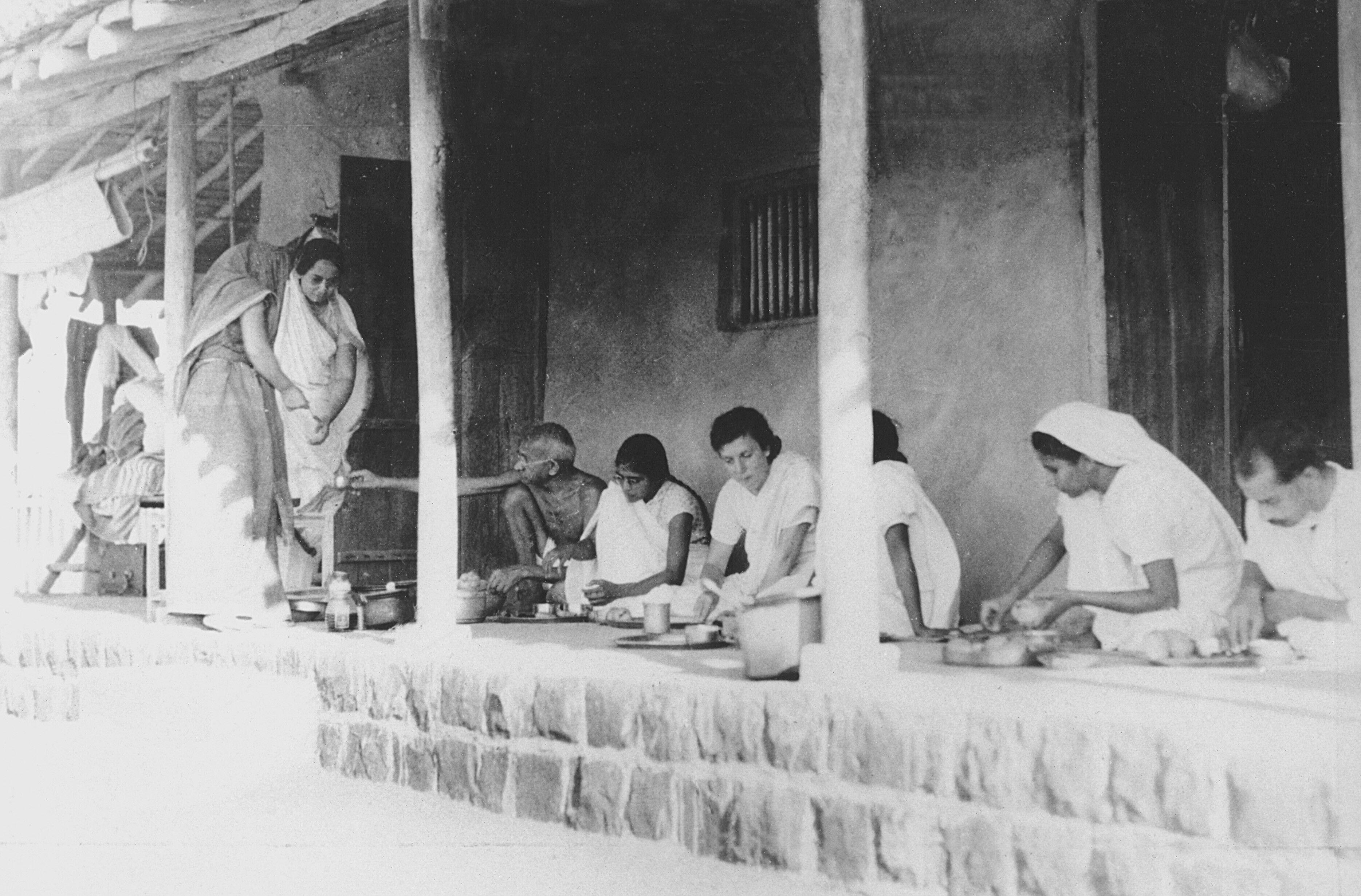
Gandhi eating with coresidents
Gandhi and coresidents eating together at Sevagram Ashram. Seated next to Gandhi is Abha Gandhi, and Sarlabehn is seated next to Abha. In nice
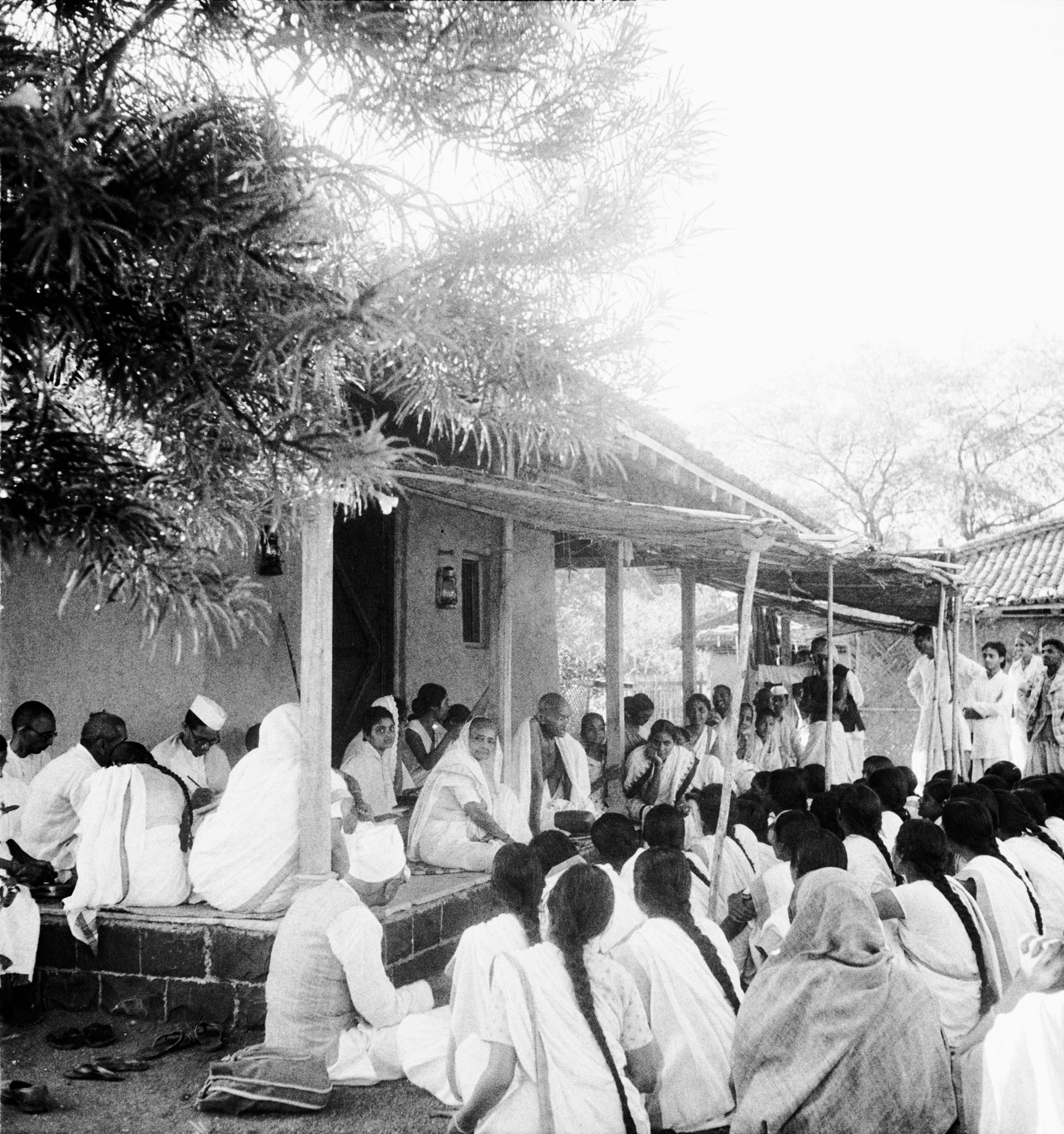
Gandhi and Kasturba Gandhi speaking to coresidents
Gandhi and Kasturba speaking with coresidents at Sevagram Ashram, circa 1940. Seated to the left of Kasturba is Abha Gandhi.
Gandhi (Photographer)
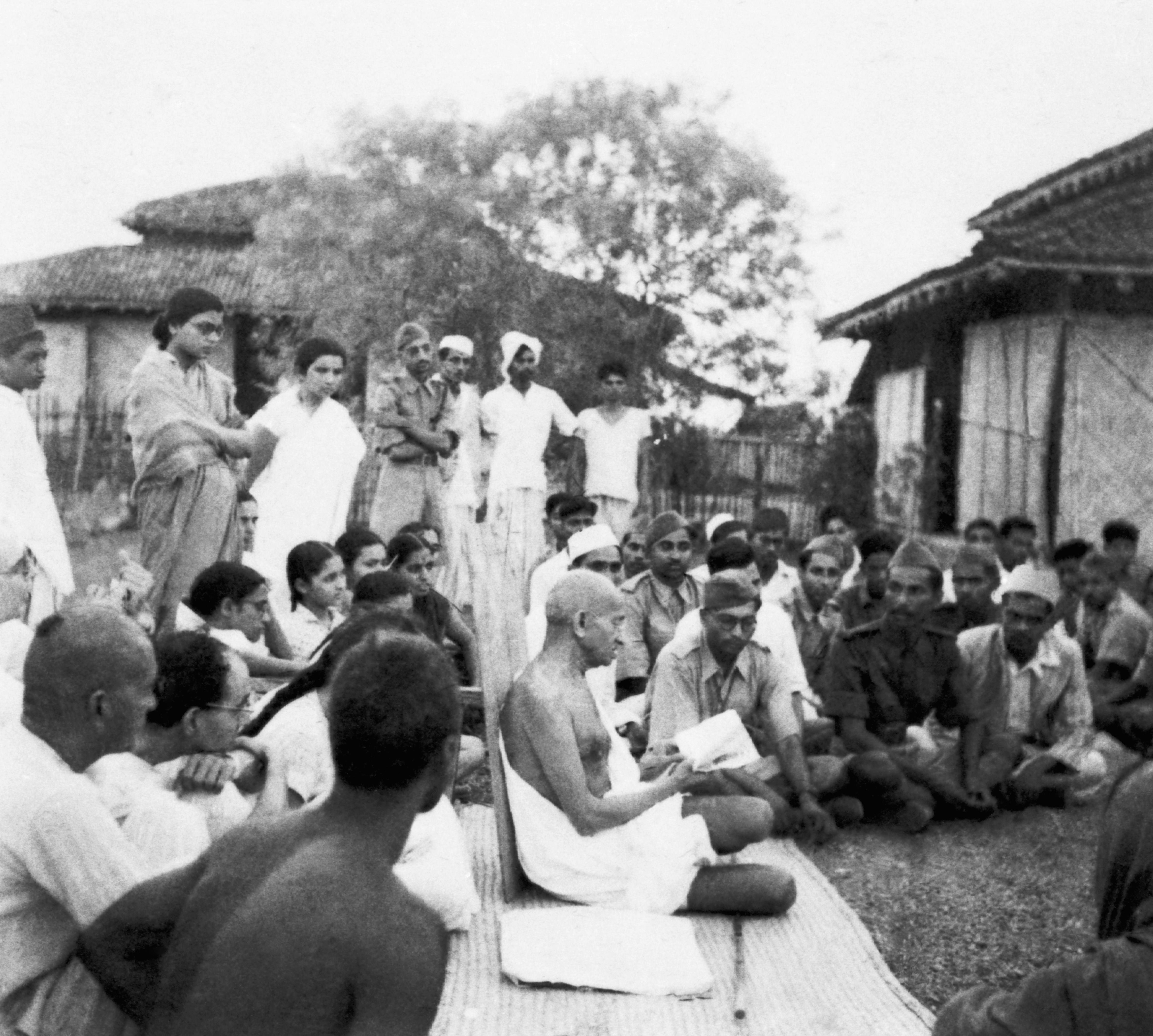
Gandhi teaching at Sevagram Ashram
Gandhi teaching visitors and coresidents at Sevagram Ashram, circa 1939. Also depicted is Pyarelal Nayar.
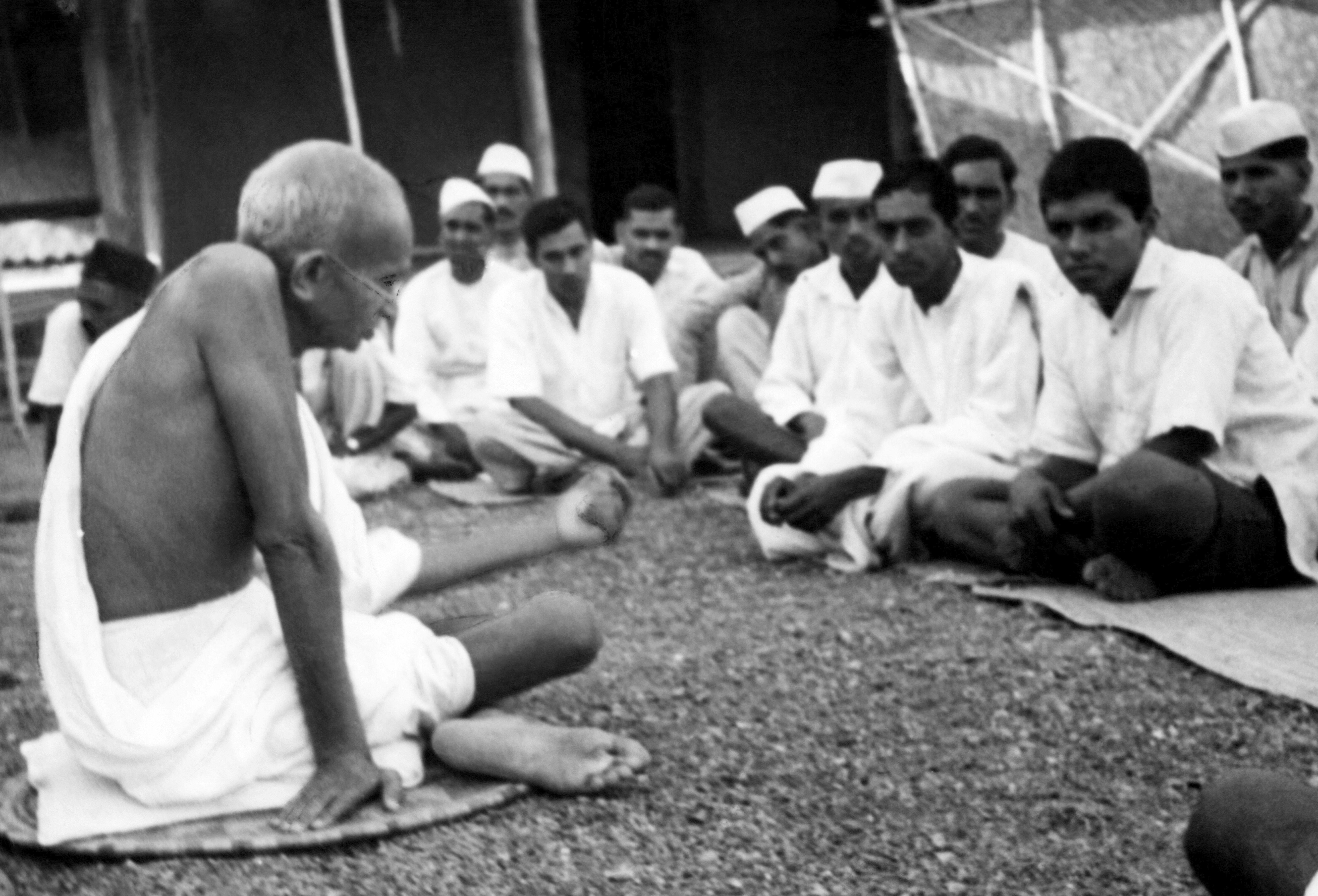
Gandhi teaching Dalits (Harijans) at Sevagram Ashram
Gandhi teaching Dalits ("untouchables" or Harijans) at Sevagram Ashram, 1940. The village where Sevagram Ashram was located had a majority Dalit
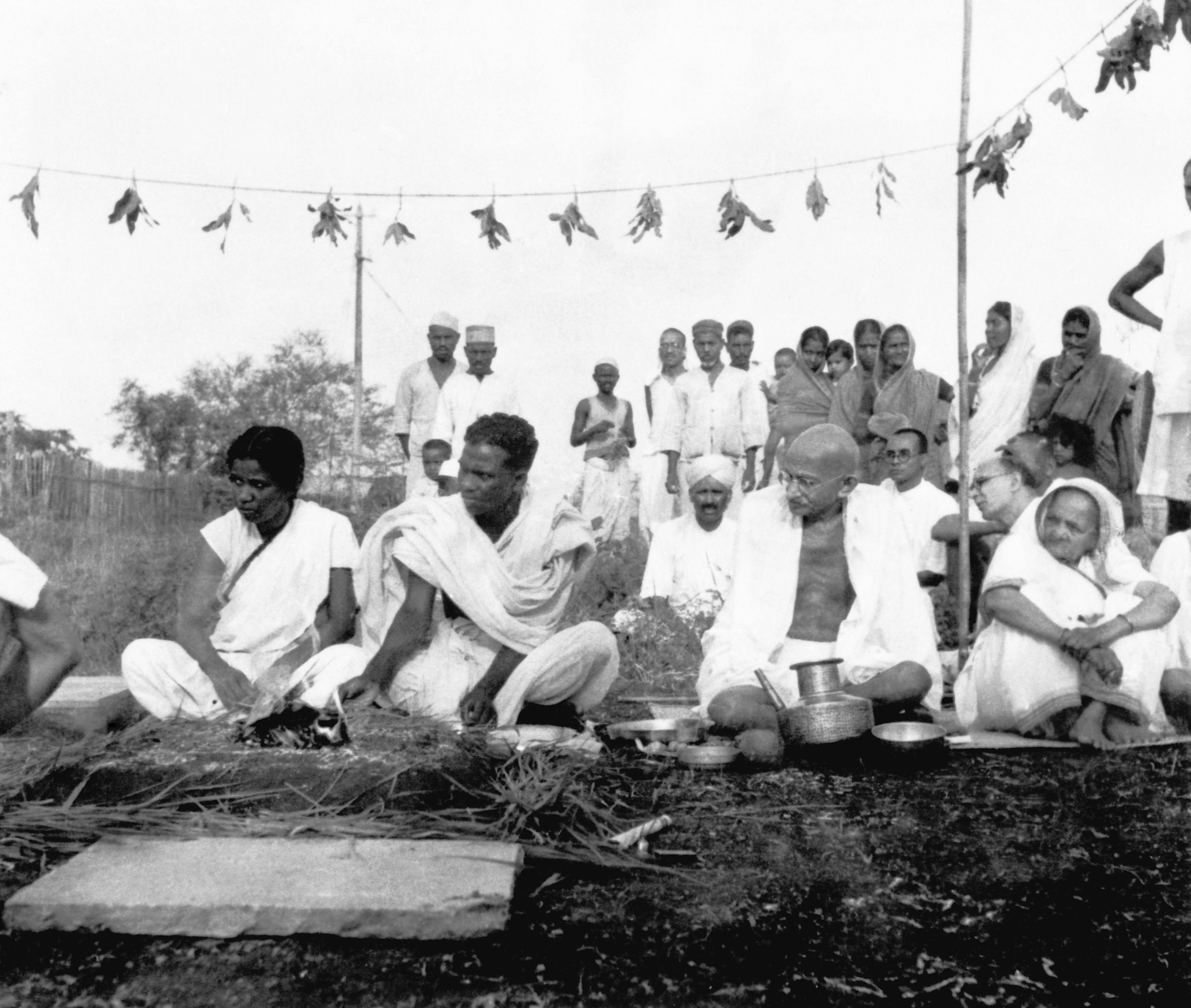
Interfaith and intercaste wedding at Sevagram Ashram
This photograph documents the wedding of Dakshayani, a Hindu Dalit (Pulayar caste) woman, and Velayudhan, a Christian Dalit (Ezhava caste) man.
Gandhi (Photographer)
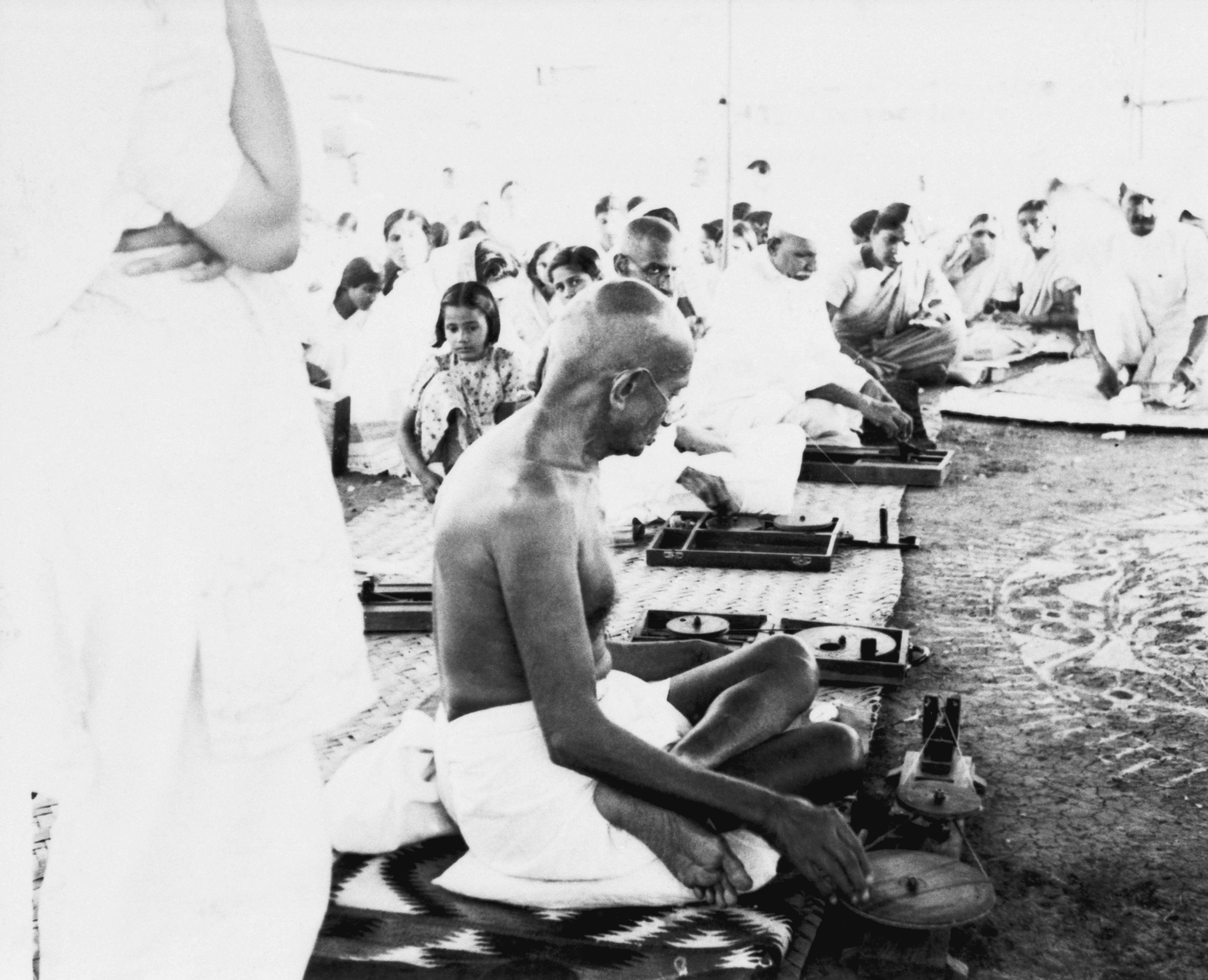
Gandhi teaching spinning at Sevagram Ashram
Gandhi teaching spinning to visitors at Sevagram Ashram, circa 1945. Here Gandhi is providing instruction on how to use a type of portable
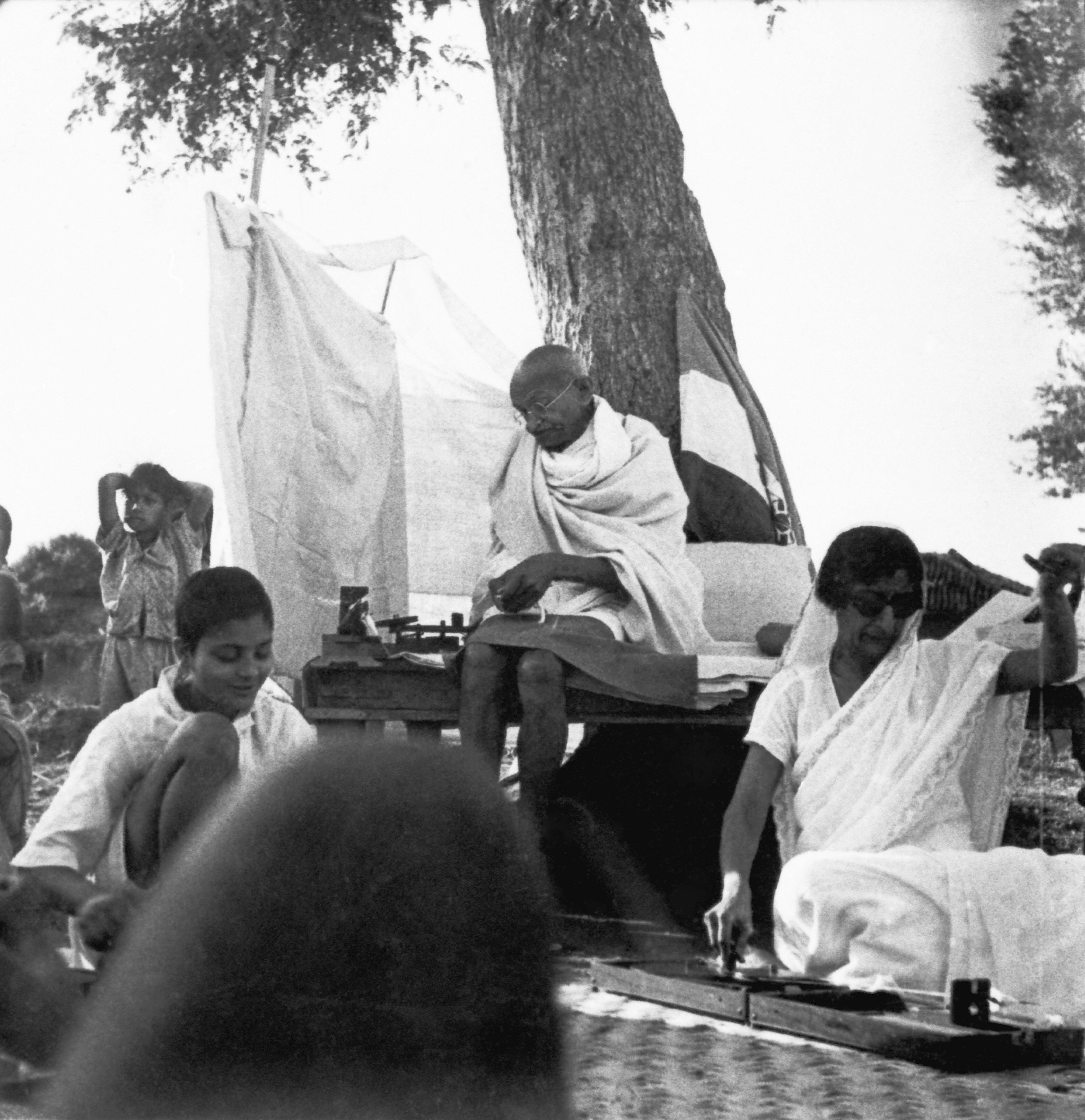
Gandhi and Amrit Kaur spinning
Gandhi and Amrit Kaur spinning. At Sevagram Ashram, circa 1941. Gandhi sits on the bench, and Amrit Kaur is seated on the ground (wearing