
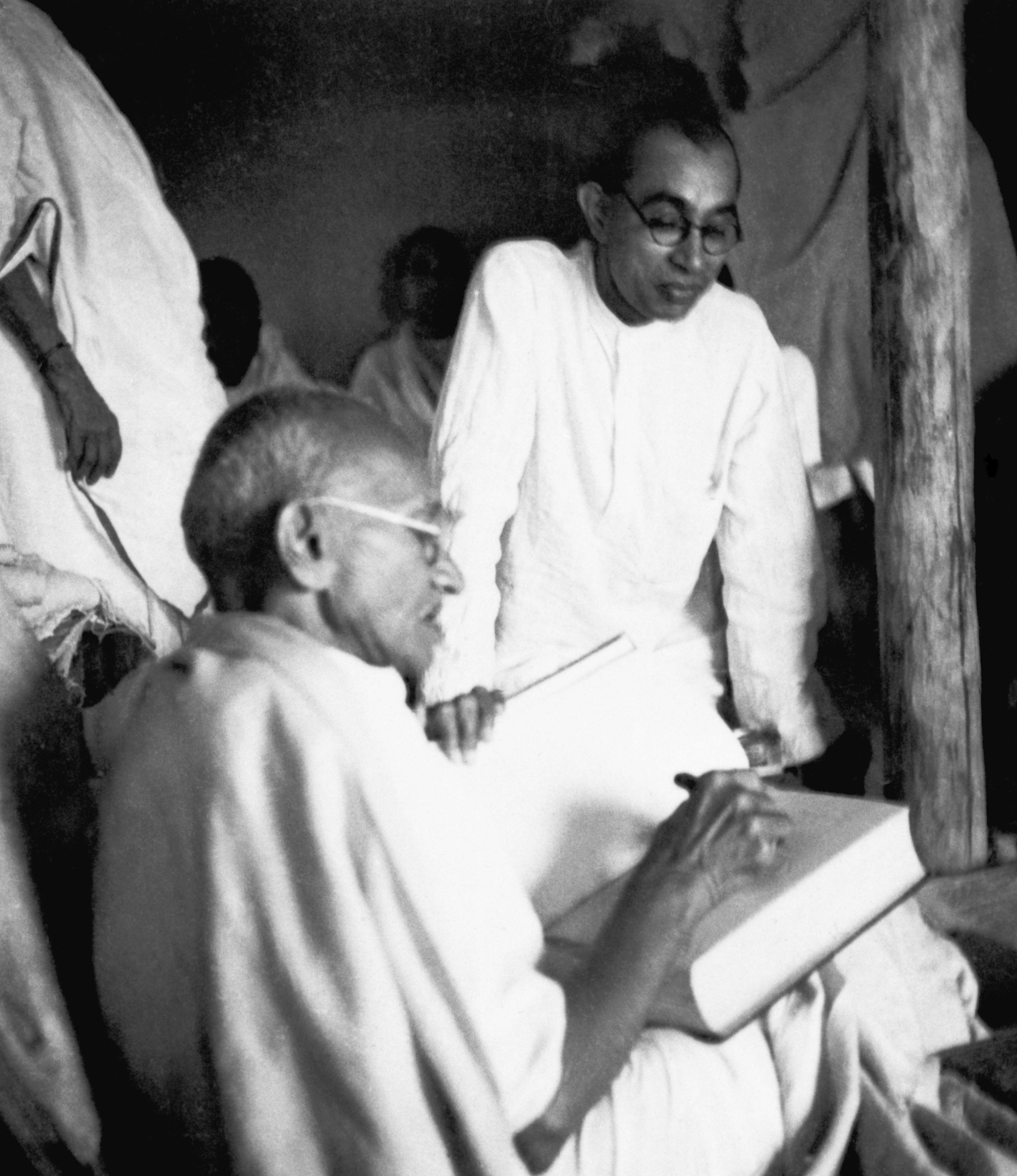
Gandhi and Pyarelal Nayar
Pyarelal Nayar with Gandhi, in Gandhi's hut at Sevagram Ashram, circa 1939.
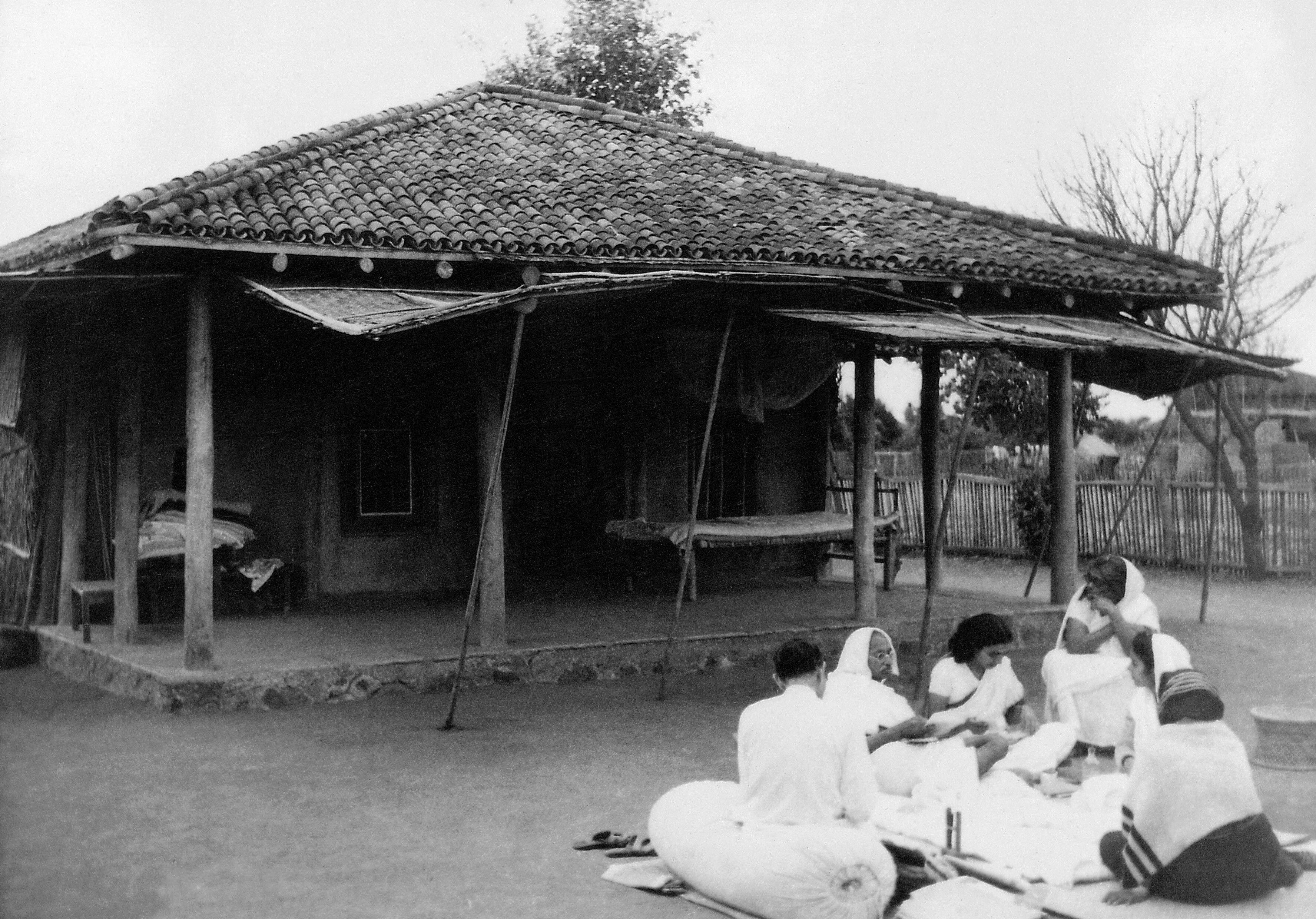
Gandhi seated with coresidents
Gandhi seated with coresidents in front of his hut at Sevagram Ashram, circa 1939. Sushila Nayar is seated to Gandhi's left.
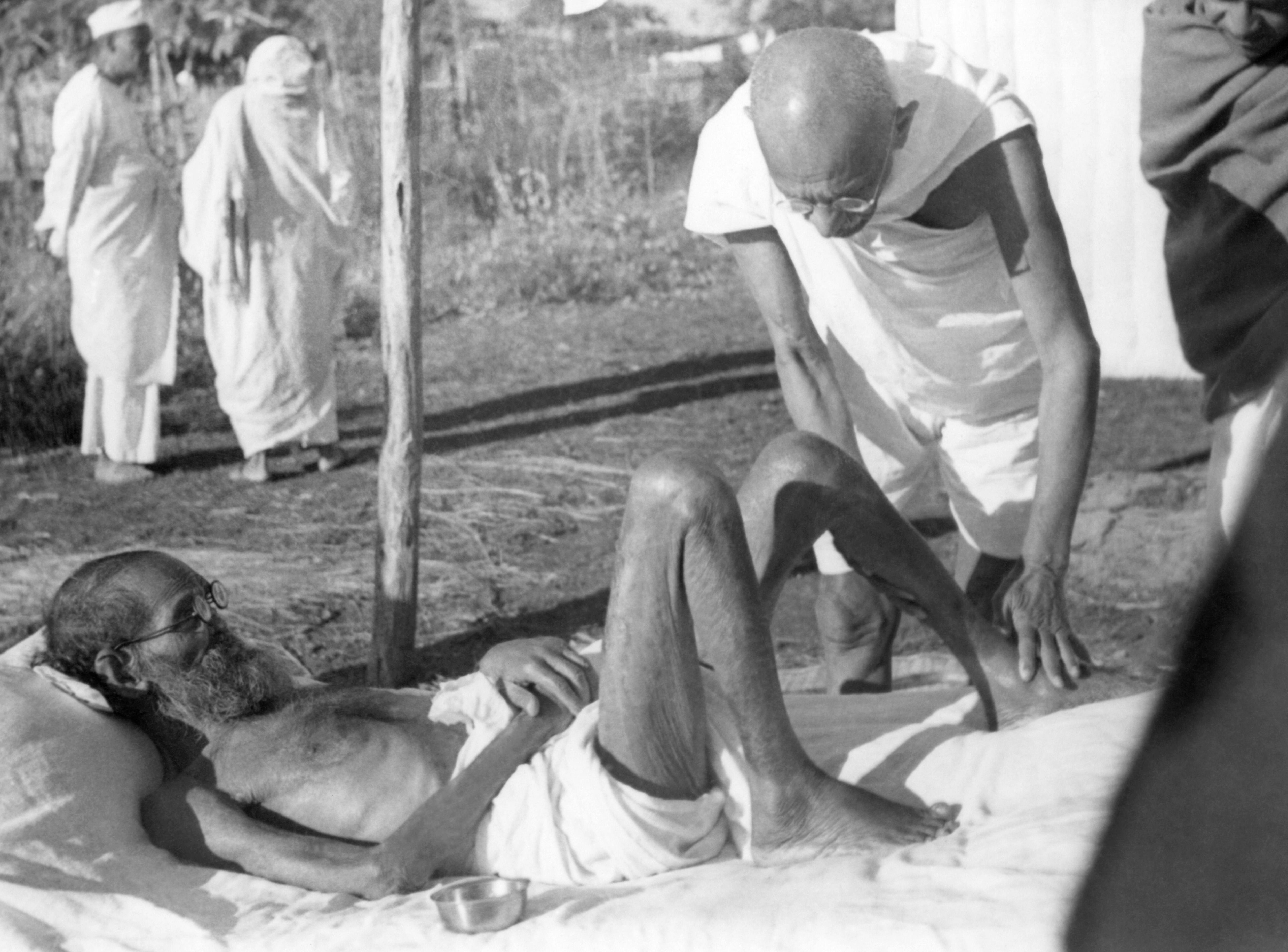
Gandhi attending to Parchure Shastri
Gandhi attending to Parchure Shastri at Sevagram Ashram, 1939. Parchure Shastri was stricken with leprosy, and therefore deemed an outcaste by
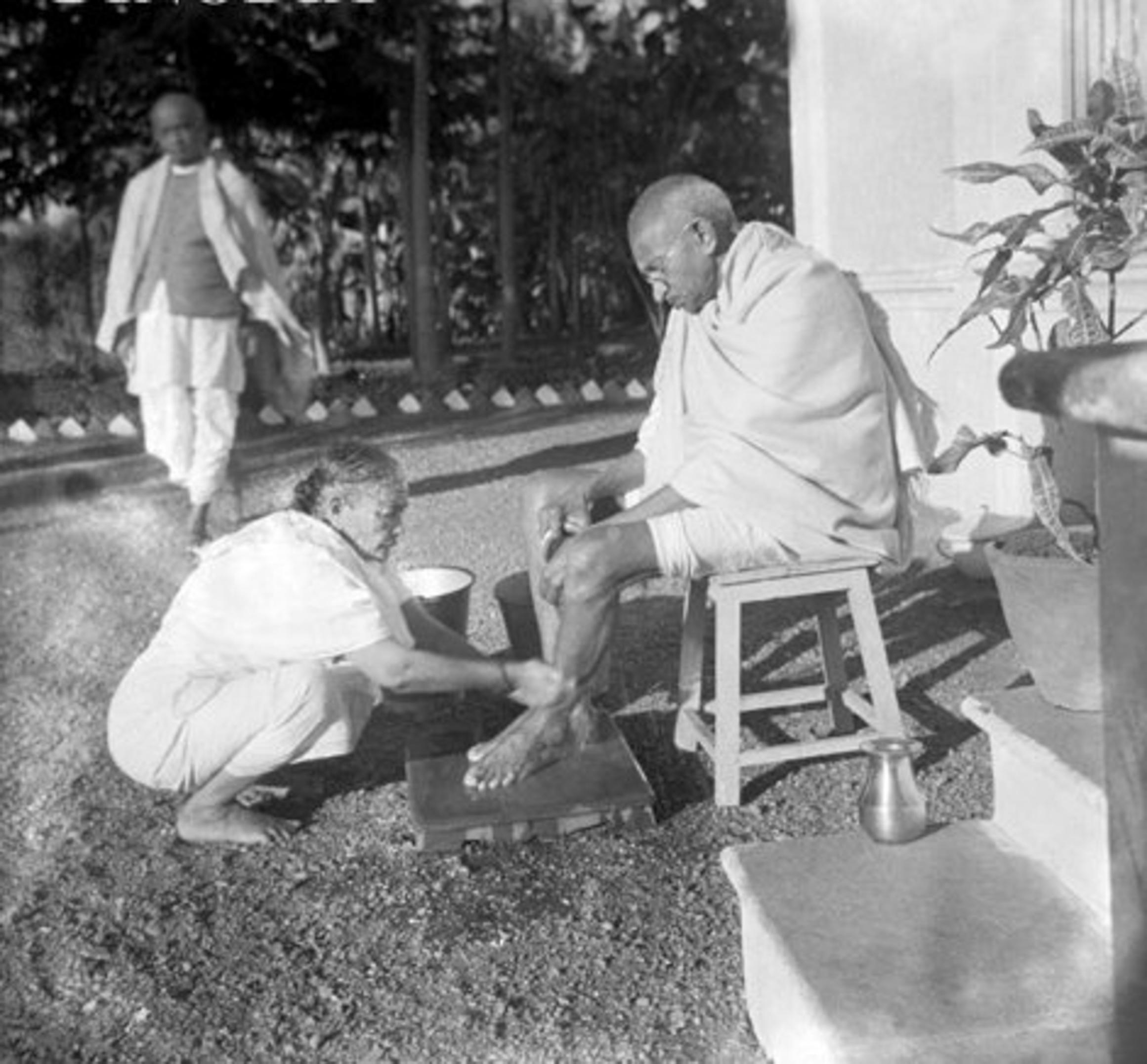
Kasturba Gandhi washing Gandhi's feet
Kasturba Gandhi washing Gandhi's feet, circa 1939. Such bodily service (seva) toward Gandhi was performed by Kasturba and some other
Gandhi (Photographer)

Lilavati Asar washing Gandhi's feet
Lilavati Asar washing Gandhi's feet, circa 1939. Such bodily service (seva
Gandhi (Photographer)

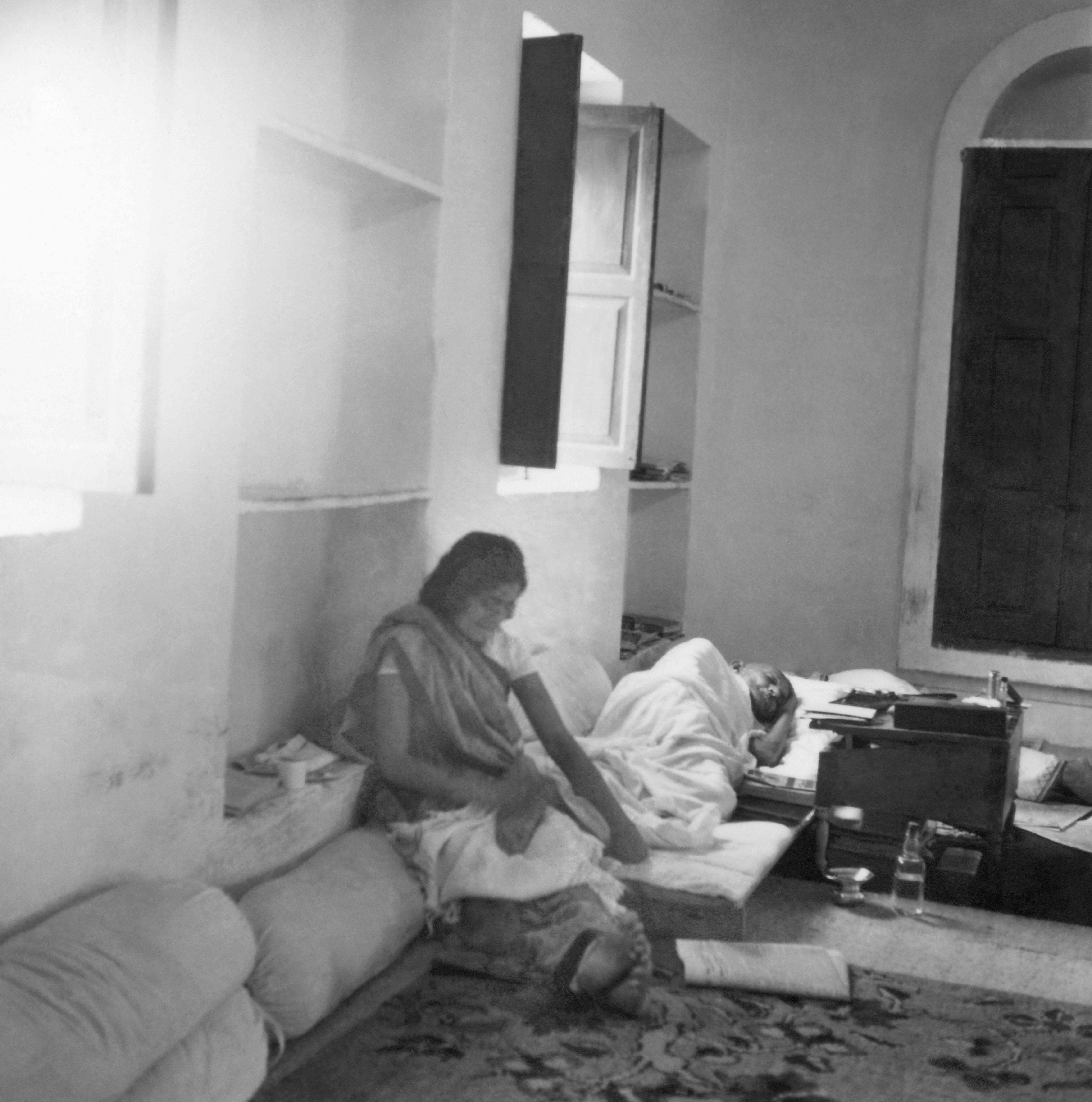
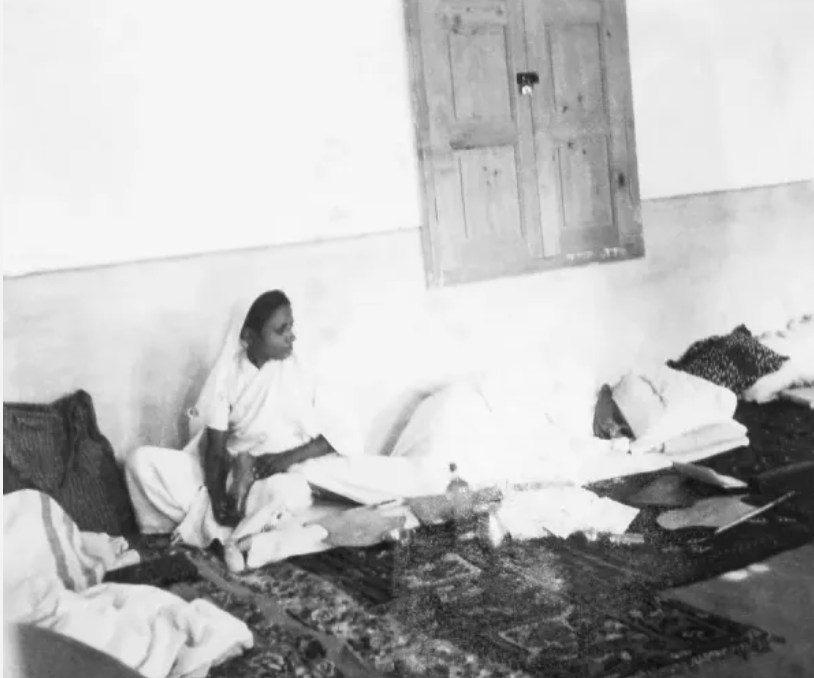
Amtul Salaam giving Gandhi a massage
Amtul Salaam giving Gandhi a massage, circa 1938. Such bodily service (seva
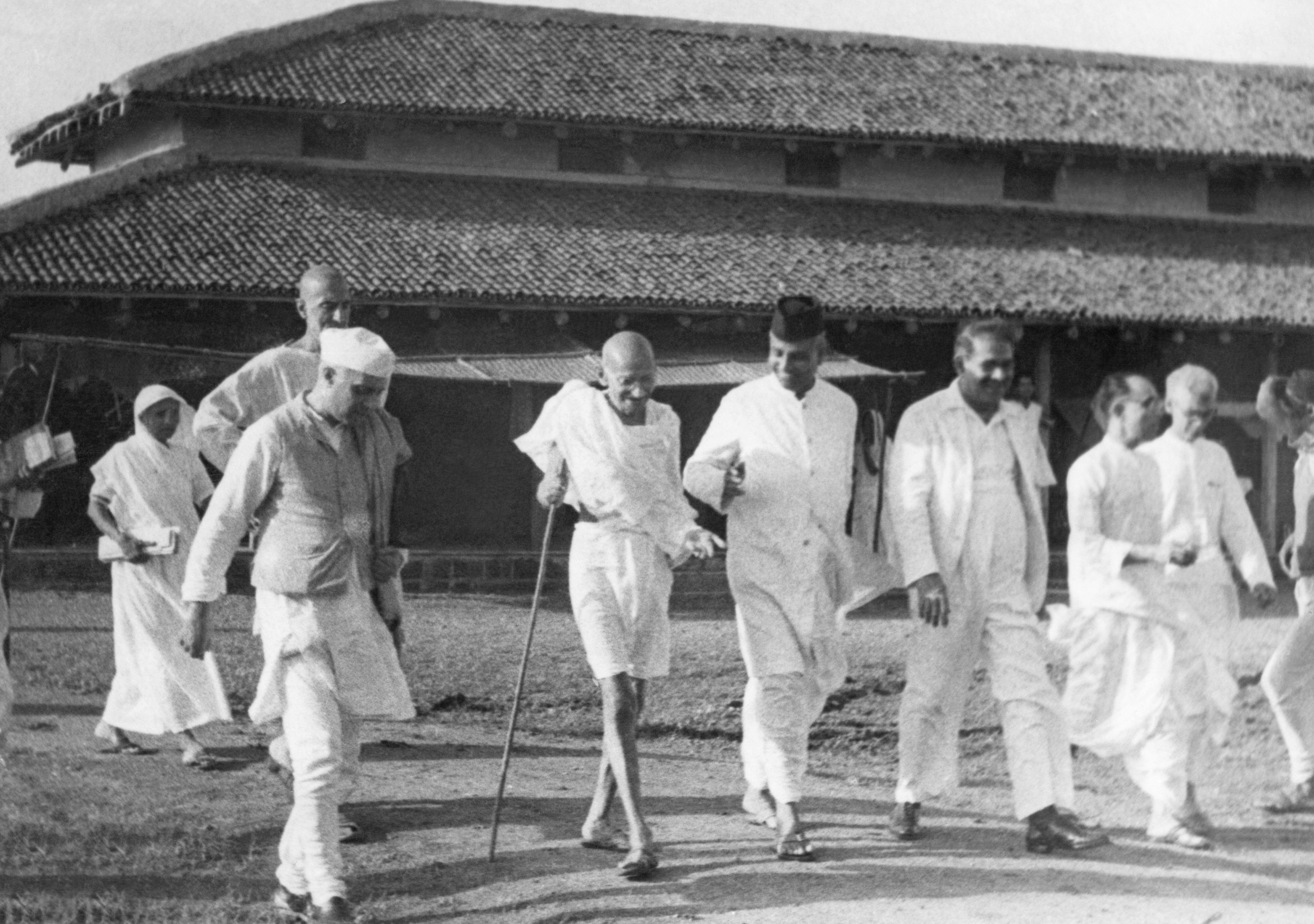
Gandhi with politicians at Sevagram Ashram
Politicians visiting Sevagram Ashram to consult with Gandhi and plan a civil disobedience campaign. Pictured in the photo are: Jawaharlal Nehru (
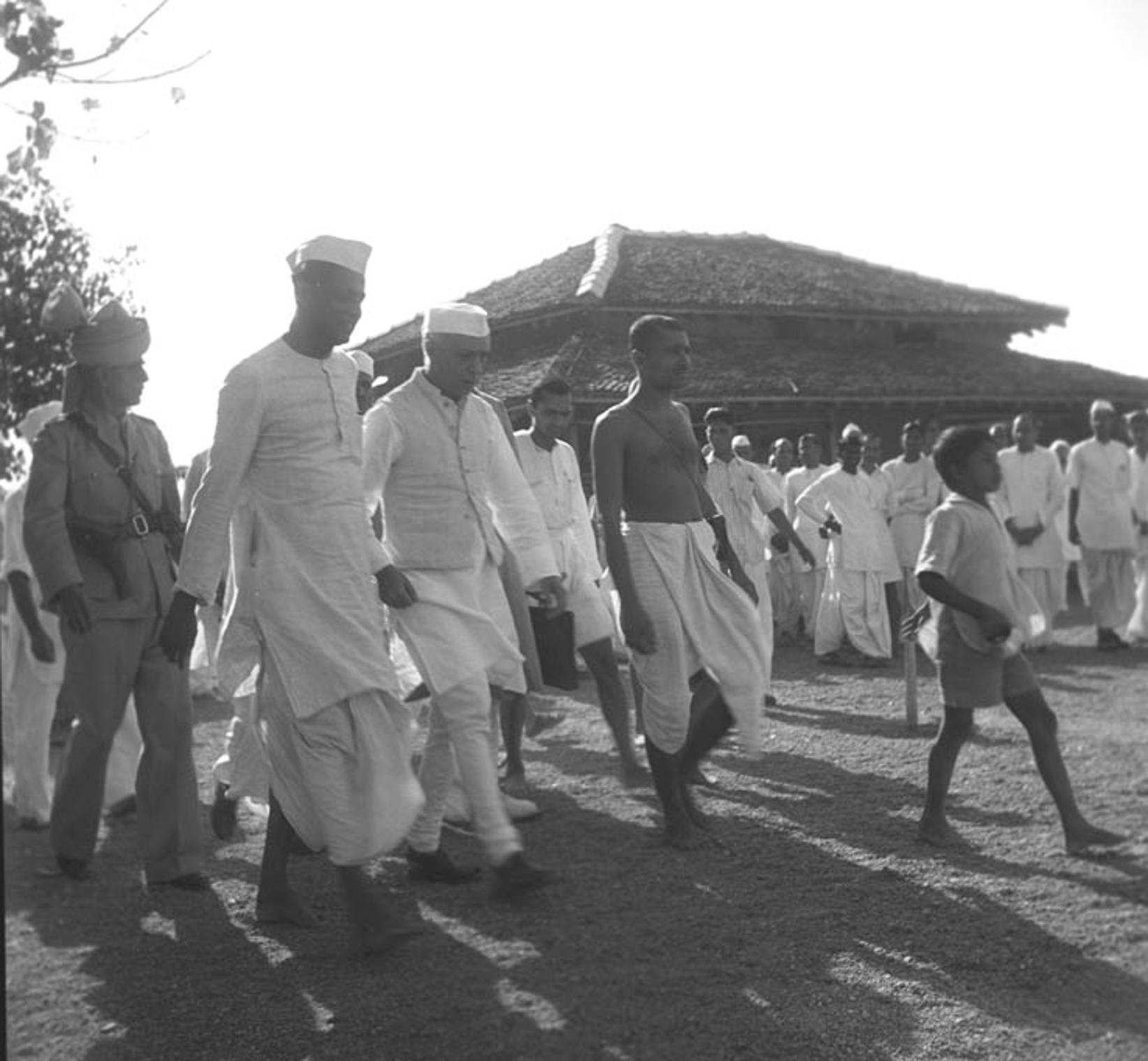
Jawaharlal Nehru visiting Sevagram Ashram
Jawaharlal Nehru and other politicians visit Sevagram Ashram. Jawaharlal Nehru later became the first Prime Minister of independent India.