
Dudabhai Dafda
Dafda, Dudabhai
Description
Dudabhai Dafda
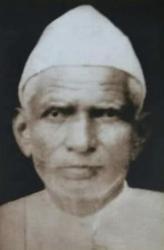
Dudabhai Dafda (1889-1964) was born in Botad, India, into a Dalit (“untouchable”) subcaste known as Dhed that is traditionally associated with the occupation of weaving. Dudabhai broke away from this hereditary occupation, however, through his connection with Thakkar Baba (Amritlal Vithaldas Thakkar). Thakkar Baba was a member of the Servants of India Society, and was working in the state of Gujarat to provide basic education to Dalits as part of a caste reform initiative. Dudabhai was a good student, and Thakkar Baba began to train him to teach basic literacy to other Dalits. When Thakkar Baba learned that Gandhi was founding an intentional community in Gujarat in 1915 (which became Sabarmati Ashram), he immediately recommended Dudabhai Dafda and his family to Gandhi as potential residents.
Gandhi put the recommendation that a Dalit family join the Sabarmati Ashram community up for discussion with his current coresidents, who agreed – after significant debate – to admit the family. Thus Dudabhai, along with his wife Danibehn and their young daughter Lakshmi, joined Sabarmati Ashram in September of 1915. Gandhi wanted to expand educational opportunities for Dalits and women as part of the mission of Sabarmati Ashram, and Dudabhai likely welcomed the opportunity to contribute to this work. Dudabhai and Danibehn may have also welcomed the promise of living as equals in a community committed to abolishing untouchability, and raising their young daughter there. However, after joining Sabarmati Ashram they quickly became aware that there was ongoing debate among the residents about untouchability, and that the community was not entirely free from caste prejudice. For instance, Gandhi notes in his autobiography that he detected the women’s “indifference, if not their dislike, towards Danibehn” and that he pleaded with Dudabhai to “swallow minor insults” and ask his wife to do likewise. Gandhi often recounted a story about Dudabhai’s stoic reaction on an occasion when an upper-caste villager physically assaulted Dudhabhai while he was attempting to draw water from the village well. Gandhi took inspiration from Dudabhai’s silent suffering at the hands of the upper-caste villager, praising Dudabhai’s inner strength, discipline, and commitment to nonviolence, and emphasizing that this sort of brave discipline in the face of injustice is what will eventually melt the heart of the oppressor.
In spite of Gandhi praise, Dudabhai and Danibehn, decided to leave Sabarmati Ashram after living there for less than a year. Four years later, however, they returned to leave Lakshmi – then approximately six years old and ready to begin formal schooling – to be raised and educated by the community, as they returned to Dudabhai’s native village of Botad, where he opened a small school for Dalits. Gandhi and Dudabhai corresponded regularly about Lakshmi as she grew up in Sabarmati Ashram, until her eventual marriage and departure from the community in 1933.