
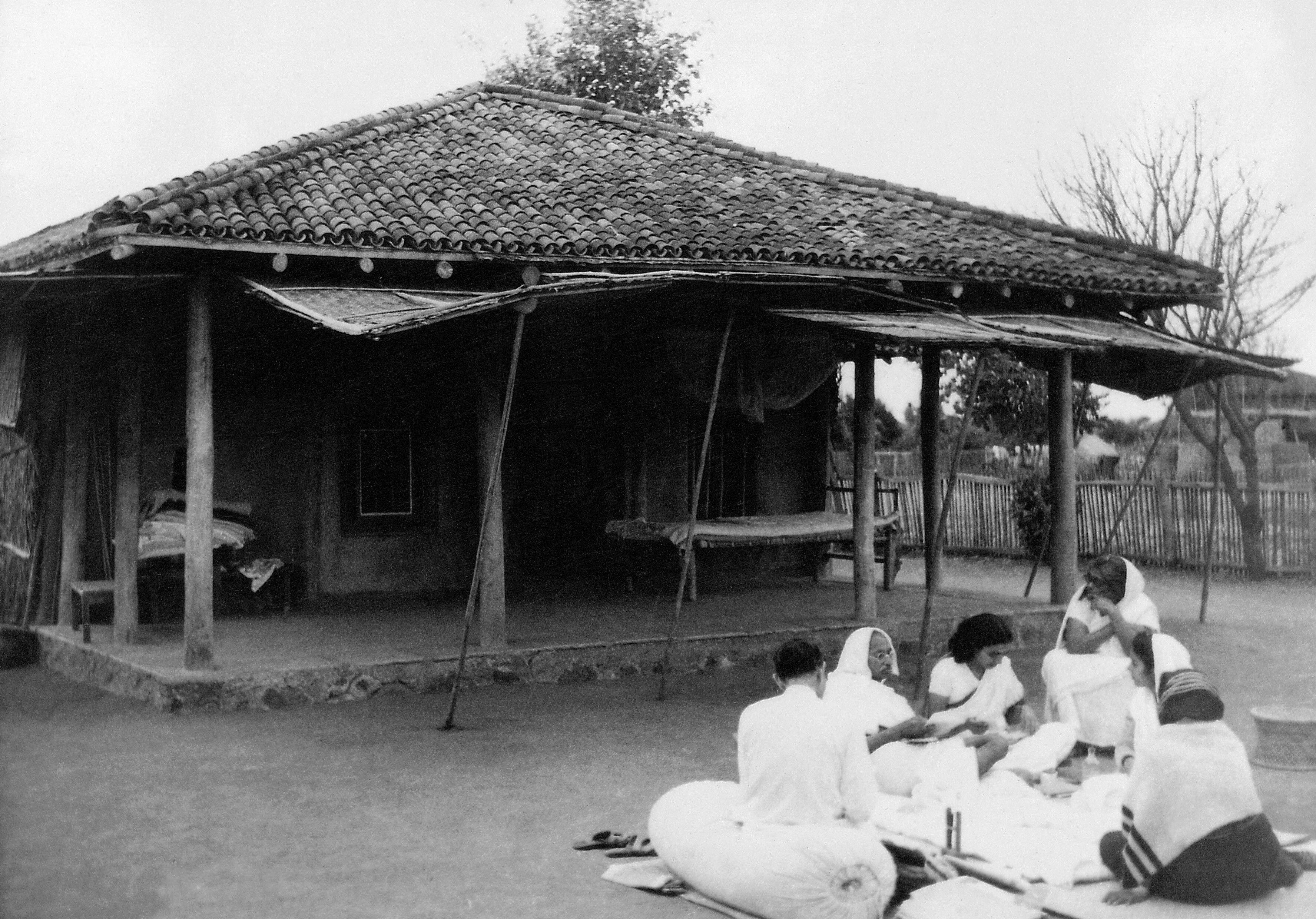
Gandhi seated with coresidents
Gandhi seated with coresidents in front of his hut at Sevagram Ashram, circa 1939. Sushila Nayar is seated to Gandhi's left.
Published on

Phoenix Settlement residents
The residents of Phoenix Settlement, 1905. Gandhi is in the third row; Kasturba is among the women in the second row. These residents all agreed
Published on
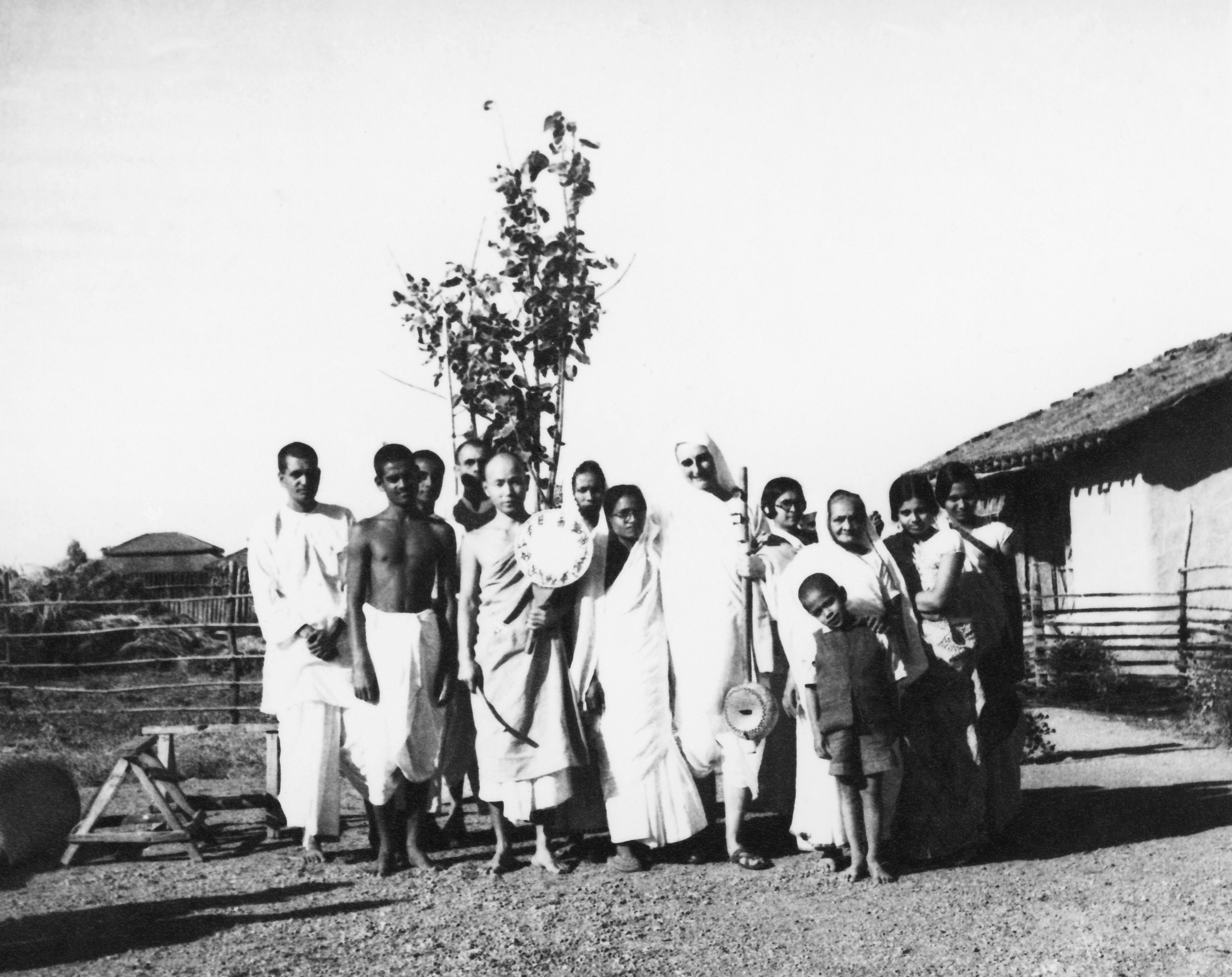
Early residents
Some of the early residents of Sevagram Ashram, circa 1938. Among those included in the photo are Kasturba Gandhi (3rd from right) with her
Gandhi (Photographer)
Published on
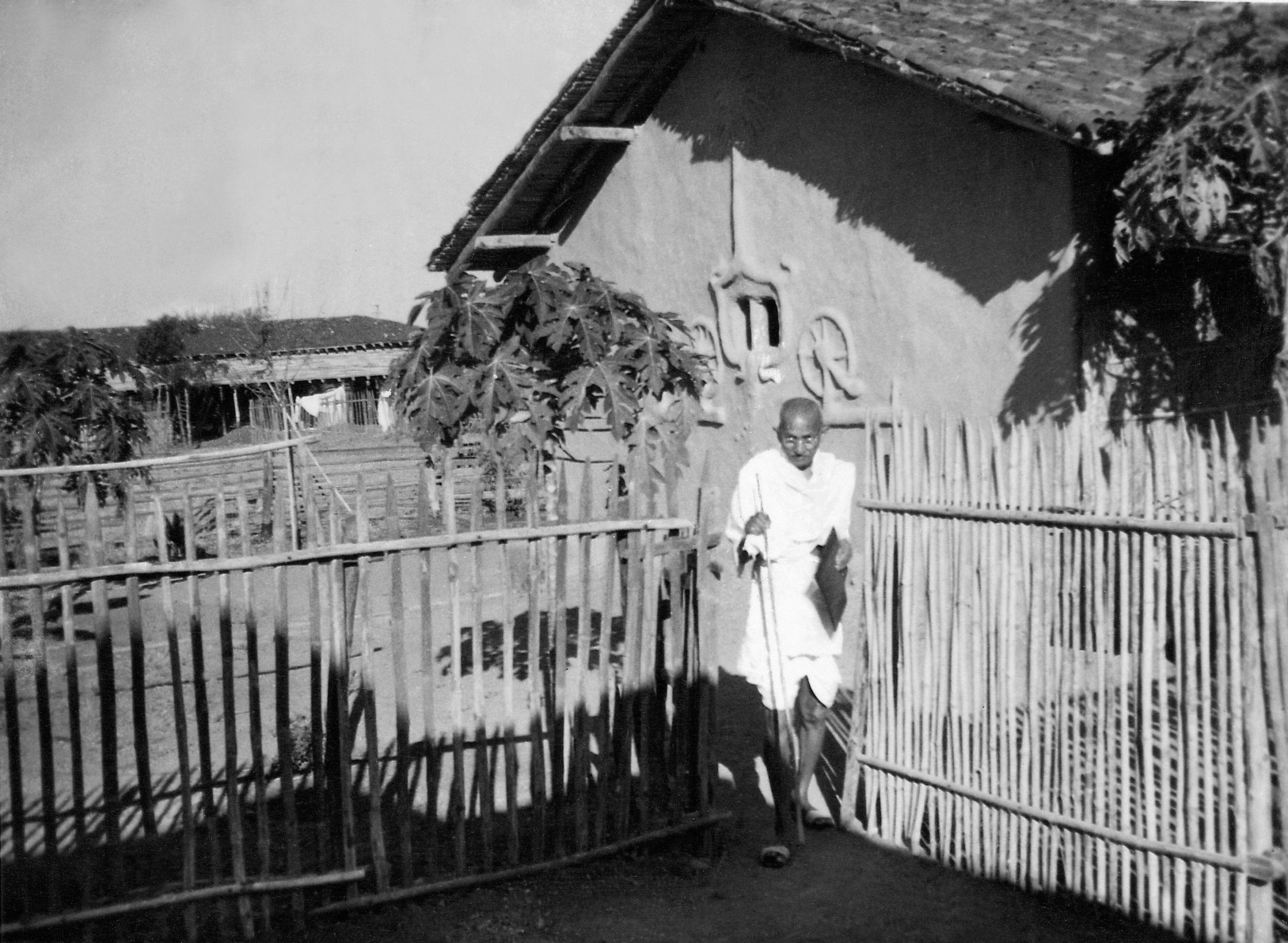
Gandhi at Bapu Kuti
Gandhi in front of his hut at Sevagram Ashram, circa 1941. The hut is called "Bapu Kuti," and was originally built by Mirabehn. Gandhi greatly
Gandhi (Photographer)
Published on
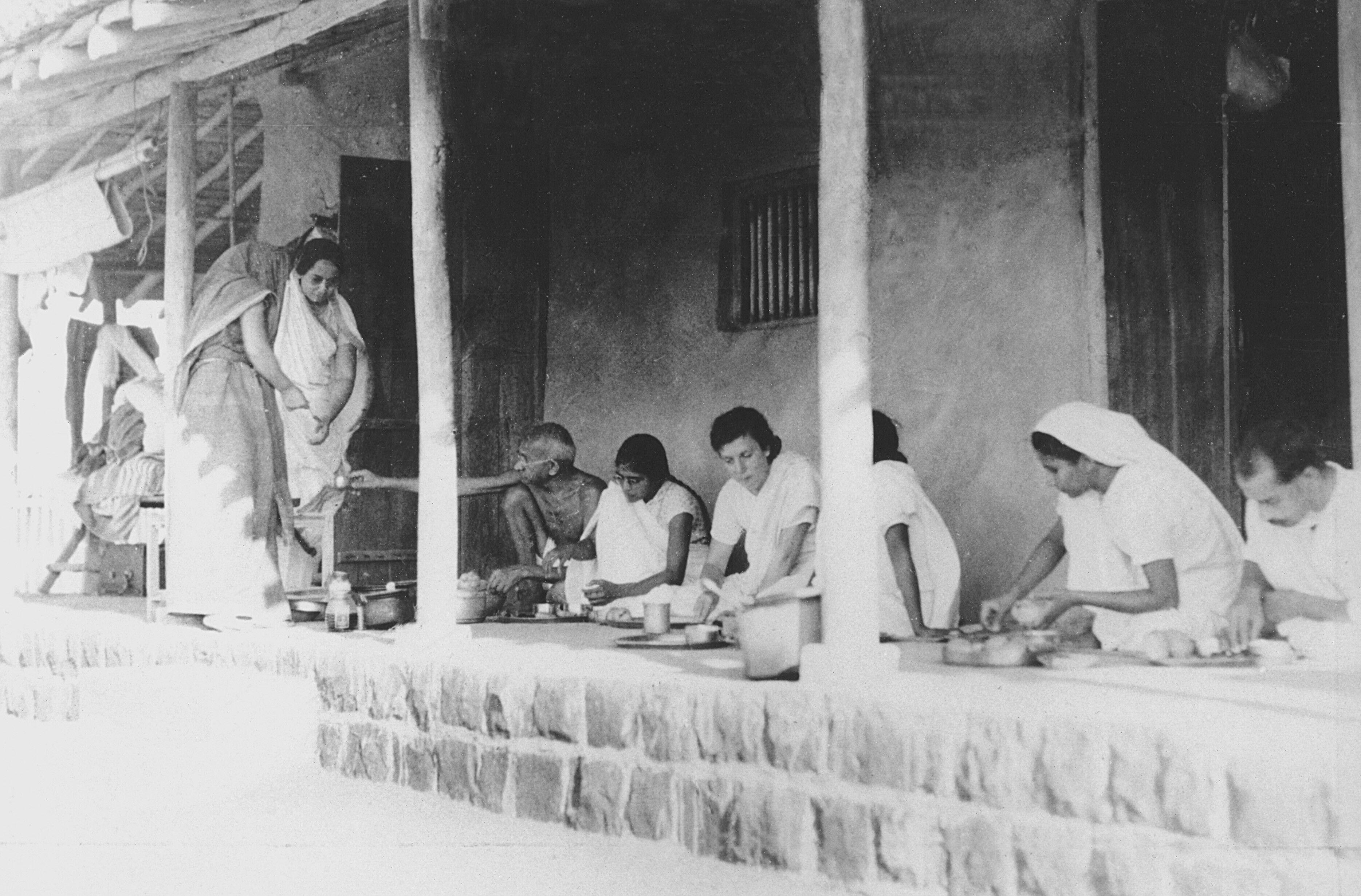
Gandhi eating with coresidents
Gandhi and coresidents eating together at Sevagram Ashram. Seated next to Gandhi is Abha Gandhi, and Sarlabehn is seated next to Abha. In nice
Published on
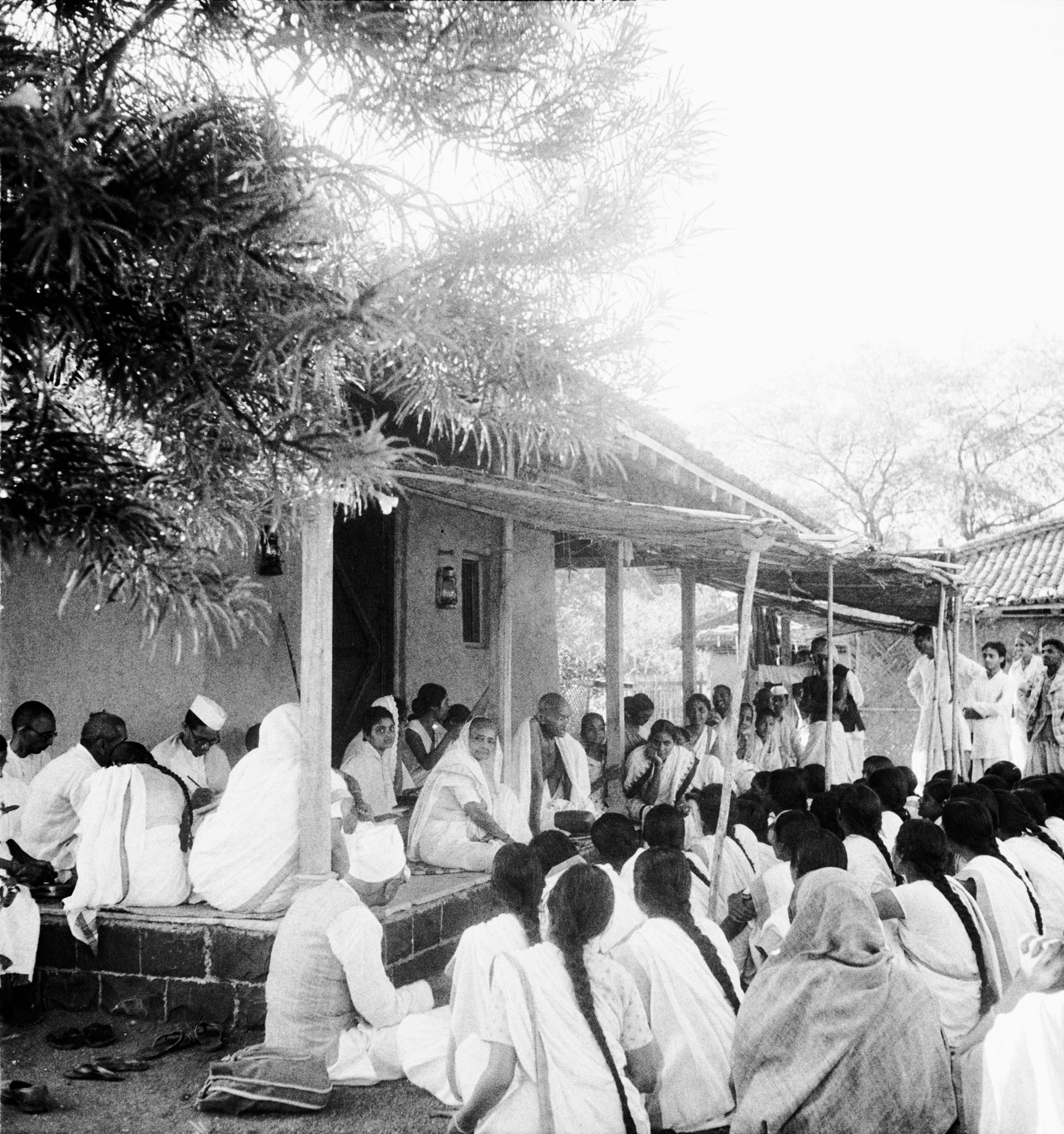
Gandhi and Kasturba Gandhi speaking to coresidents
Gandhi and Kasturba speaking with coresidents at Sevagram Ashram, circa 1940. Seated to the left of Kasturba is Abha Gandhi.
Gandhi (Photographer)
Published on
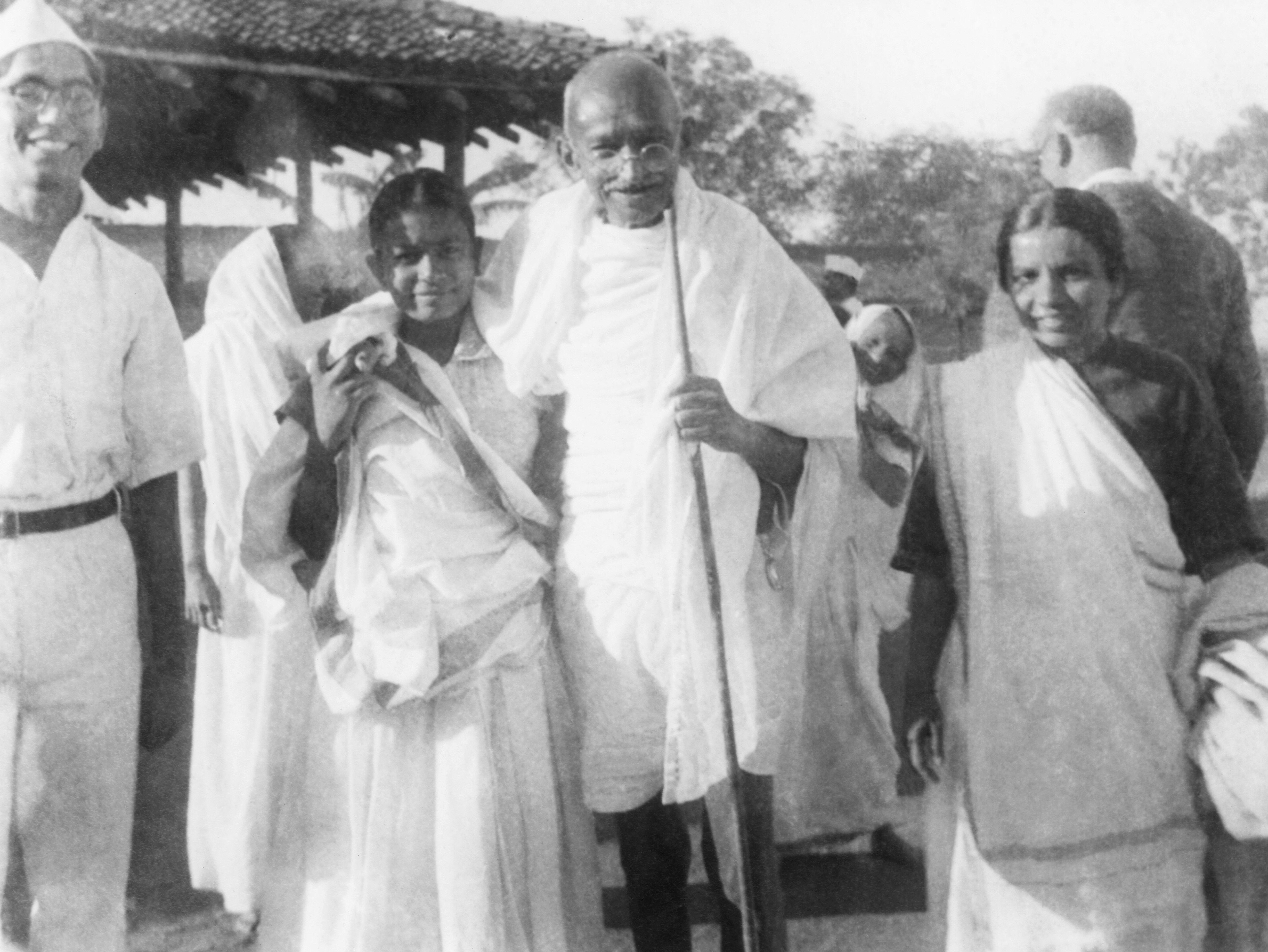
Gandhi walking with Joharabehn and Lilavati Asar
Gandhi walking with coresidents Johara ("Joharabehn") and Lilavati Asar ("Lilavatibehn") at Sevagram Ashram, circa 1939. Pictured to the left is
Gandhi (Photographer)
Published on
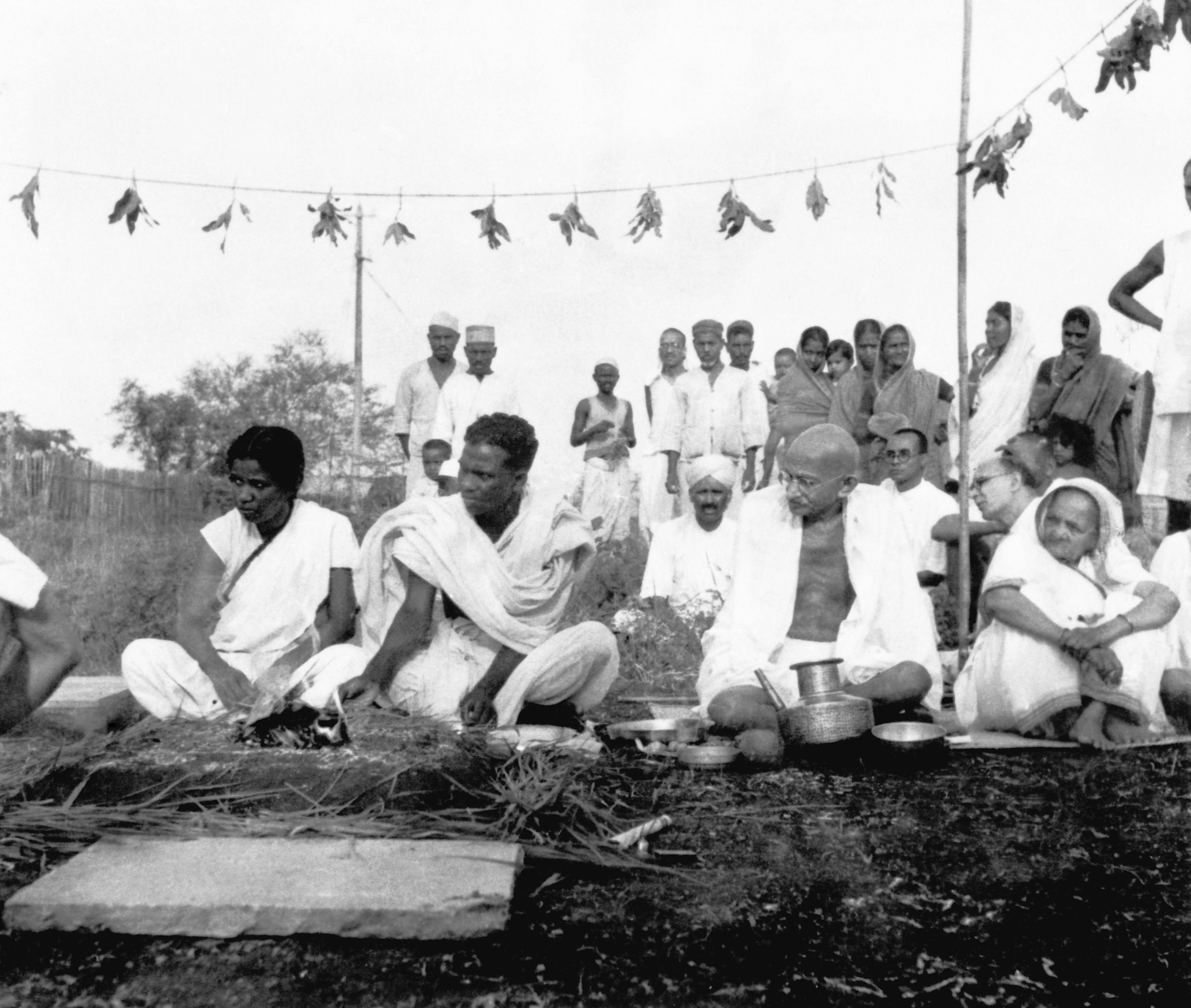
Interfaith and intercaste wedding at Sevagram Ashram
This photograph documents the wedding of Dakshayani, a Hindu Dalit (Pulayar caste) woman, and Velayudhan, a Christian Dalit (Ezhava caste) man.
Gandhi (Photographer)
Published on
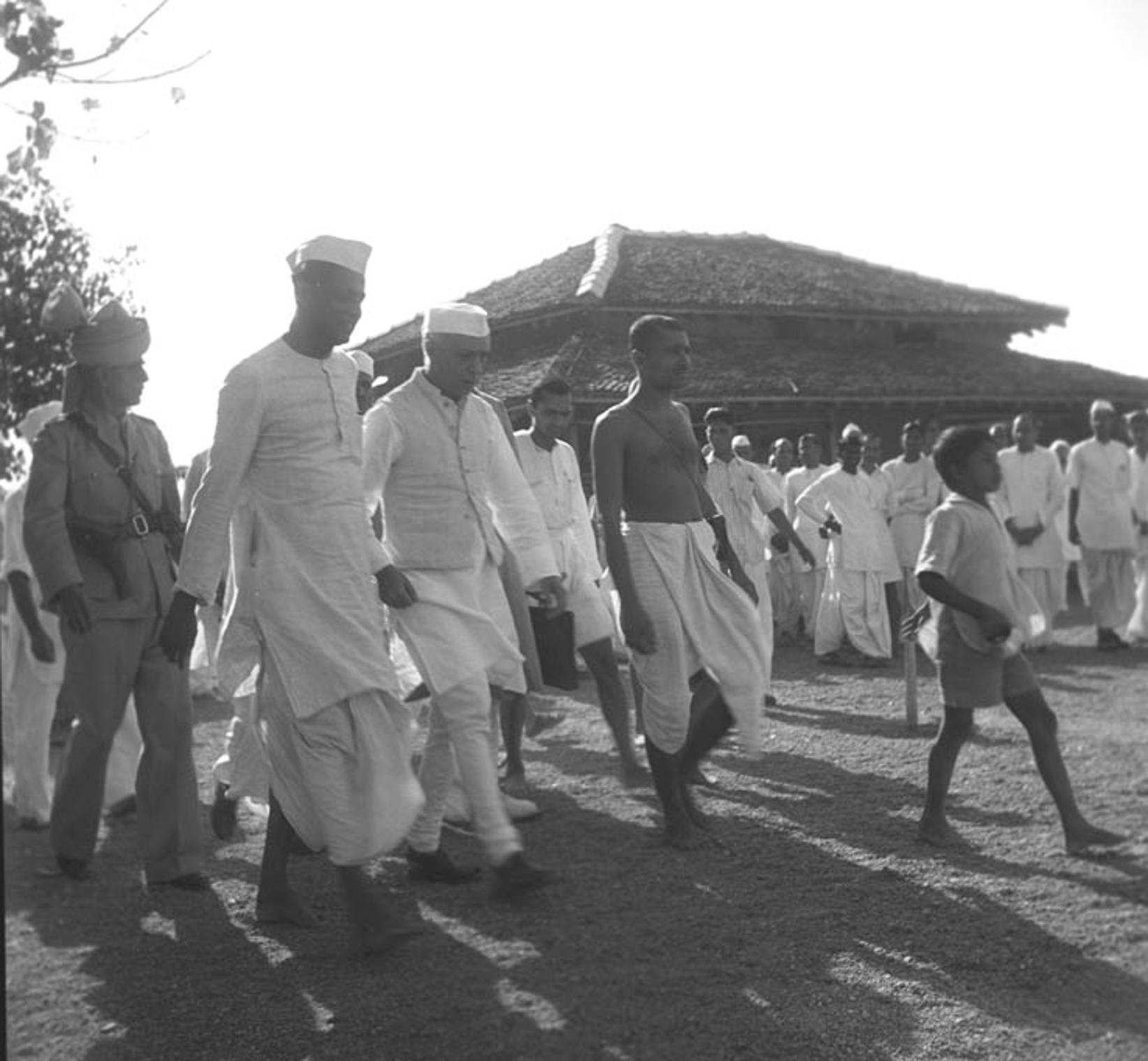
Jawaharlal Nehru visiting Sevagram Ashram
Jawaharlal Nehru and other politicians visit Sevagram Ashram. Jawaharlal Nehru later became the first Prime Minister of independent India.
Published on
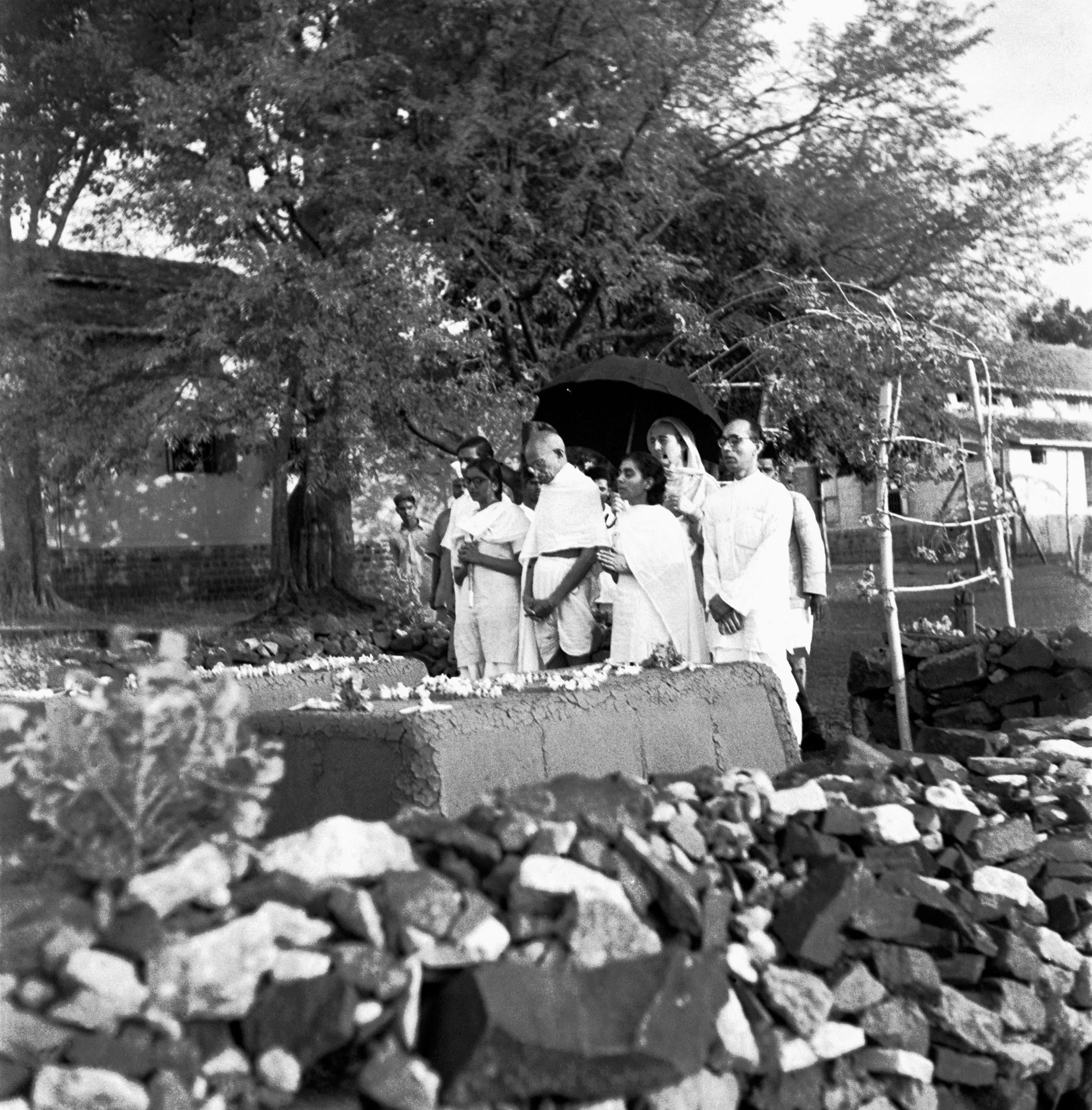
Mourning Kasturba Gandhi and Mahadev Desai
Gandhi and coresidents from Sevagram Ashram mourning the passing of Kasturba Gandhi and Mahadev Desai at the Aga Khan Palace prison, 1944.
Gandhi (Photographer)
Published on

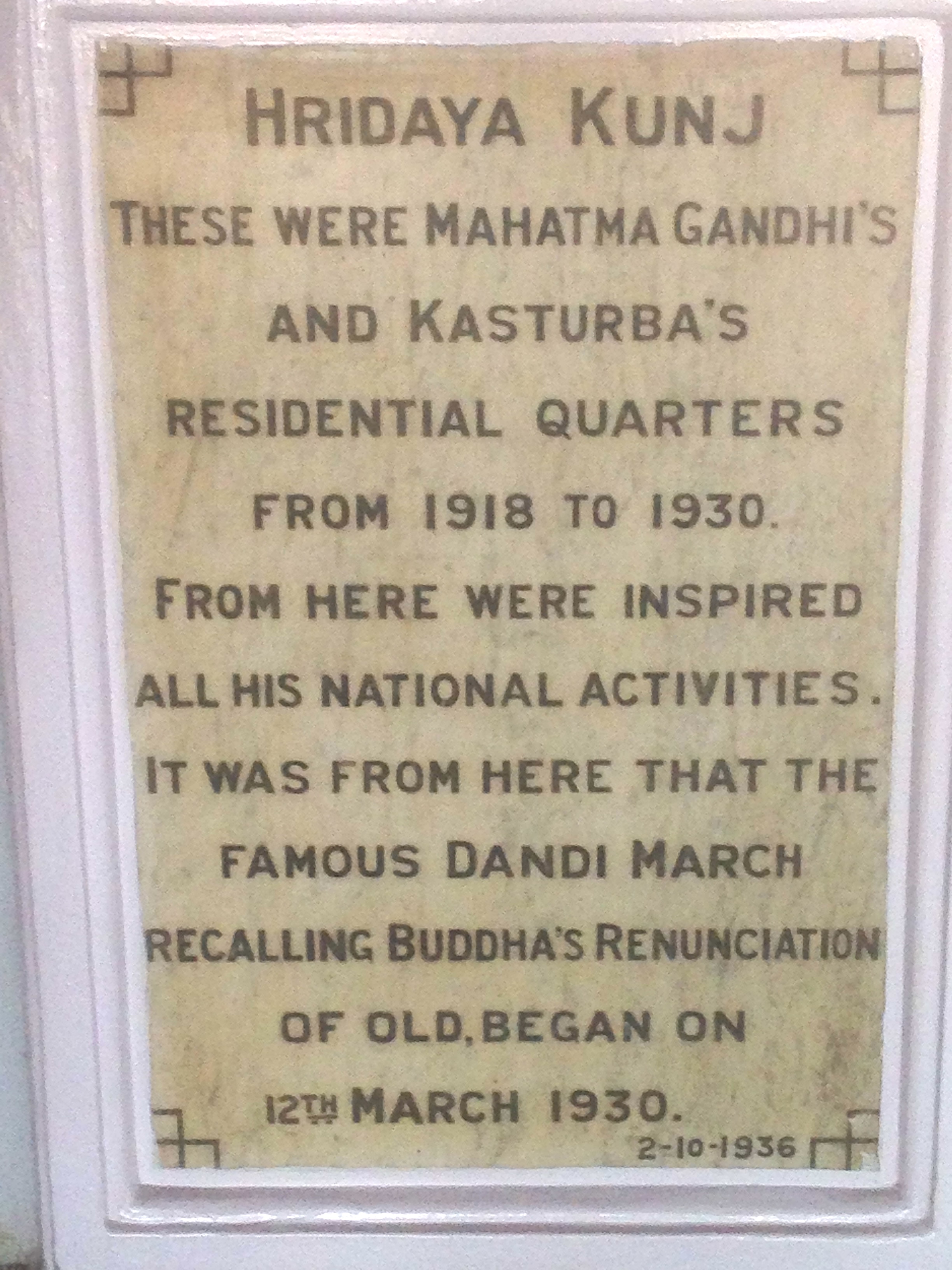
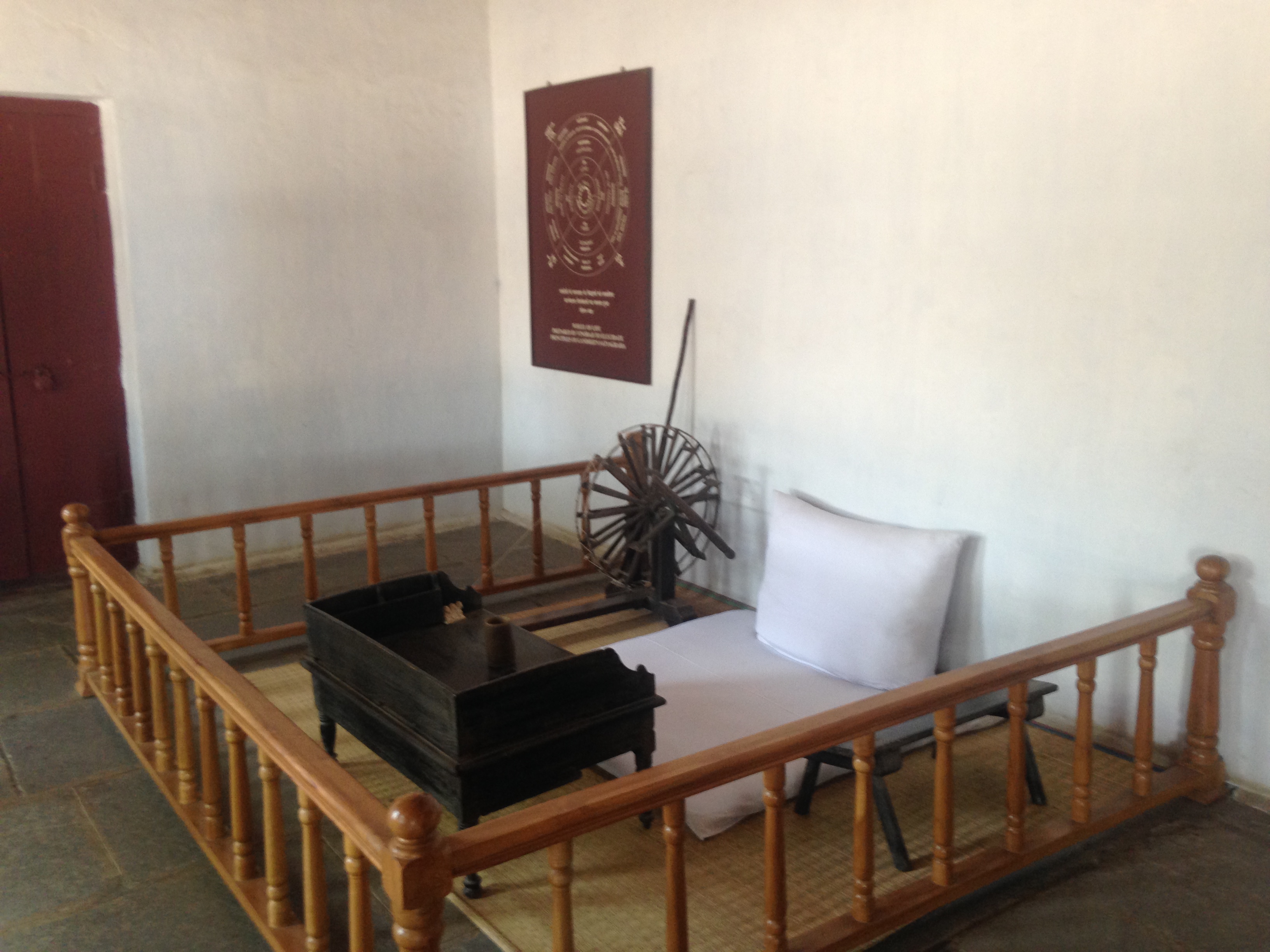
Hridaya Kunj veranda
Veranda of "Hridaya Kunj," Gandhi and Kasturba's house at Sabarmati Ashram.
McLain (Photographer)
Published on
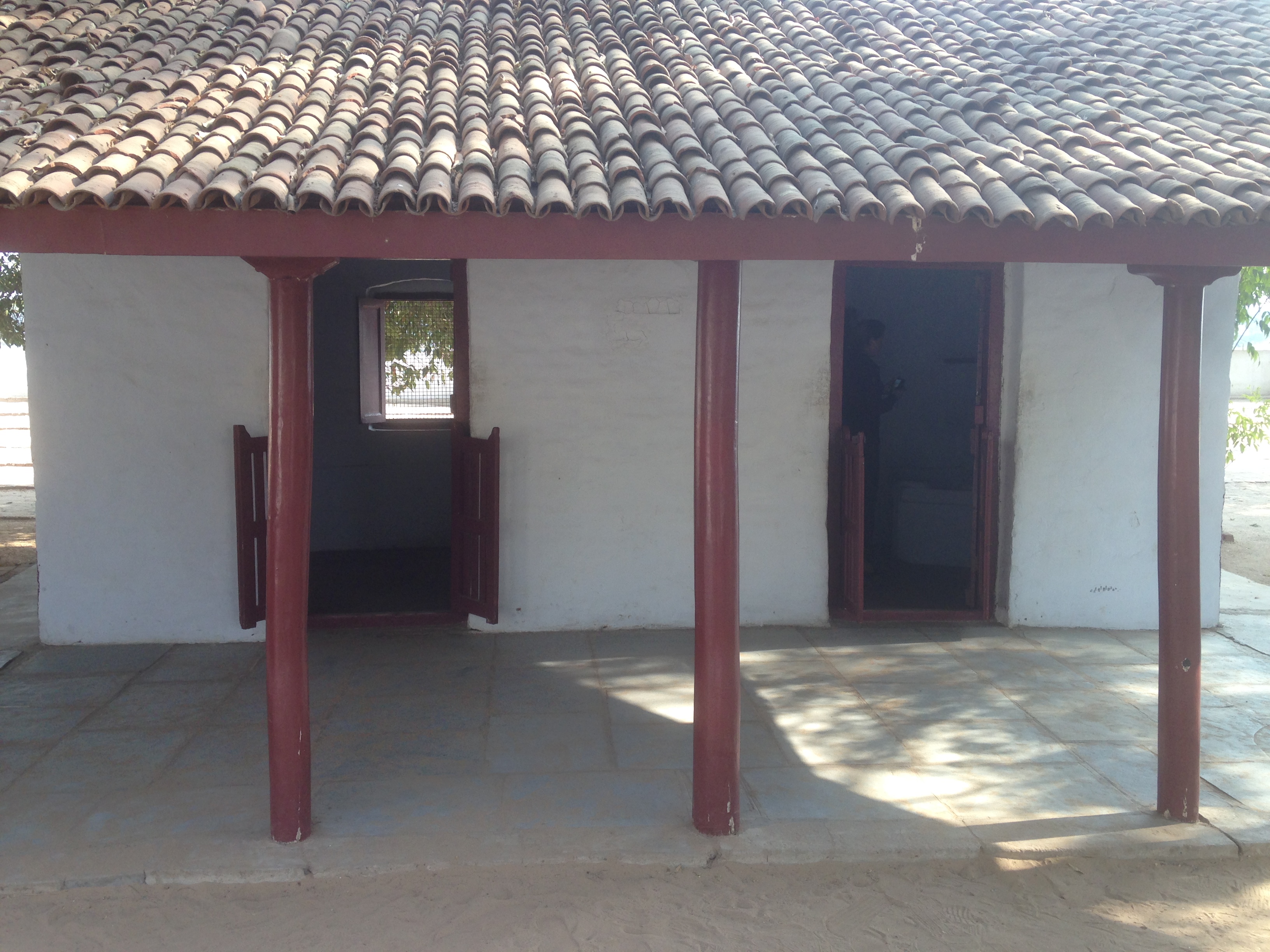
Vinoba Mira Kuti
"Vinoba/Mira Kuti," the home occupied first by Vinoba Bhave and later by Mirabehn at Sabarmati Ashram.
McLain (Photographer)
Published on
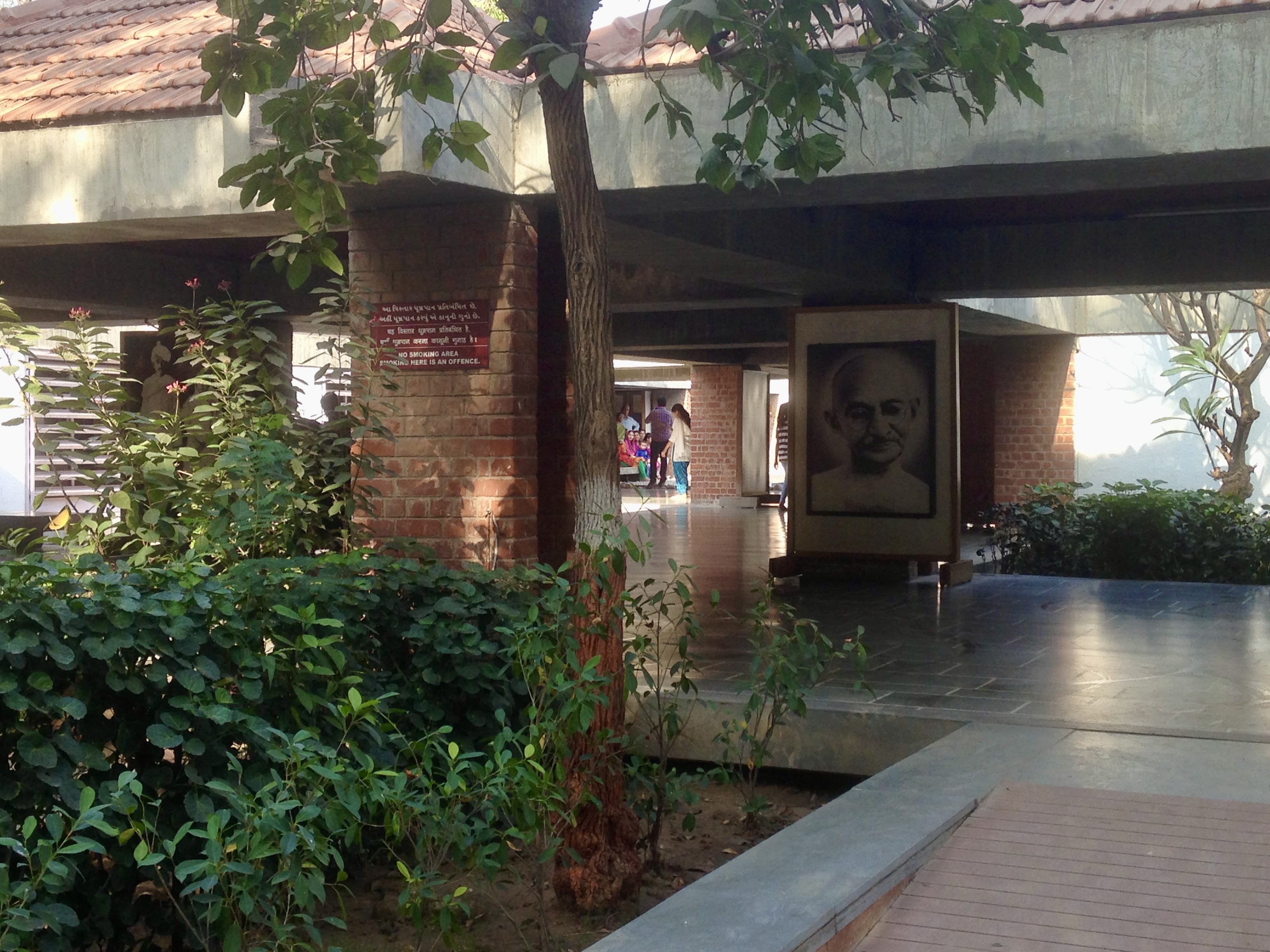
Museum at Sabarmati Ashram
The Gandhi Memorial Museum at Sabarmati Ashram. The museum was added in 1963 to memorialize Gandhi's political leadership in the anticolonial
McLain (Photographer)
Published on
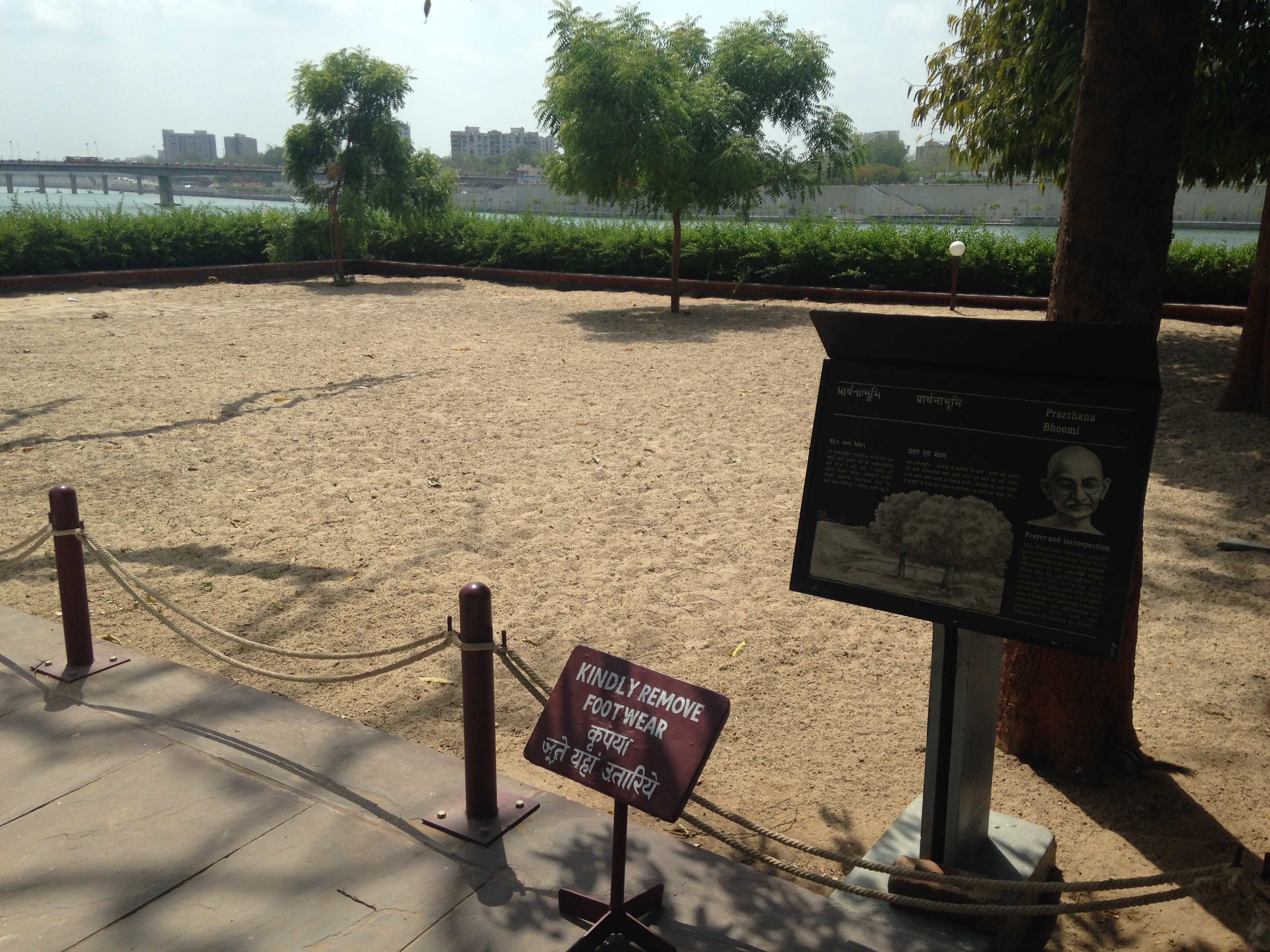
Upasana Mandir (Prayer Ground)
"Upasana Mandir," the prayer ground at Sabarmati Ashram. Here the community members gathered in the mornings and evenings for ecumenical prayers
McLain (Photographer)
Published on

Upasana Mandir sign
The sign for the prayer ground, "Upasana Mandir," at Sabarmati Ashram. The community members gathered here in the morning and evening for
McLain (Photographer)
Published on

Founding Tolstoy Farm
Gandhi and Kallenbach at the founding of Tolstoy Farm, 1910. They stayed in a tent while building the first structures. Depicted in the photo are
Published on

Tolstoy Farm land
Panorama of Tolstoy Farm at its beginning in 1910. The farmland was purchased by Hermann Kallenbach, who loaned it to Gandhi (who at that time
Published on

Tolstoy Farm settlers
Early settlers at Tolstoy Farm, 1910. The co-founders of this community, Gandhi and Hermann Kallenbach, are seated in the center of the middle row
Published on
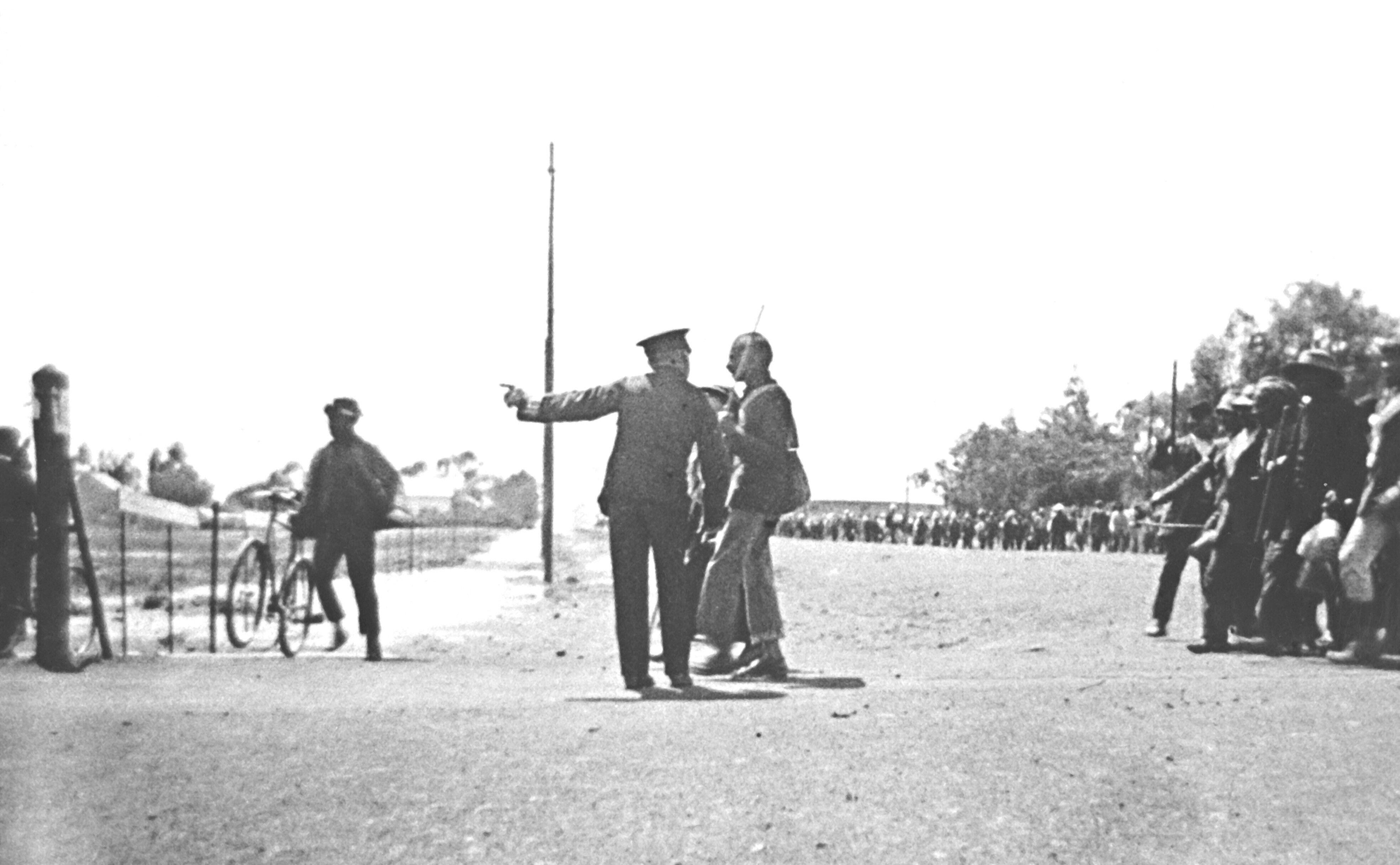
Great March 1913, 1
Gandhi and coresidents leading the Great March, 1913. In November of 1913, Gandhi and coresidents from Tolstoy Farm and Phoenix Settlement led 2,
Published on
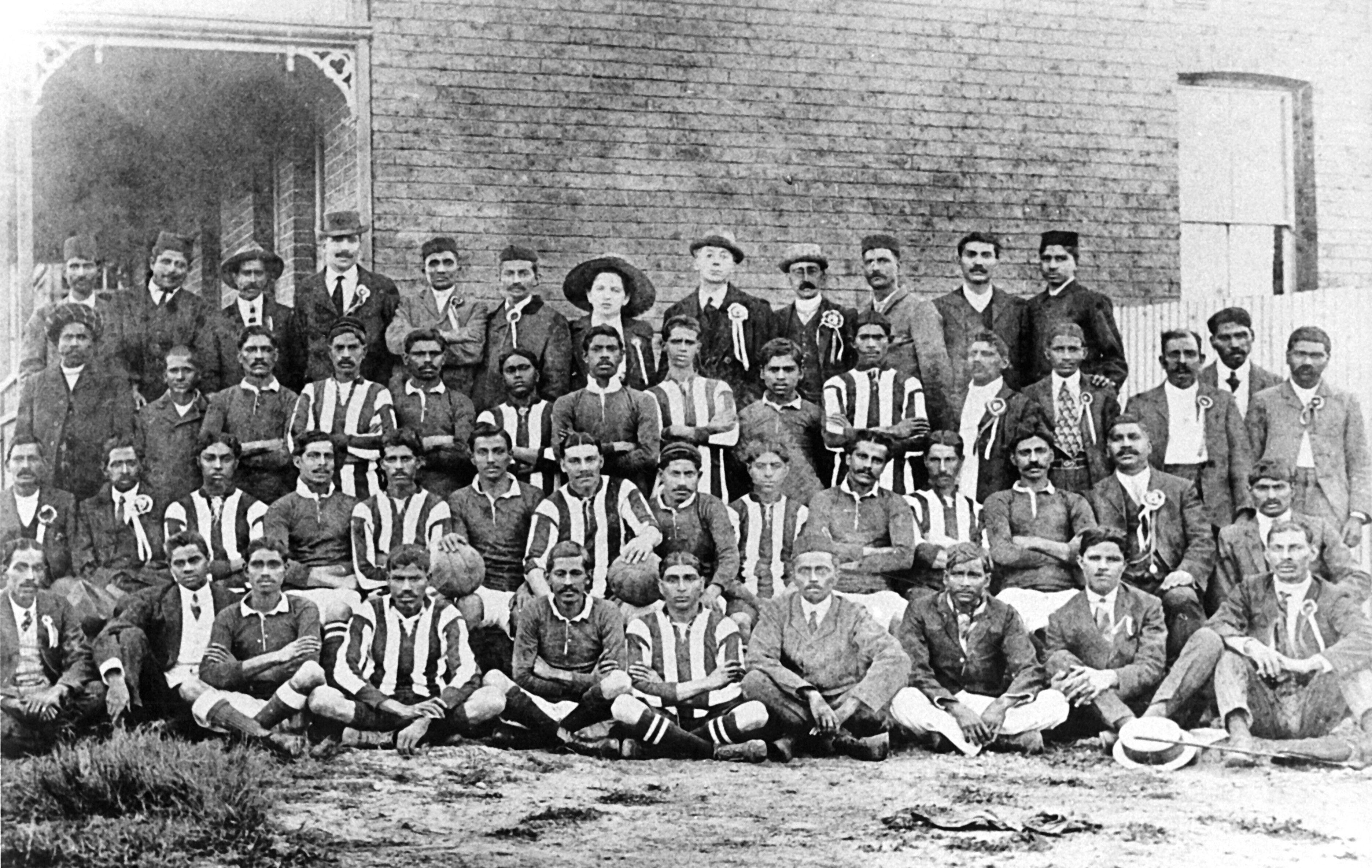
Passive Resisters
Gandhi with the Passive Resisters Football Club in Johannesburg, 1913. Gandhi founded football (soccer) clubs in Durban, Pretoria, and
Published on

Great March 1913, 2
Gandhi and the residents of Tolstoy Farm leading the Great March, 1913.
Published on

Gokhale visit
Gopal Krishna Gokhale visits Tolstoy Farm, 1912. Gokhale was Gandhi's political mentor, who came to visit from India to learn more about the
Published on

Departure 1914
A gathering to honor Gandhi and his family and his coresidents who were leaving South Africa for India in 1914. Gandhi had lived and worked in
Published on
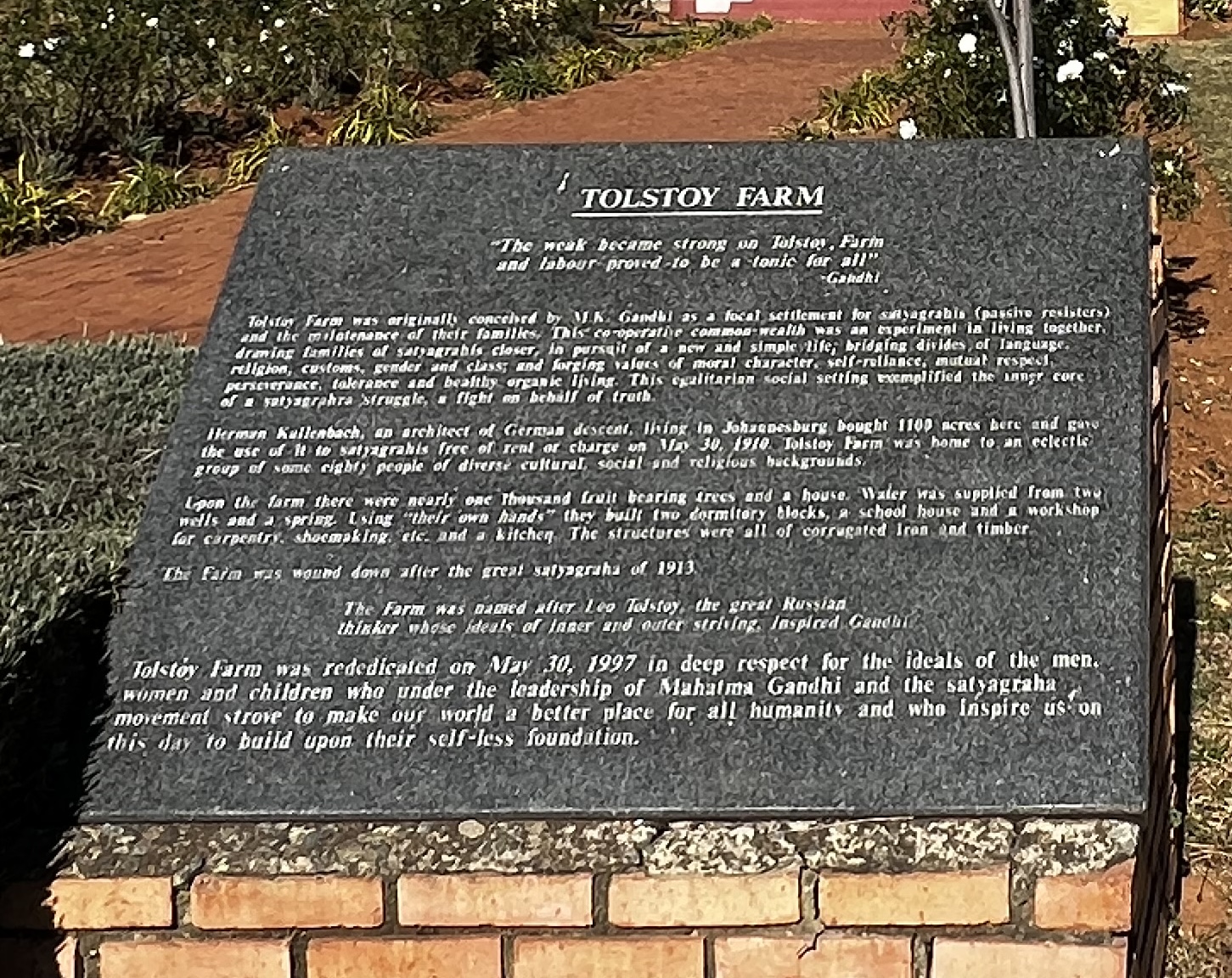
Tolstoy Farm plaque
The plaque at Tolstoy Farm, in commemoration of the historic site. It notes, among other things, that "Tolstoy Farm was rededicated on May 30,
McLain (Photographer)
Published on
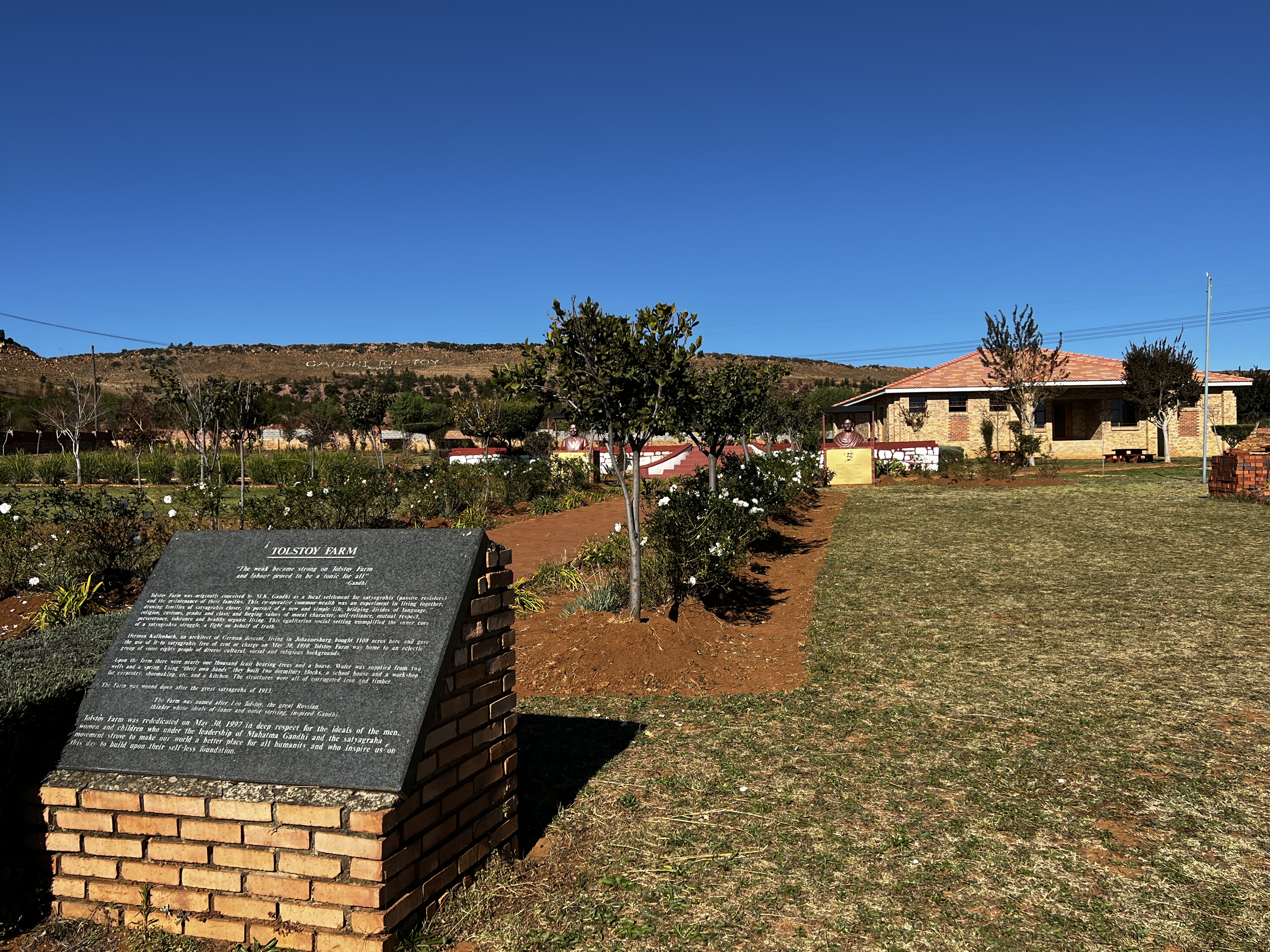
Tolstoy Farm with museum
The Tolstoy Farm site and museum. The museum building construction was complete, but the exhibition was not yet finished and open to the public
Lyons (Photographer)
Published on
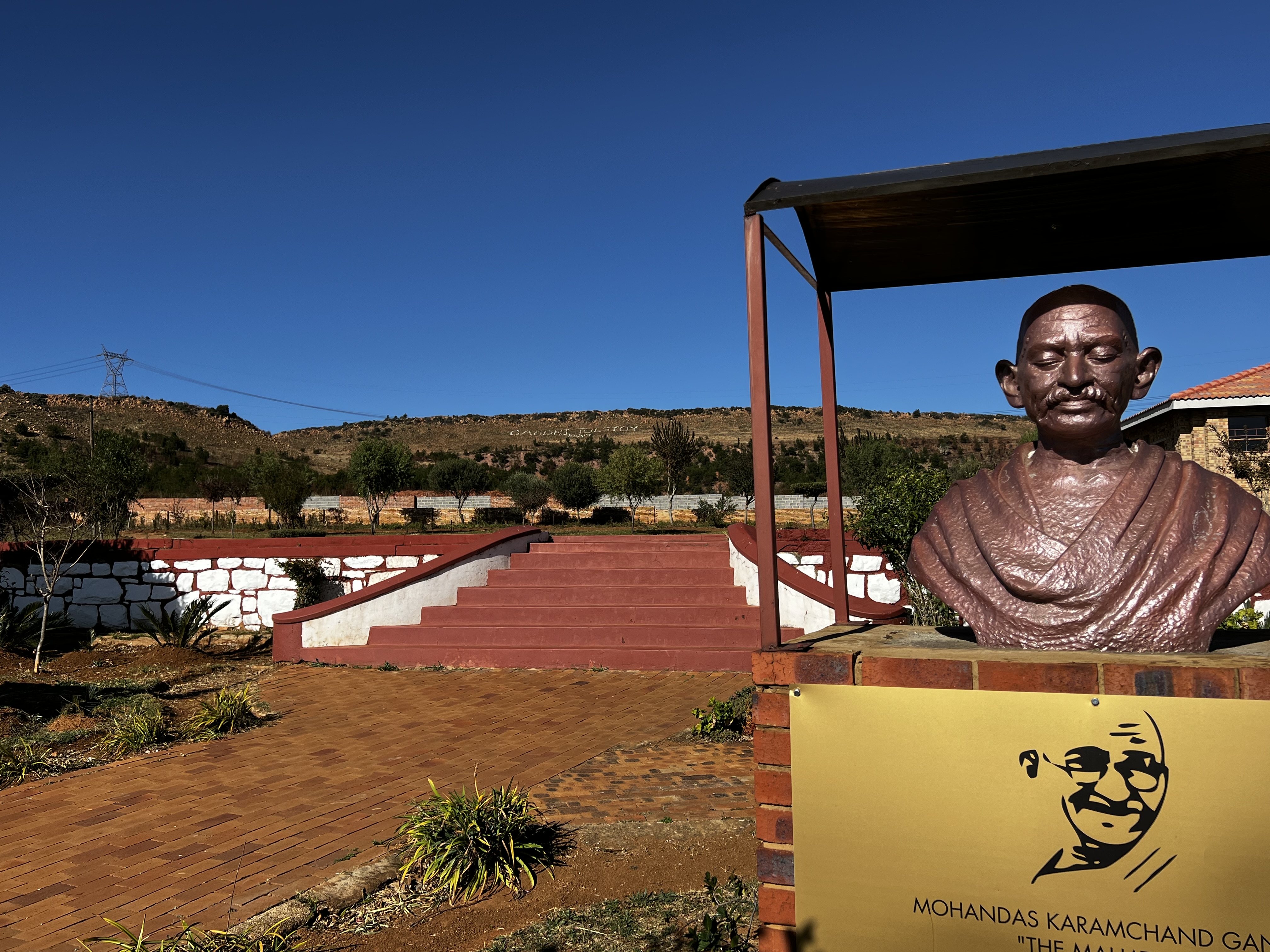
Tolstoy Farm foundation
The steps and foundation slab are all that remain of the historic house where Gandhi, Kallenbach, and others once lived at Tolstoy Farm.
McLain (Photographer)
Published on
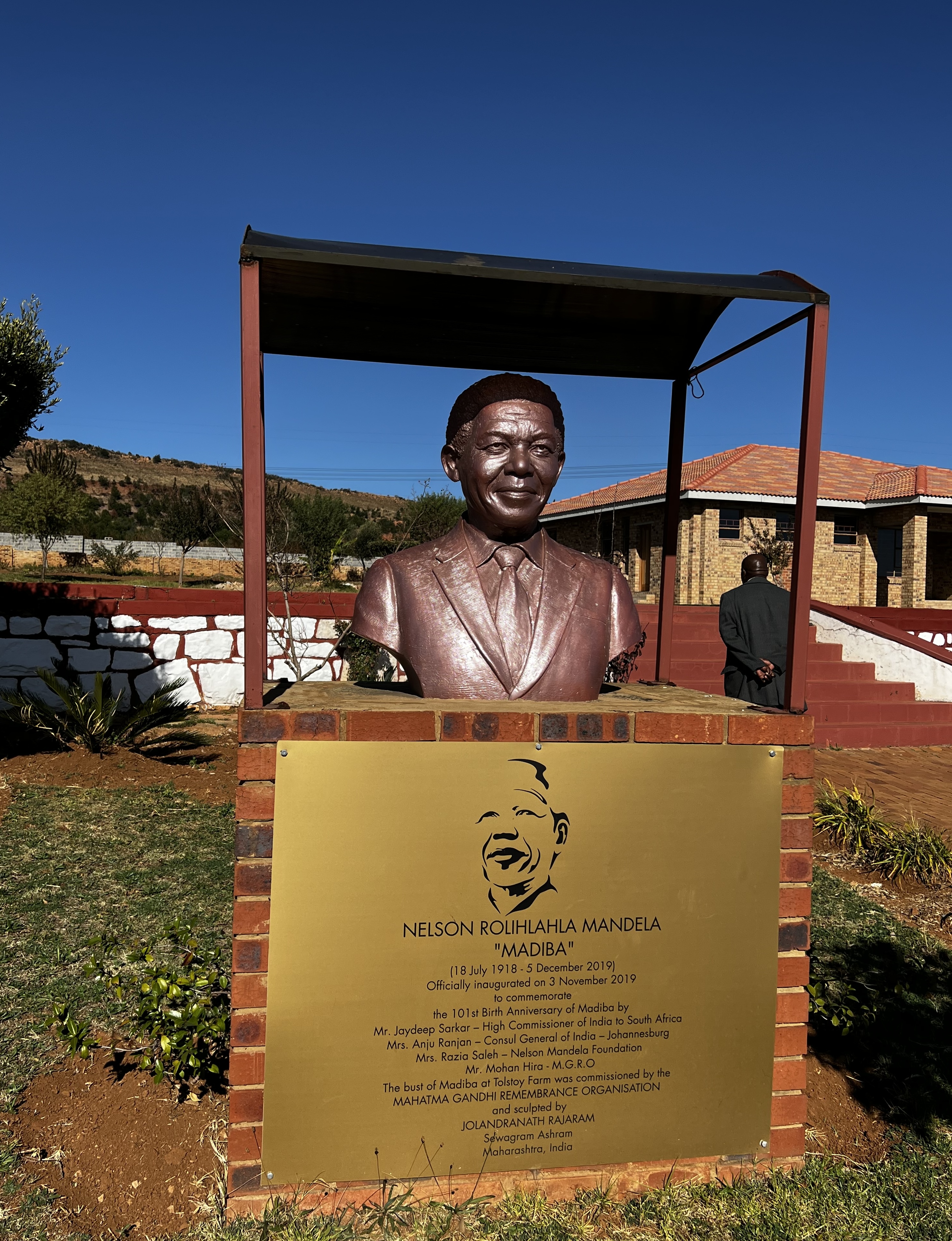
Mandela bust
The bust of Nelson Mandela at Tolstoy Farm. It was added to the site in 2019, commissioned by the Mahatma Gandhi Remembrance Organisation in South
McLain (Photographer)
Published on
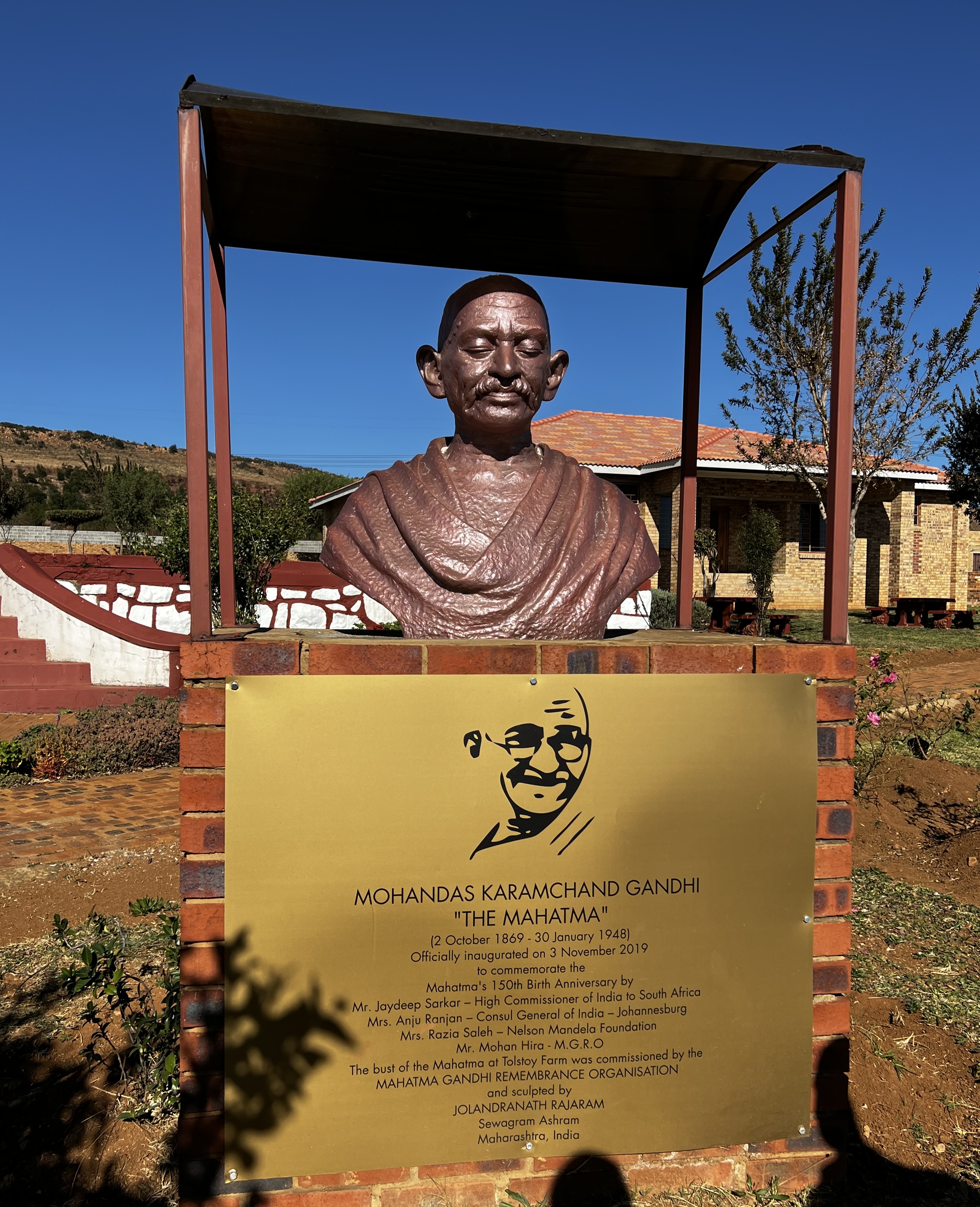
Gandhi bust
The bust of Gandhi at Tolstoy Farm. It was added to the site in 2019, commissioned by the Mahatma Gandhi Remembrance Organisation in South Africa
McLain (Photographer)
Published on
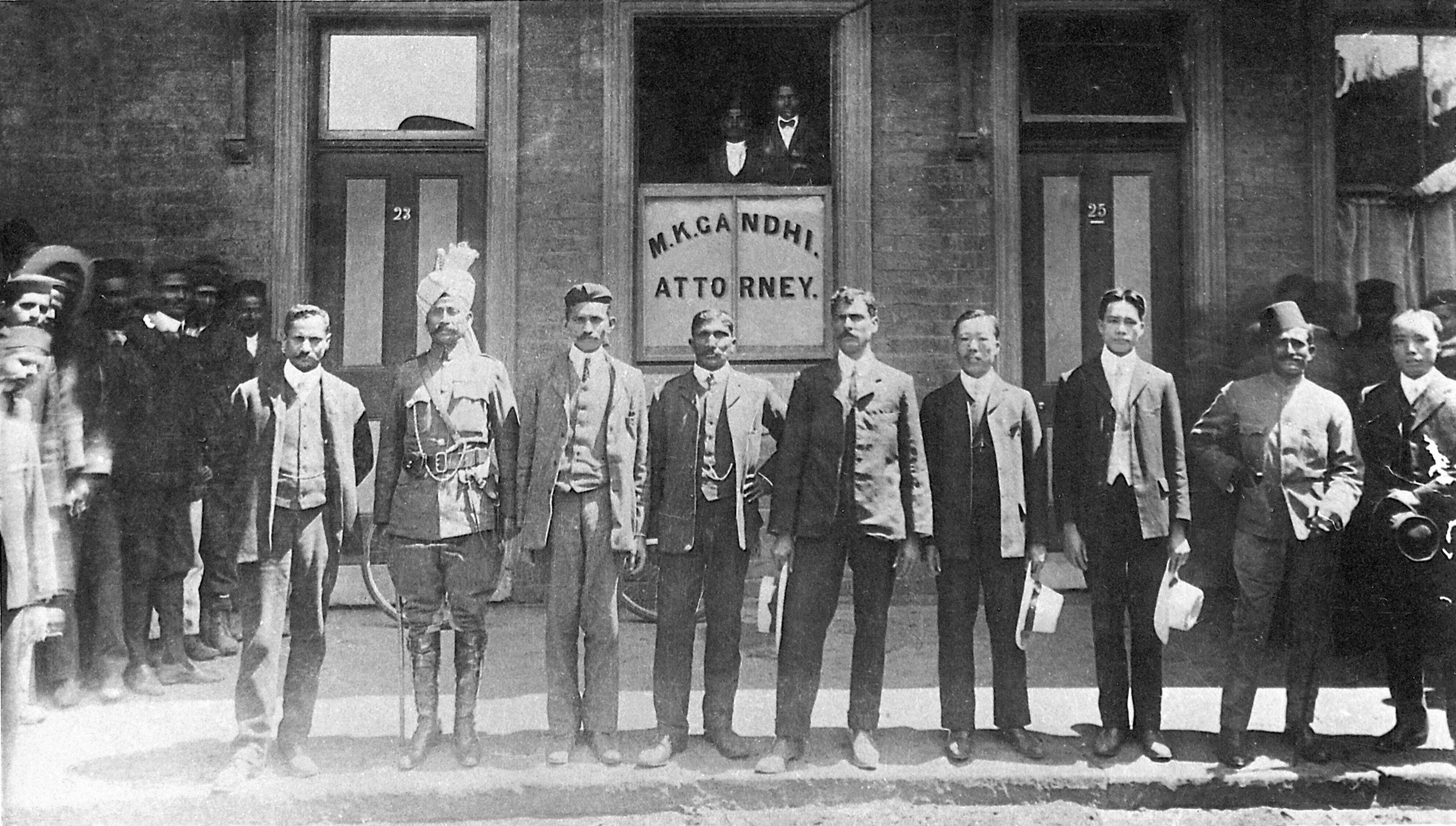
Gandhi's law office
Gandhi's law office in Johannesburg, South Africa. Gandhi is in the row of standing men, third from the left.
Published on

Kasturba and Sons
Kasturba Gandhi with her four sons in 1902: Harilal, Manilal, Ramdas, and Devdas.
Published on
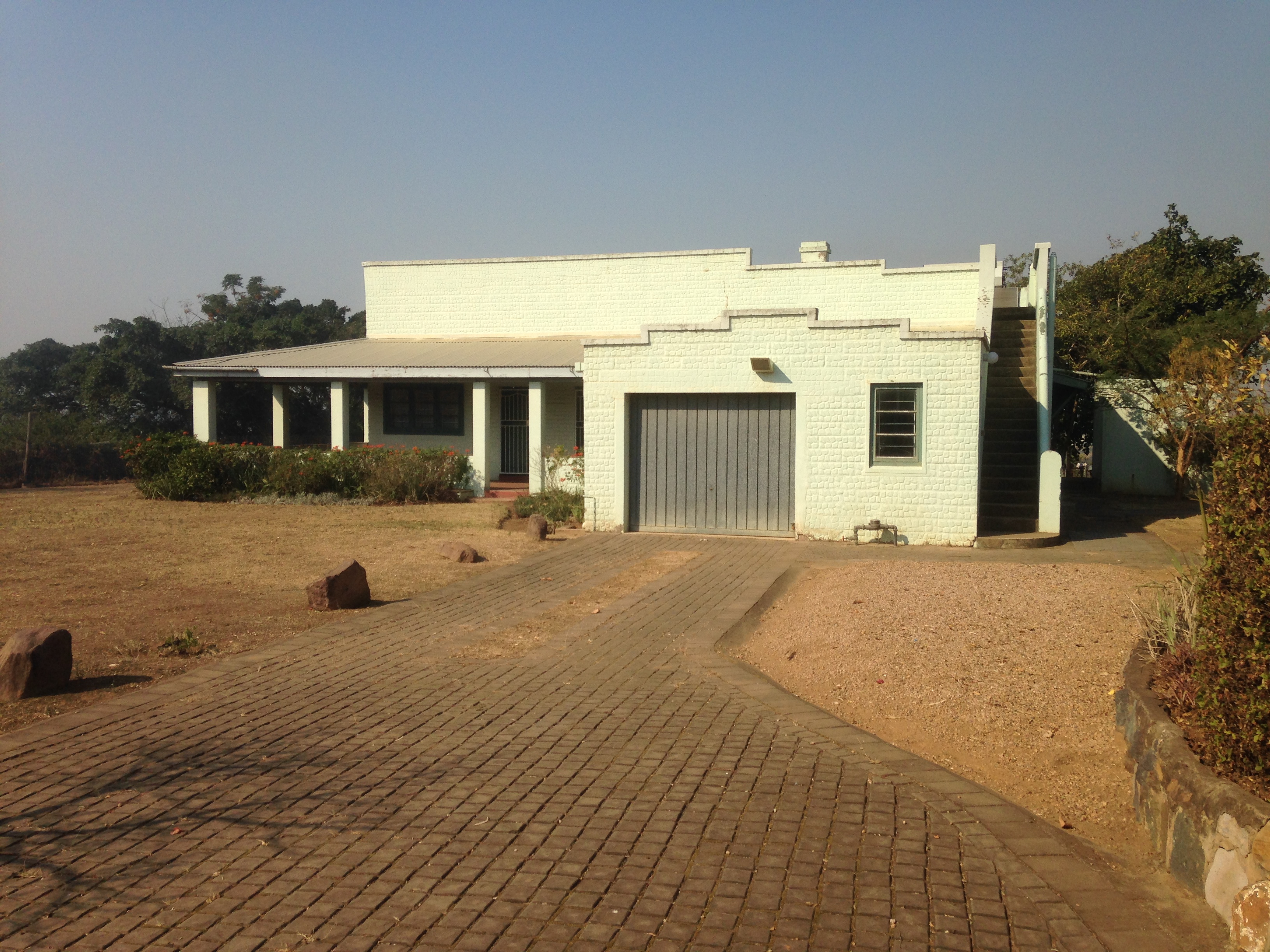
Kasturba Bhavan
"Kasturba Bhavan," the home built in 1944 by Manilal and Sushila Gandhi at Phoenix Settlement.
McLain (Photographer)
Published on

Printing Press 1985
The printing press building at Phoenix Settlement after the Inanda Riots in 1985. Urban incendiarism caused much damage to Indian-owned and Black
Published on
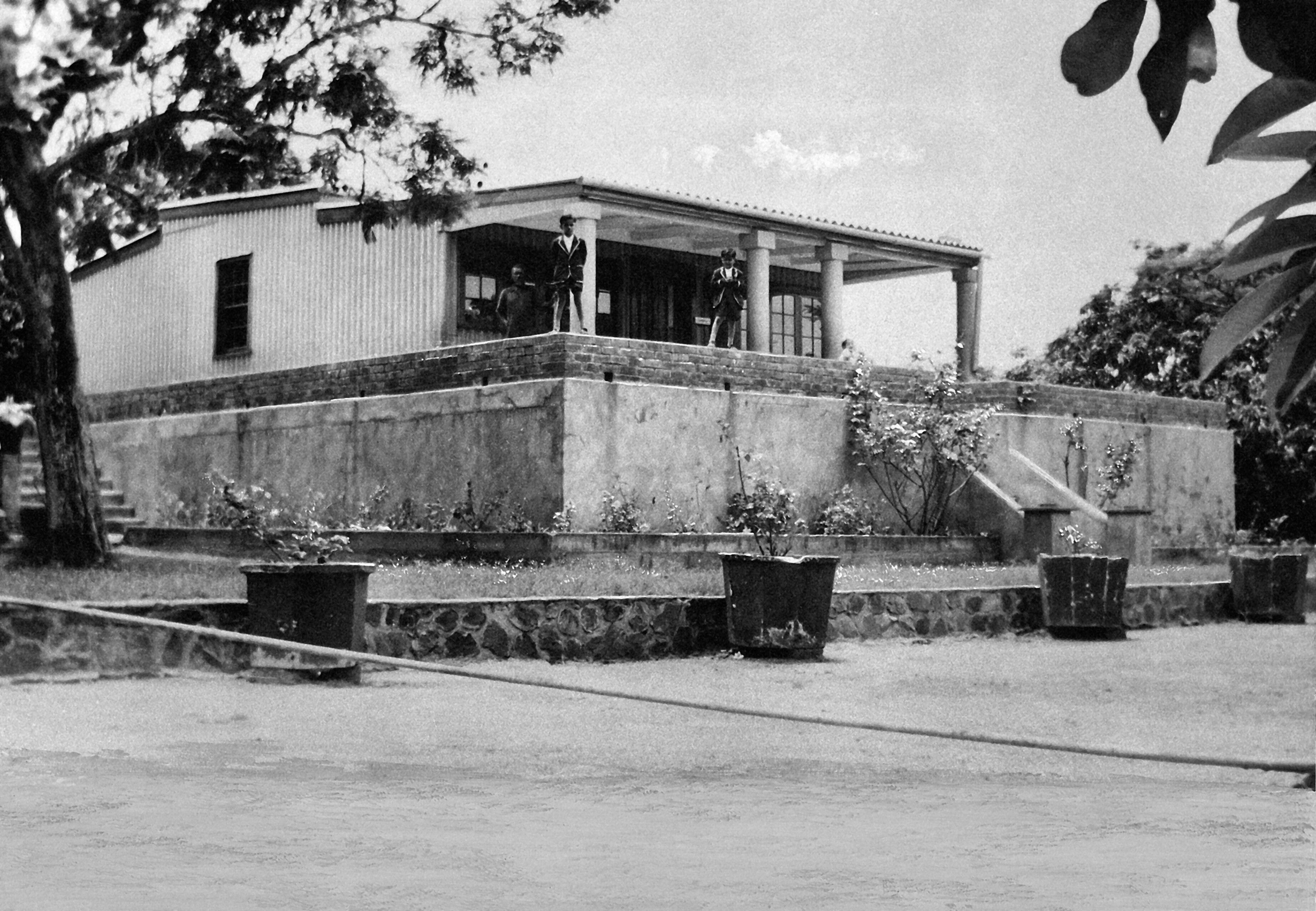
Sarvodaya House
"Sarvodaya House," Gandhi's home at Phoenix Settlement. (Front side.) The residents of Phoenix Settlement built small bungalow style homes using
Published on
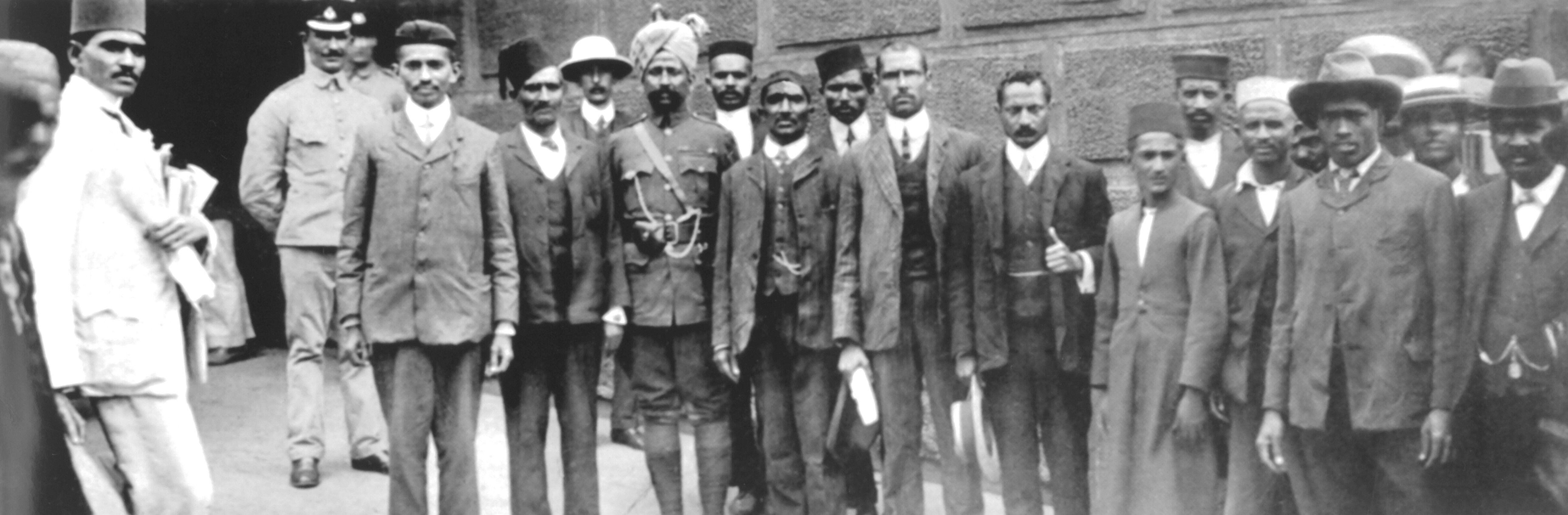
Jail release 1908
Gandhi and other nonviolent resisters being released from prison in 1908. Gandhi is first on the left of the men in the lineup.
Published on
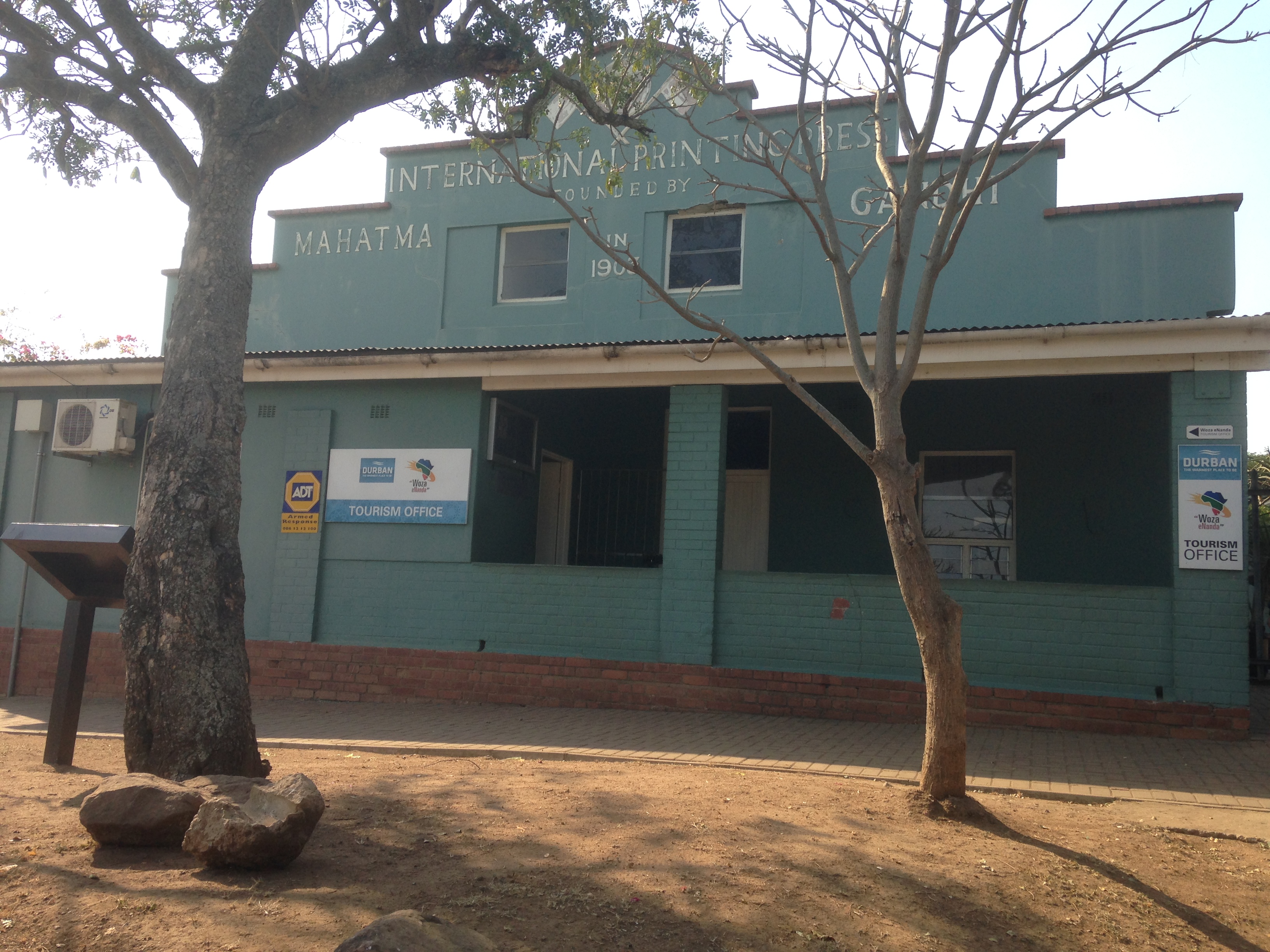
Printing Press
The Printing Press building at Phoenix Settlement, as currently preserved.
McLain (Photographer)
Published on
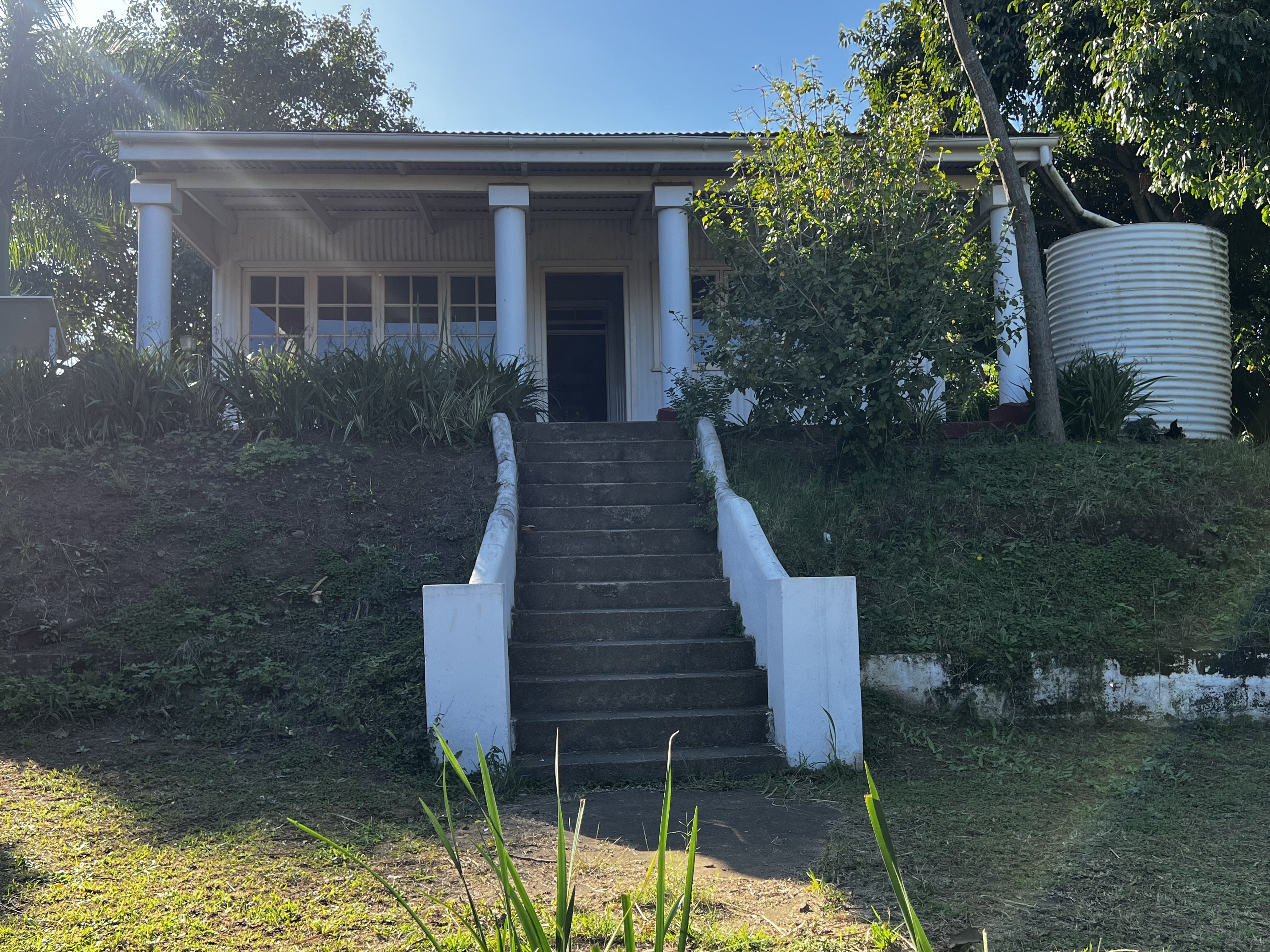
Sarvodaya House (front)
"Sarvodaya House," Gandhi's former home at Phoenix Settlement. (Front side.) The original Sarvodaya House was burned down in the Inanda Riots of
Lyons (Photographer)
Published on

Sarvodaya House (back)
"Sarvodaya House," Gandhi's former home at Phoenix Settlement. (Back side.)
McLain (Photographer)
Published on

Gandhi bust at Phoenix
Bust of Gandhi at Phoenix Settlement, installed in 2004.
McLain (Photographer)
Published on

Gandhi walking with coresidents, 1944
Gandhi walking with coresidents at Sevagram Ashram, circa 1944. Gandhi advocated daily walks for health purposes, and regularly walked to and from
Published on
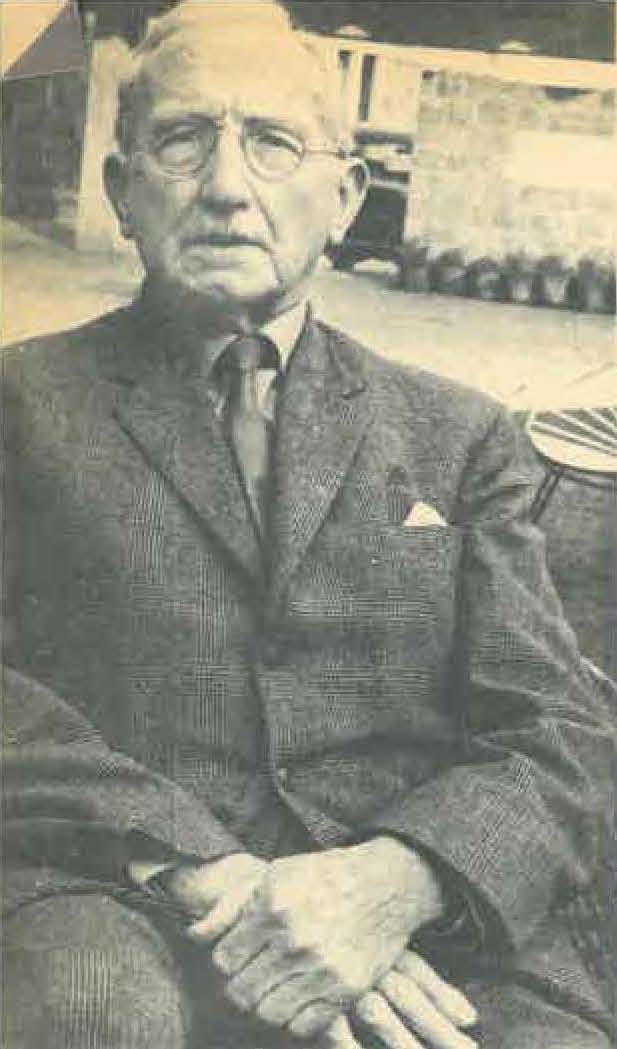
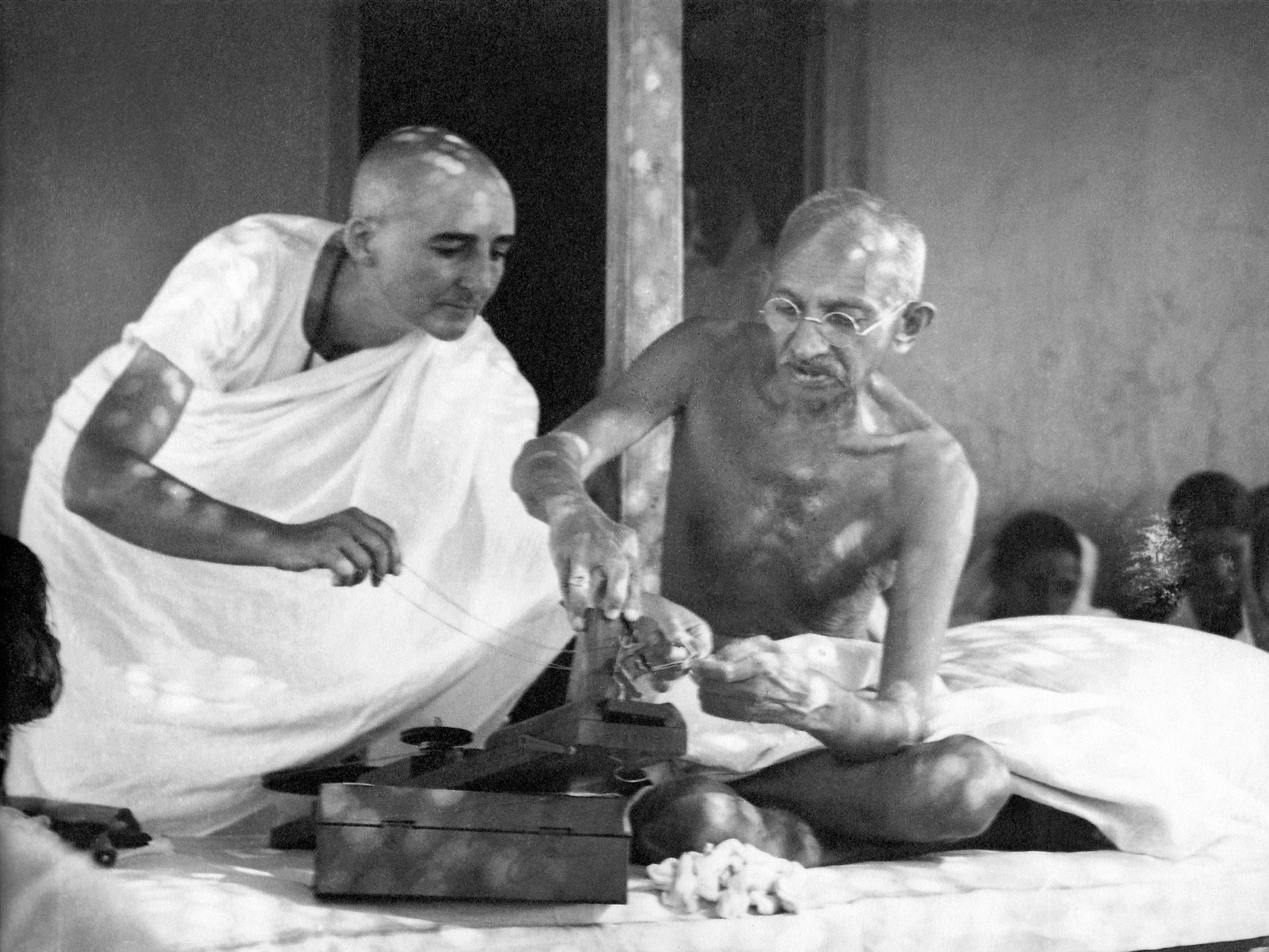
Mirabehn and Gandhi at the spinning wheel
Mirabehn helping Gandhi repair his spinning wheel. To emphasize economic self-sufficiency (swadeshi) and village handicrafts, all
Published on
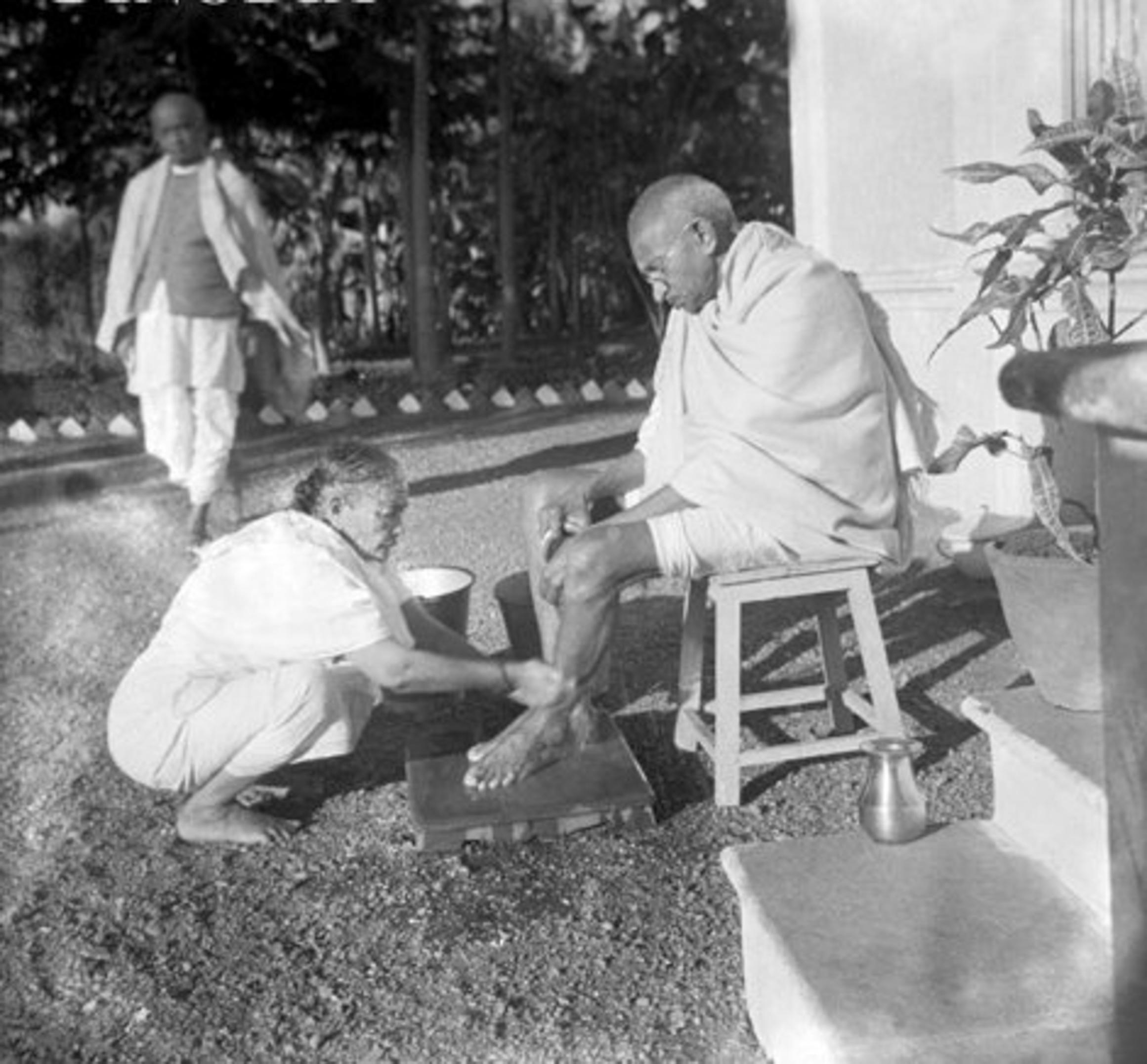
Kasturba Gandhi washing Gandhi's feet
Kasturba Gandhi washing Gandhi's feet, circa 1939. Such bodily service (seva) toward Gandhi was performed by Kasturba and some other
Gandhi (Photographer)
Published on
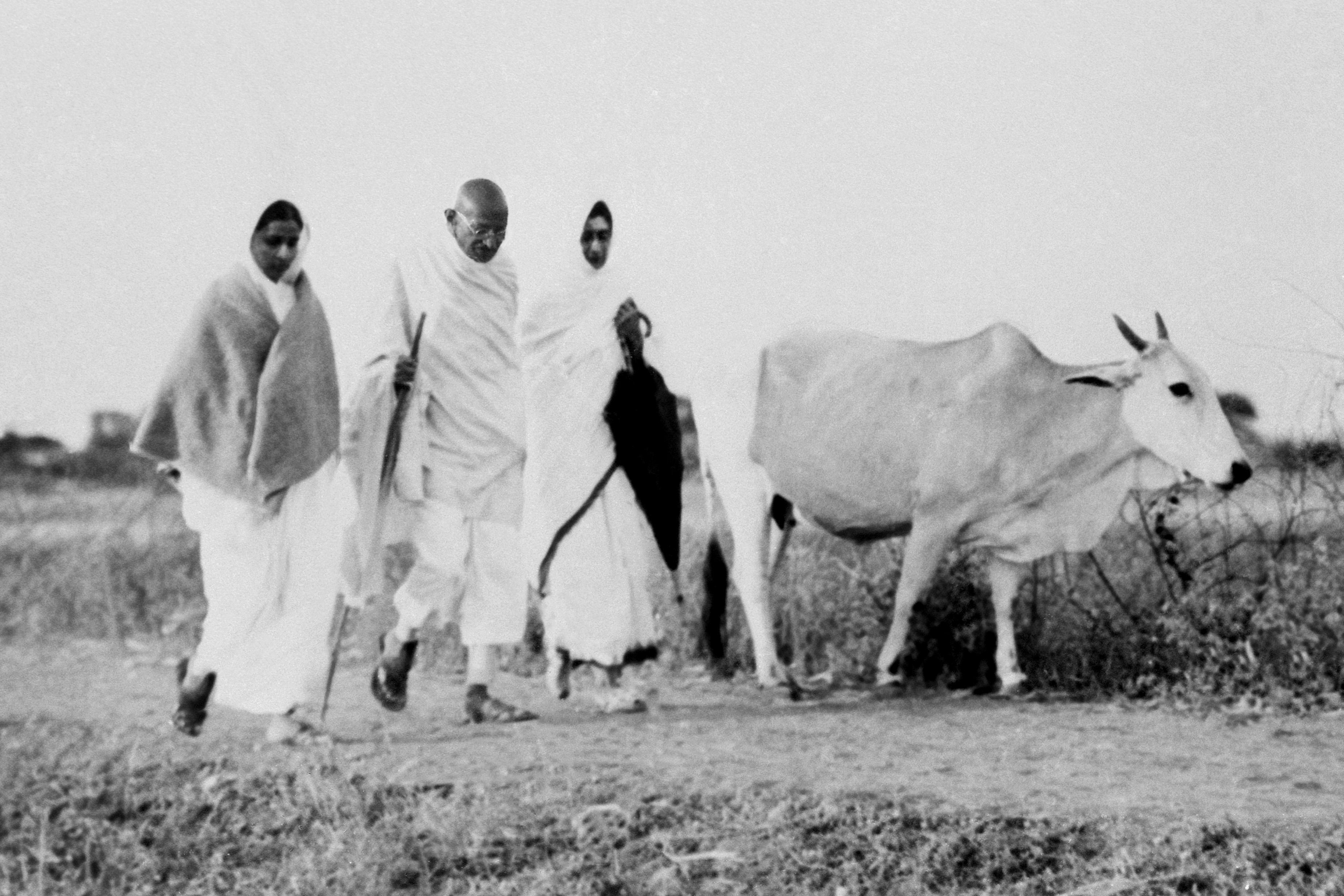
Gandhi walking with coresidents and a cow
Gandhi walking with coresidents (and a cow) at Sevagram Ashram. The community had a small dairy farm with both cattle and goats, as part of its
Published on
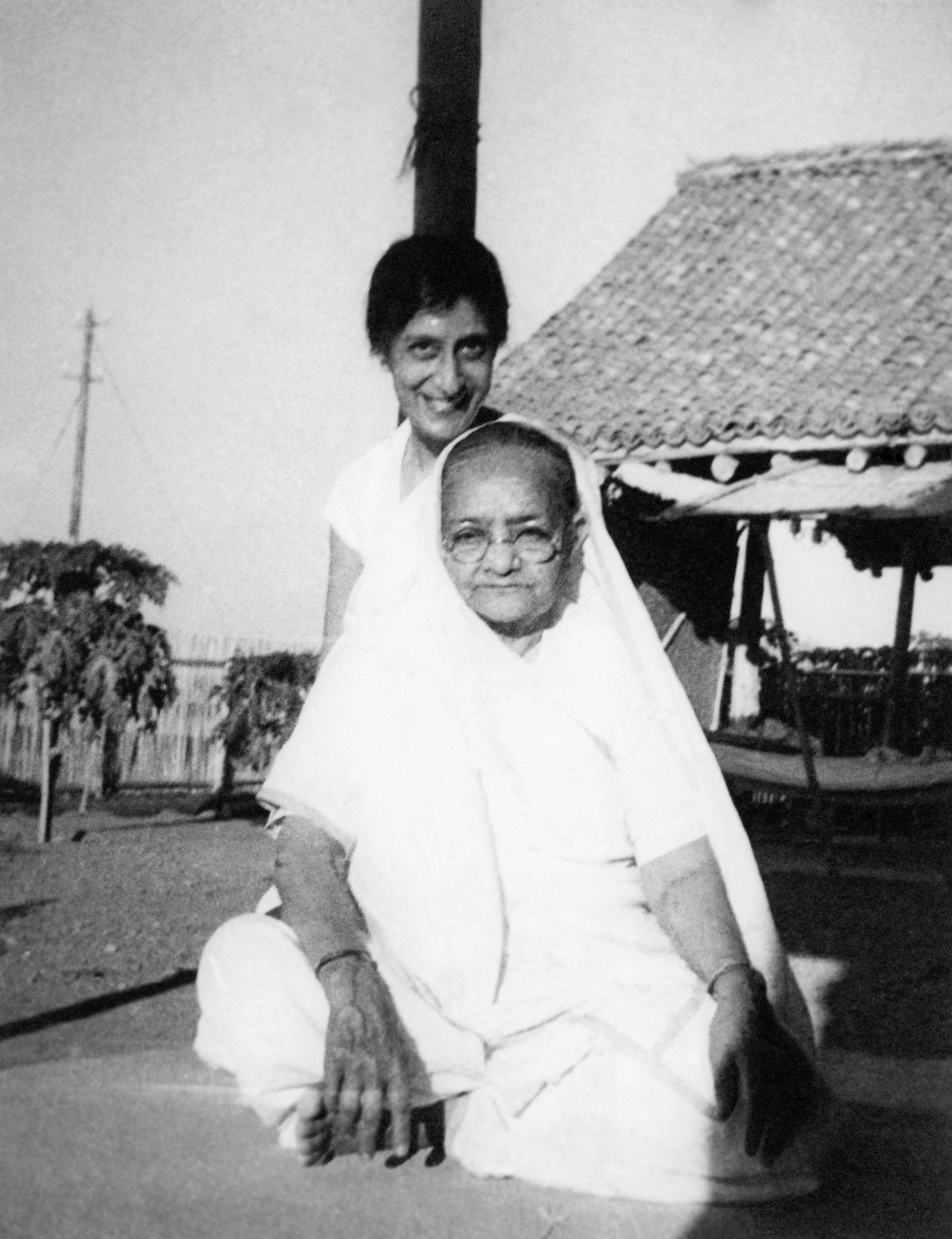
Amrit Kaur and Kasturba Gandhi
Kasturba Gandhi (seated, front) and Amrit Kaur (standing, rear) at Sevagram Ashram, circa 1941.
Gandhi (Photographer)
Published on
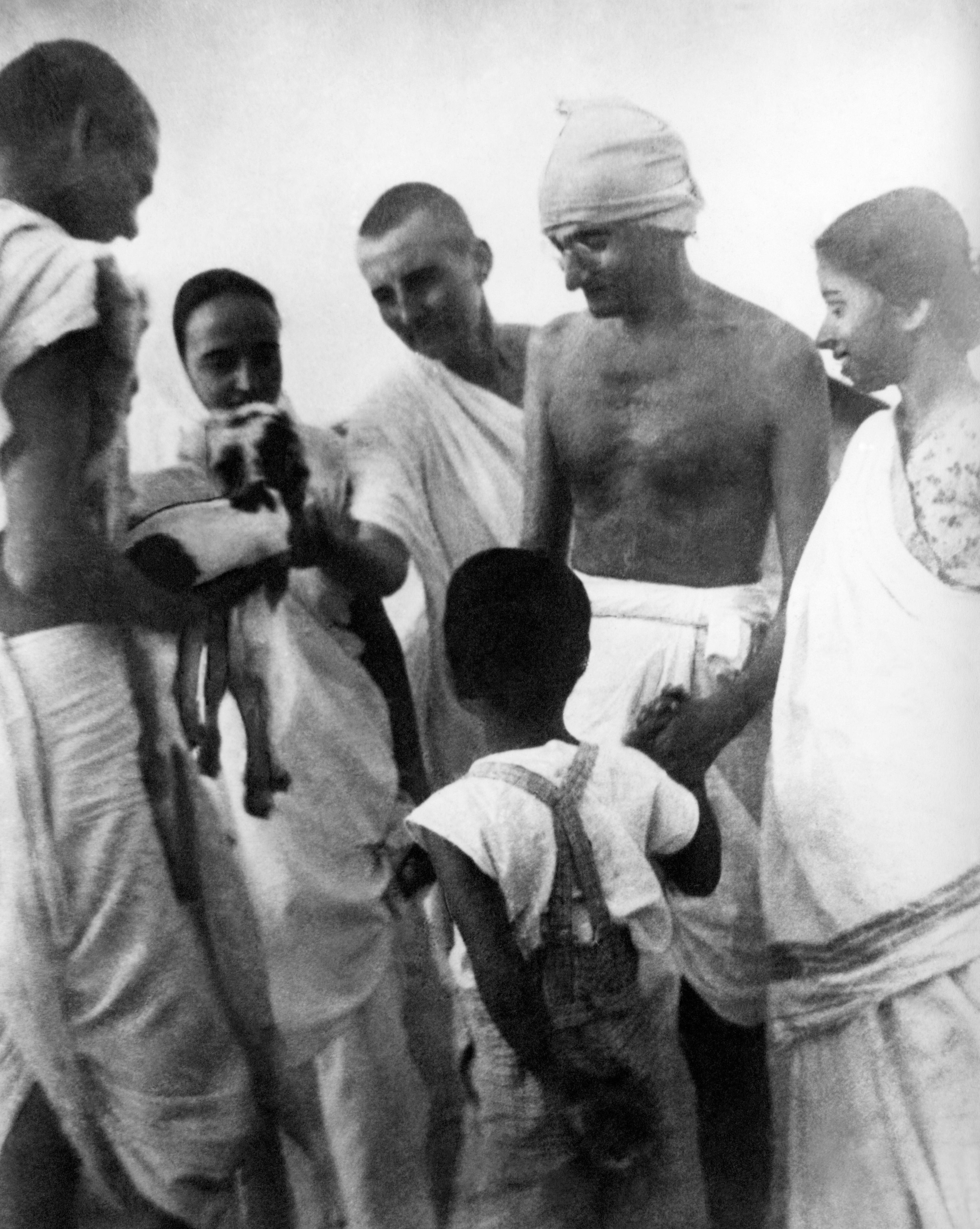
Celebrating baby goats
Celebrating the birth of goats at Sevagram Ashram, circa 1938. Gandhi holds hands with his grandson, Kahandas Gandhi. Mirabehn pets the goats;
Gandhi (Photographer)
Published on
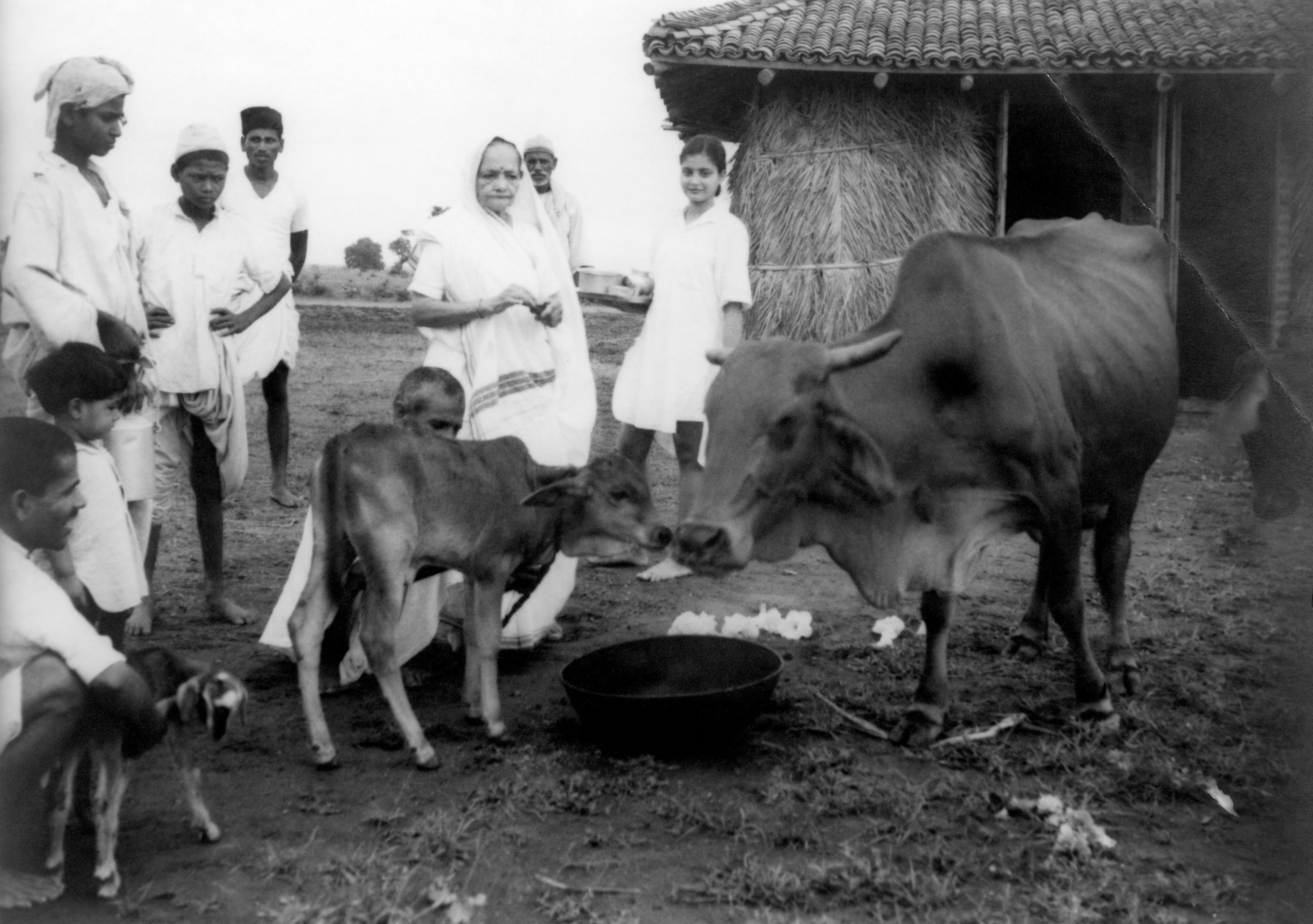
Feeding cows
Residents feeding cows at Sevagram Ashram, circa 1940. Pictured at the center is Kasturba Gandhi, with Abha Gandhi to her left.
Gandhi (Photographer)
Published on
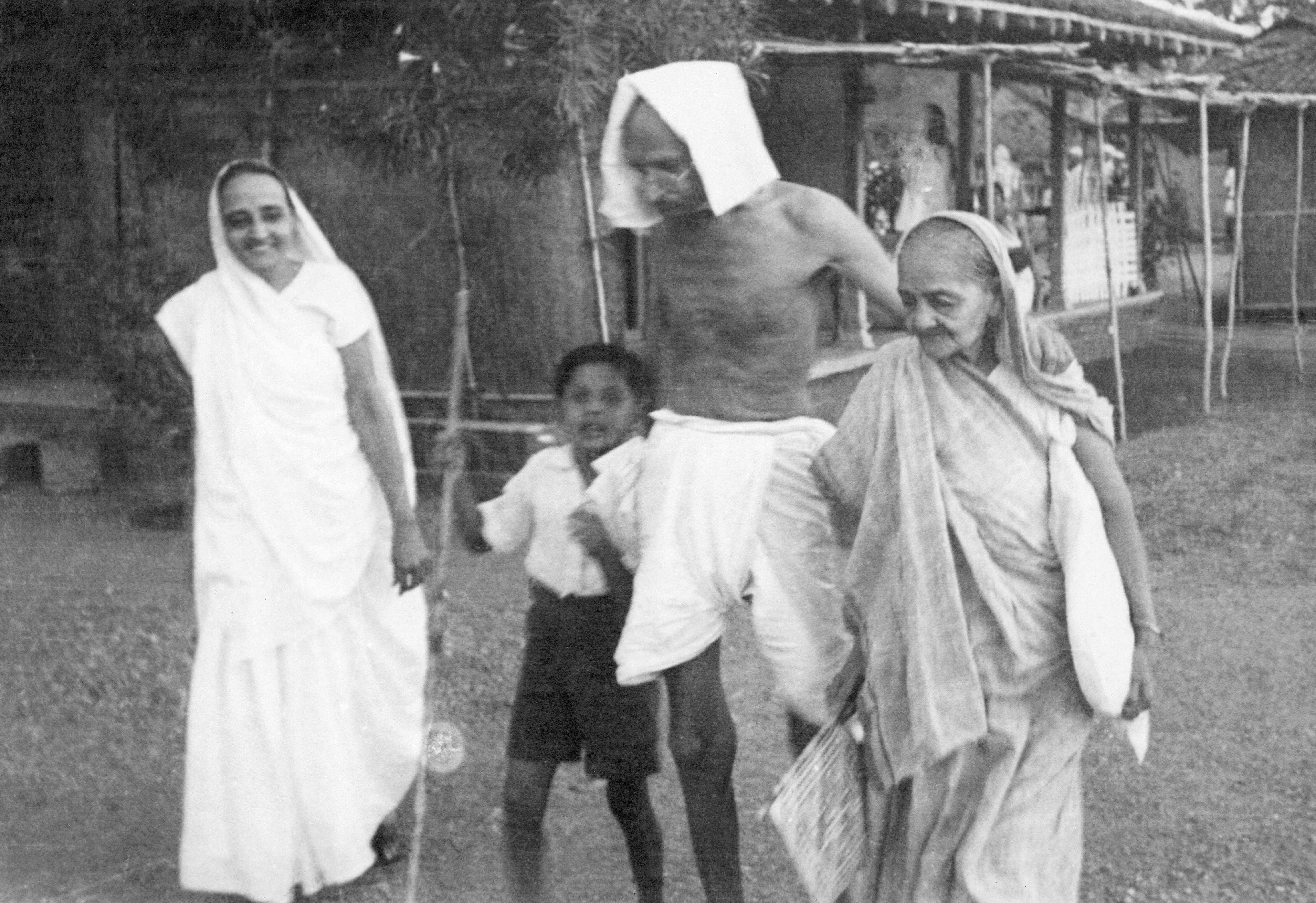
Gandhi walking with Kasturba Gandhi and grandson
Gandhi walking at Sevagram Ashram with his wife, Kasturba Gandhi (on his left), and his grandson (on his right). Also depicted is Nirmala Gandhi (
Published on
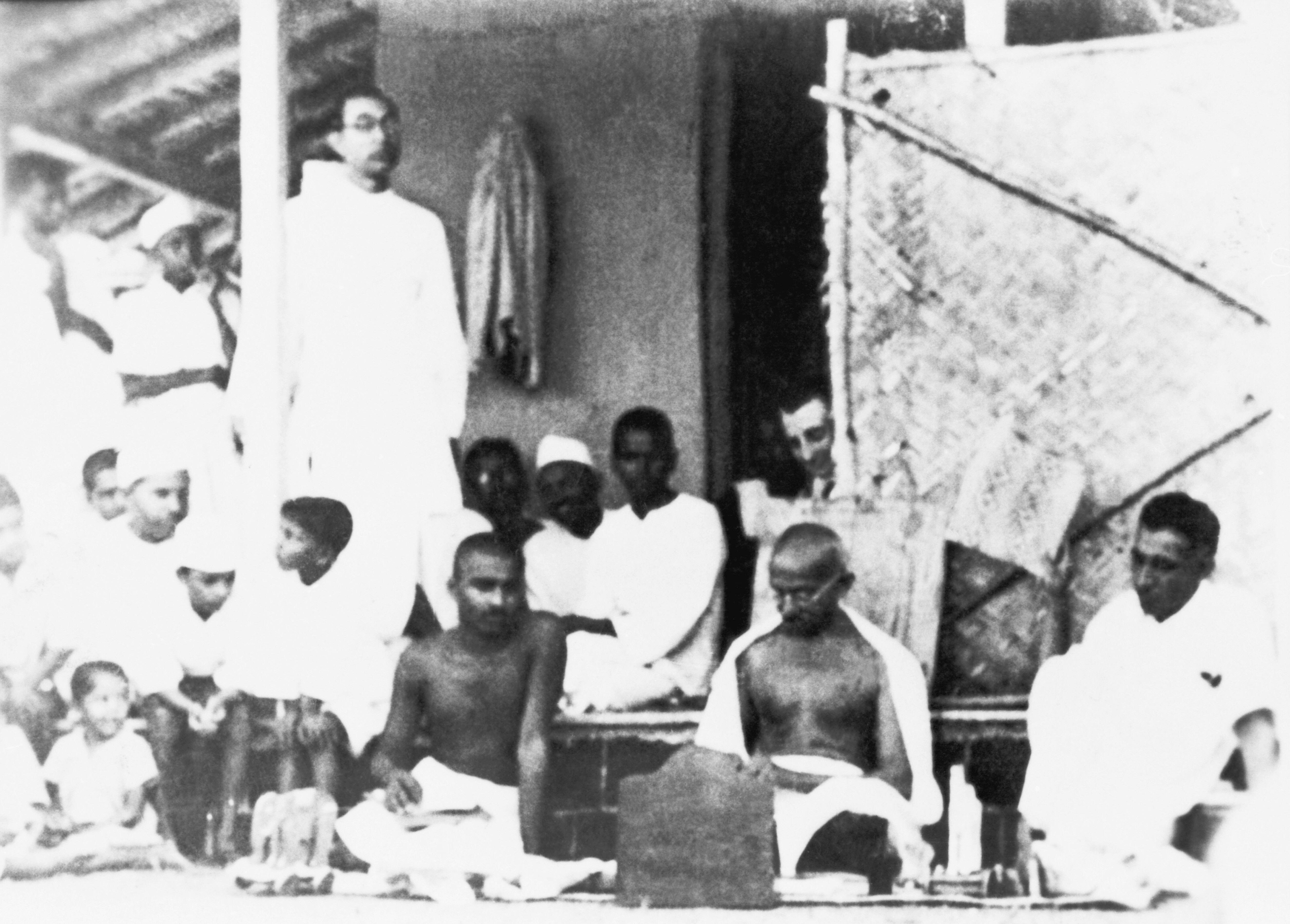
Celebrating Gandhi's birthday
Celebrating Gandhi's birthday (October 2) at Sevagram Ashram in 1938. Kanu Gandhi is seated in the center next to Gandhi; Pyarelal Nayar stands on
Published on